


RAVEN-X, Aorta Vision and RoboCare Lead Winners at Egypt’s University Innovation Summit 2026
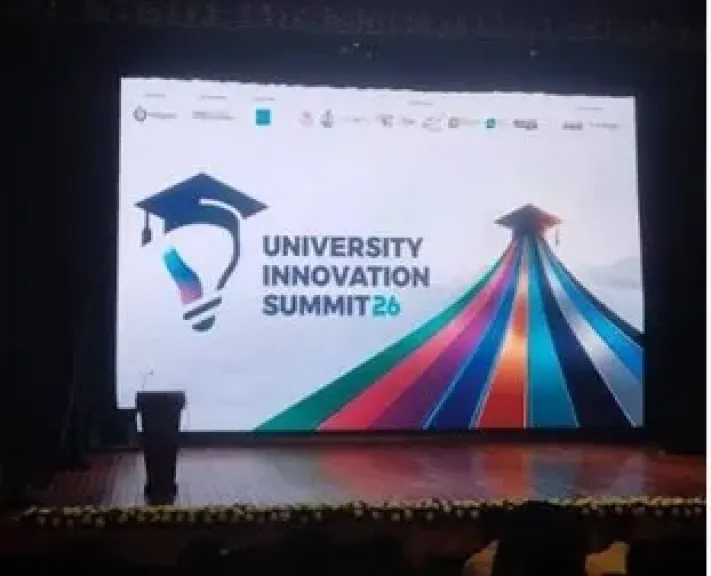
RAVEN-X, Aorta Vision and RoboCare have emerged among the leading winners of Egypt’s first University Innovation Summit, as more than 100 student-led technology and research projects competed across fields ranging from artificial intelligence and robotics to semiconductors, biotechnology and space technology.
The inaugural University Innovation Summit 2026 brought together more than 1,000 students from 30 universities and 24 STEM schools, with participating projects representing 10 specialized technology alliances.
Organized by Egypt’s Academy of Scientific Research and Technology in partnership with Zewail City of Science, Technology and Innovation and Global Innovation & Entrepreneurship Egypt, the summit was designed to push student innovation beyond academic projects and toward technologies capable of addressing real-world problems.
The participating teams went through final evaluation based on technical excellence, the quality of their ideas and their potential for practical application.
Behind the competition sits a wider effort to build a pipeline connecting universities, scientific research and Egypt’s technology ecosystem.
RAVEN-X Takes First Place in CinemaTech
RAVEN-X secured first place in the CinemaTech Alliance, ahead of ID Protein in second place and Swarm Robotics in third.
The CinemaTech track is one of a wider group of specialized technology alliances designed to organize student innovation around strategic technology sectors rather than treating university projects as isolated academic exercises.
That structure allows teams working on related technologies to compete, collaborate and receive specialized technical support within a defined field.
It also gives judges a more relevant framework for assessing whether projects can progress beyond prototypes toward practical applications.
Cairo University’s Aorta Vision Leads AI and IoT Track
In one of the summit’s most closely watched technology categories, Aorta Vision from Cairo University took first place in the university student track of the Egypt AI & IoT Alliance.
Chanily from Mansoura University finished second, while Revive from Menoufia University took third place.
Artificial intelligence and the Internet of Things also had a dedicated competition for students from Egypt’s STEM schools.
Skinergy, developed by students from Gharbia STEM School, won first place, followed by NeuroLimb from Red Sea STEM School and Smart Aqua Farming from Gharbia STEM School.
The separate university and school tracks are significant because they introduce students to applied AI development before they reach the conventional startup stage.
RoboCare Puts Menoufia University on Top of Deep Tech Competition
Menoufia University also secured a major win through RoboCare, which took first place in the university track of the Deep Tech Geeks challenge.
AgroEye from El Shorouk Academy came second, followed by NeuroCoders from Fayoum University.
Deep technology is particularly important within the summit because projects in areas such as robotics, advanced engineering, biotechnology and semiconductors generally require more than software development.
They often need laboratories, specialized equipment, technical mentoring, longer development cycles and significantly more capital before they can reach commercialization.
Creating a dedicated competition for these projects therefore addresses a different challenge from conventional university entrepreneurship programs.
Innovation Starts Before University
Some of the summit’s strongest results also came from STEM school students.
TikCare from Obour STEM School was among the first-place projects announced during the summit, while other school teams competed with technologies spanning healthcare, AI, agriculture and assistive technologies.
This early-stage participation is one of the more notable elements of the program.
Instead of waiting until university graduation to introduce students to innovation and technology development, the model brings secondary-school students into the same wider ecosystem as university researchers, academics, technology specialists and entrepreneurs.
That could help create a longer development path for projects that begin in school and continue through university rather than disappearing after individual competitions.
From Cancer Research to Smart Carpet Manufacturing
The winning projects also demonstrate how broad the definition of technology innovation has become.
Among the first-place research projects was work evaluating a synthetic pyrazole derivative for breast cancer applications from October University for Modern Sciences and Arts.
Other winning and highly ranked projects covered areas including agricultural technology, robotics, semiconductor technologies, medical applications and artificial intelligence.
The Academy’s individual-project competition also produced unconventional engineering applications.
A project from Samanoud Technological University developing a fourth-generation approach to handmade carpet production using an intelligent hand-tufting robot took first place in that category.
A multilingual historical guidance system from Suez Canal University came second, while MedTrack from the Higher Technological Institute ranked third.
The diversity is important because the summit is not structured solely around software startups. It also provides a route for research-intensive projects whose commercial applications may take considerably longer to emerge.
EGP 41 Million Is Supporting the Technology Alliances
The summit forms part of a broader technology-alliance model supported by the Academy of Scientific Research and Technology through its “Mashrouei Bedayti” — My Project, My Start — program.
The program has provided approximately EGP 41 million in support for the participating technology alliances.
That funding changes the significance of the competition.
Awards and rankings can provide visibility, but the more difficult stage for university innovation begins after the competition ends — when teams need laboratories, technical development, intellectual property support, business mentoring and funding to turn prototypes into usable products.
The Academy says support for winning teams will continue after the summit, with the objective of moving selected projects toward more advanced development and practical implementation.
More Than 100 Projects Compete Across Strategic Technologies
The scale of the inaugural event provides another indication of how university innovation is being organized differently.
More than 100 projects were drawn from 30 universities and 24 STEM schools, involving over 1,000 students and 10 participating technology alliances.
Their work covered areas including:
- Artificial intelligence and the Internet of Things
- Deep technology and robotics
- Semiconductors
- Biotechnology and medical research
- Space and satellite technologies
- Agriculture and environmental technology
- Applied engineering and advanced manufacturing
The final judging process assessed both technical excellence and the quality and potential of the ideas.
That combination matters because technically sophisticated university research does not automatically translate into a viable product, while a commercially attractive idea without strong technology may struggle to create a sustainable competitive advantage.
Egypt Is Trying to Build a Pipeline From Research to Market
Acting President of the Academy of Scientific Research and Technology Prof. Mamdouh Moawad said the results demonstrated the research and technical capabilities available among students at universities and STEM schools.
He said the participation of more than 100 projects demonstrated the ability of the technology-alliance model to identify young innovators and develop their ideas into research and applied projects.
Prof. Wael Akl, Acting CEO of Zewail City of Science, Technology and Innovation, said the diversity of winning projects across AI, medical research and biotechnology demonstrated the importance of providing students with a research environment capable of supporting further development.
The organizations behind the summit say the next stage will focus on continuing to work with winning teams and helping selected technologies move toward more advanced development.
The Real Test Begins After the Awards
The first University Innovation Summit has succeeded in assembling a sizable pipeline of student technology projects.
The more important question is what happens to them next.
University competitions frequently produce promising prototypes that disappear once students graduate or funding ends. Turning projects such as Aorta Vision, RoboCare and RAVEN-X into sustainable technologies will require continued technical support, access to laboratories, intellectual property protection, market testing and, for some projects, external investment.
That is why the EGP 41 million alliance model may ultimately prove more important than the rankings themselves.
If the winning teams can move from university laboratories and STEM classrooms into incubators, companies and commercial deployments, the University Innovation Summit could develop into something larger than an annual student competition — a pipeline for turning Egypt’s academic research into technology businesses and applied solutions
related topics
 Visa Selects 21 African Fintechs as AI and Stablecoins Reshape Financial Services
 TIME Names Tabby Co-Founder Hosam Arab Among the World’s Most Influential Rising...
 BAIC X55 REEV Heads to Egypt on October 7 as Range-Extended Cars...
 Korra Energy Tops EGX Trading in September With EGP 14.2 Billion Turnover
 President El-Sisi Issues Decree Joining ”Vodafone Egypt Foundation for Community Development” to...
 Egyptian Exchange Highlights Record Performance and New Investment Tools at MEIRA Conference
 Visa Launches Sixth Africa FinTech Accelerator Cohort with 21 Startups from 9...
 Exabeam Unveils AI-Powered Security Tools to Accelerate Investigations and Monitor AI Agents
 ITIDA Brings Together 53 Companies and 900+ Job Opportunities at 22nd Employment...
 Near-Unanimous Gains for Banking Stocks on the Egyptian Exchange.. Housing & Development...
 Global Auto Redefines Luxury in East Cairo with a New Innovative Showroom...
 BYD Expands Egyptian Presence with New Technology Center at Citystars