


TIME Names Tabby Co-Founder Hosam Arab Among the World’s Most Influential Rising Stars
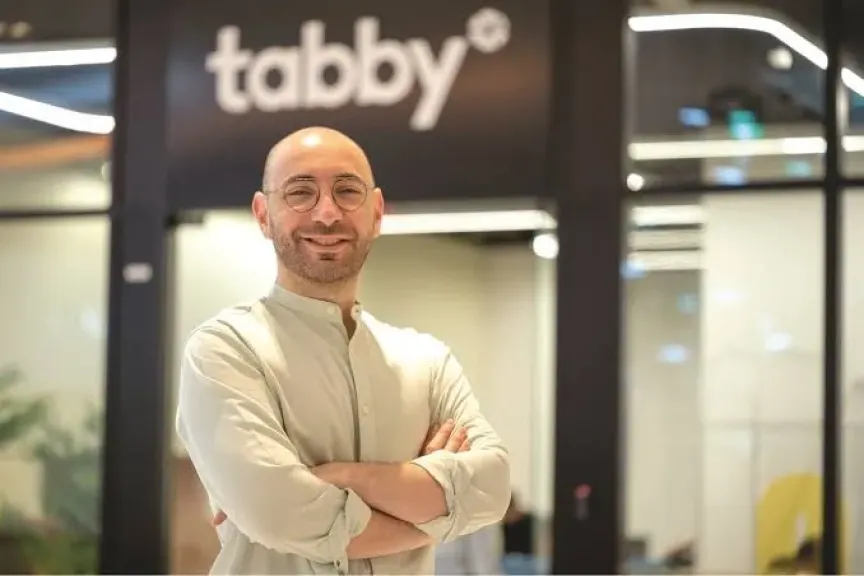
TIME has named Hosam Arab, CEO and Co-Founder of Tabby, to its 2026 TIME100 Next list of the world’s most influential rising stars, recognizing an entrepreneur whose journey from e-commerce to fintech has helped reshape how millions of consumers across the Middle East shop, pay and increasingly manage their money.
Arab’s inclusion comes at a particularly significant moment for Tabby.
Just weeks before the TIME recognition, the Saudi-headquartered fintech raised $233 million at a $6.5 billion valuation, up sharply from the $4.5 billion valuation referenced by TIME and recorded in a secondary share sale in late 2025.
The company is also moving well beyond the buy now, pay later model on which it built its initial growth.
Tabby now processes more than $18 billion in annualized transaction volume, serves 25 million registered users and works with 70,000 business partners, while expanding into consumer finance, SME lending, accounts, cards, money transfers and broader money-management services.
That evolution makes Arab’s inclusion in TIME100 Next less a recognition of a single successful fintech product and more a reflection of how Tabby is attempting to build a wider financial-services platform for the Middle East.
TIME Traces Tabby’s Origins Back to a Problem With Cash
TIME’s profile of Arab focuses on an insight he developed years before launching Tabby.
In 2011, Arab co-founded fashion e-commerce platform Namshi, where he encountered a persistent feature of Middle Eastern online shopping: customers often preferred cash on delivery even when digital payment alternatives were available.
Experiments aimed at encouraging shoppers to pay digitally led him to a different conclusion.
The underlying issue was not simply access to finance. It was trust.
Customers wanted greater confidence that a transaction had been successfully completed and that they had received what they expected before fully committing their money.
That experience eventually became part of the thinking behind Tabby, which Arab co-founded in 2019.
Instead of asking consumers to pay the full amount immediately, Tabby allowed them to spread purchases across multiple payments, lowering some of the friction surrounding online checkout.
What began as a payment option would eventually develop into one of the region’s largest fintech platforms.
Tabby’s Valuation Has Already Moved Beyond TIME’s Profile
TIME notes that Tabby reached a valuation of $4.5 billion in 2025, but the company has already passed that milestone.
On September 14, 2026, Tabby announced a $233 million equity round at a $6.5 billion valuation, led by existing investor Blue Pool Capital, with participation from HSG, Wellington Management and Arbor Ventures.
That represents a $2 billion increase from the valuation implied by the company’s October 2025 secondary share sale.
Tabby has also been profitable since 2023, an important distinction at a time when many high-growth fintech companies have had to balance expansion against the pressure to demonstrate sustainable economics.
The latest investment is intended to support the company’s expansion beyond installment payments into broader credit and money-management services in Saudi Arabia and the UAE.
25 Million Users and $18 Billion in Annual Transactions
Tabby’s scale has changed substantially since its early years as a checkout payment option.
The company now has 25 million registered users and works with 70,000 business partners, including major international and regional brands.
Its annualized transaction volume has exceeded $18 billion.
The platform works with companies including Amazon, Apple, IKEA, Samsung, SHEIN, Jarir and noon.
Those numbers help explain why Tabby’s strategic focus is widening.
Once a financial platform reaches tens of millions of users and processes billions of dollars in transactions, the relationship with customers can extend beyond financing an individual purchase.
Tabby is increasingly attempting to become a platform through which consumers can manage a broader range of everyday financial activities.
Saudi Licences Are Turning Tabby Into More Than a BNPL Company
One of the most important developments came in June 2026, when the Saudi Central Bank granted Tabby consumer finance and SME finance licences.
The consumer finance licence allows Tabby to provide larger financing amounts over longer repayment periods.
Eligible customers can access financing of up to SAR 50,000, with repayment plans extending to 12 monthly installments for qualifying purchases.
That pushes the company into categories where transaction values are considerably higher than typical BNPL purchases, including education, travel, used cars and short-term rentals.
The SME licence creates another business entirely.
Tabby can provide working capital to merchants on its platform, giving the company a route into business financing alongside its consumer operations.
The regulatory expansion effectively changes the addressable market available to the company.
Tweeq Acquisition Added Accounts, Cards and Transfers
Tabby has also been expanding through acquisitions.
Its purchase of Saudi digital wallet Tweeq gave the company access to capabilities beyond consumer credit, including accounts, cards and money transfers.
In the UAE, Tabby secured a Stored Value Facilities licence from the Central Bank of the UAE, supporting the launch of Tabby Cash.
The service is designed as an alternative to a conventional debit account and includes card payments, cashback and domestic and international money transfers.
Taken together, these moves illustrate how far Tabby has travelled from its original proposition.
The company that started by putting an installment button at online checkout is increasingly competing across a much wider portion of the consumer financial relationship.
From Namshi to Tabby, Arab Has Followed the Same Consumer Problem
There is also continuity between Arab’s two major entrepreneurial ventures.
Namshi addressed how Middle Eastern consumers discovered and purchased fashion online.
Tabby addressed the next part of the transaction: how consumers pay.
The company’s latest expansion takes that progression another step forward by targeting how customers borrow, transfer, spend and manage money.
That trajectory helps explain TIME’s focus on the original insight Arab developed while building Namshi.
His experience suggested that changing consumer financial behavior in the region required more than digitizing an existing process. Products needed to address the reasons consumers were reluctant to abandon established habits in the first place.
TIME Recognition Arrives as Tabby Enters Its Next Phase
TIME100 Next is designed to highlight emerging figures whom the publication identifies as shaping the future and the next generation of leadership.
For Arab, the recognition arrives at a point when the company he co-founded is changing category.
Calling Tabby simply a buy now, pay later company increasingly understates the scope of its operations.
Consumer and SME finance licences in Saudi Arabia, the Tweeq acquisition, Tabby Cash in the UAE and the latest $233 million investment all point toward a broader ambition: becoming a regional financial platform rather than remaining a specialized payments provider.
That makes Arab’s journey from Namshi to Tabby particularly notable. The problem he first encountered was how to persuade Middle Eastern consumers to trust digital commerce. Fifteen years later, the company he built from that insight is valued at $6.5 billion and is trying to extend that trust from the checkout page into a much larger part of consumers’ financial lives.
related topics
 MENA Startups Secure $789M in Banner Week; Space42 and Viasat Launch $1B...
 Tabby Secures $233M at $6.5B Valuation to Fuel Expansion Beyond BNPL in...
 FinTech Hive Event Highlights Need for Robust Tech Foundations to Scale Agentic...
 Tabby Partners with Apple Store UAE to Offer Interest-Free Installments via Tabby...