


Egypt Courts UAE Investment Groups in Energy, Infrastructure and Agri-Food Expansion
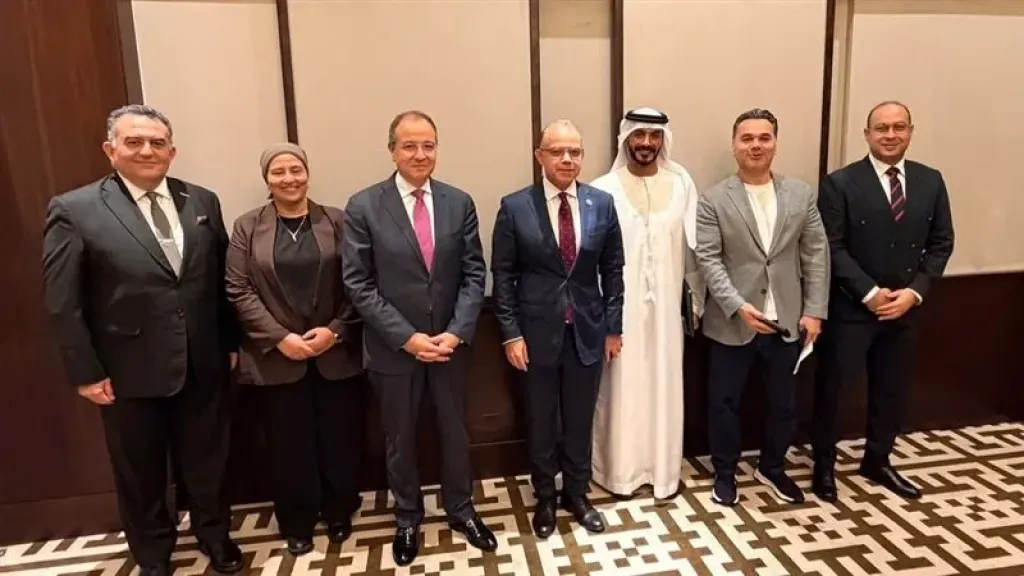
Egypt is stepping up efforts to attract new Emirati capital into energy, infrastructure and agri-food projects, with Investment and Foreign Trade Minister Mohamed Farid Saleh holding talks in Abu Dhabi with IRH Global Trading, ePointZero and Silal over potential expansion in the Egyptian market.
The meetings form part of Farid’s official visit to the UAE and focused on investment opportunities in priority sectors, potential projects and the information and coordination companies would need to evaluate further investment in Egypt.
No investment values, specific projects or binding agreements were announced following the talks.
That distinction is important. The meetings represent an early stage of investment discussions rather than confirmed transactions, but the profiles of the three groups provide an indication of the sectors Egypt is targeting as it seeks capital capable of supporting production, exports and infrastructure.
ePointZero Brings an Energy and Infrastructure Focus
Among the groups involved, Abu Dhabi-headquartered ePointZero has one of the clearest strategic links to Egypt’s investment priorities.
The company describes itself as a global investment platform focused on specialized energy infrastructure, deploying capital across power generation, energy distribution, pipelines, storage, industrial infrastructure and other assets supporting electrification and industrial growth.
Its strategy extends beyond conventional energy investment into infrastructure required by increasingly digital economies, including systems supporting growing power demand from industry and artificial intelligence.
ePointZero is part of the wider 2PointZero investment ecosystem and already has exposure to Egypt through its portfolio.
The group’s disclosed holdings include Elsewedy Electric, giving it an existing connection to one of Egypt’s largest engineering and infrastructure companies.
That makes the latest talks potentially more significant than an initial approach by an investor unfamiliar with the market.
ePointZero Is Expanding Aggressively Beyond the UAE
The company has also been deploying substantial capital internationally.
In 2026, ePointZero completed the $2.25 billion acquisition of US-based Traverse Midstream Partners, expanding its exposure to energy infrastructure.
More recently, it agreed to acquire a 90% stake in Azura Power Holding, alongside Amaya Capital, giving the platform exposure to 752 MW of electricity generation capacity across Nigeria, Senegal and Mozambique.
Those transactions illustrate the type and scale of infrastructure assets ePointZero is pursuing internationally.
However, the Egyptian government’s announcement did not identify which specific assets or projects were discussed with the company in Abu Dhabi.
Silal Could Bring Food Security and Agri-Tech Into the Investment Talks
The meeting with Silal introduces a different investment theme.
The Abu Dhabi-based group operates across food, agriculture and technology and is part of ADQ’s portfolio.
Its mandate includes diversifying food sources and expanding manufacturing and distribution across the agri-food value chain, while its activities cover farming, food distribution, agricultural technology and supply-chain infrastructure.
Silal has also been expanding through acquisitions.
Its portfolio includes Al Bakrawe Holding, a major regional fresh-produce importer and distributor whose sourcing network extends across more than 40 countries.
The company has also invested in agricultural inputs and distribution businesses as it builds a wider food ecosystem.
For Egypt, a potential relationship with Silal could therefore intersect with several investment priorities, including agricultural production, food processing, logistics, cold-chain infrastructure and agricultural exports.
The government announcement, however, did not specify which of those areas were discussed.
IRH Adds Resources and Global Trading to the Discussions
Talks with IRH Global Trading add another dimension to the Abu Dhabi meetings.
IRH operates within a broader investment ecosystem with interests linked to resources, mining and global commodities, while the wider IRH platform has expanded its exposure to strategic and transition minerals.
That could potentially align with Egypt’s efforts to attract investment into industries where local production can feed both domestic demand and exports.
Again, no specific transaction involving IRH Global Trading was disclosed.
The immediate outcome of the meeting was an agreement to continue communication and provide the information needed for the company to evaluate opportunities in Egypt.
Egypt Is Targeting Investment With Export Potential
Farid used the meetings to present developments in the Egyptian economy and measures aimed at simplifying procedures for investors.
The minister said Egypt’s investment promotion efforts are increasingly focused on sectors capable of generating higher added value and stronger economic and export returns.
That emphasis matters because attracting foreign capital alone does not necessarily translate into stronger productive capacity.
Investments in energy infrastructure, industrial production, food processing and export-oriented supply chains can have a wider economic impact by supporting local production and creating links with international markets.
Farid also invited the three groups to explore available opportunities and expand their existing or potential projects, while stressing the ministry’s role in connecting investors with relevant Egyptian authorities.
UAE Capital Remains Important to Egypt’s Investment Strategy
The Abu Dhabi meetings also fit into a wider pattern of engagement between Egypt and major UAE investors.
Only days earlier, Farid met Al-Futtaim Group Vice Chairman and CEO Omar Al-Futtaim to discuss further investment in logistics, commercial and administrative developments, energy and investment zones.
The government has been trying to move these relationships beyond portfolio and real-estate investment toward sectors capable of supporting industrialization, infrastructure and exports.
The latest meetings broaden that conversation to groups whose existing businesses span energy systems, commodities and agricultural supply chains.
The Next Step Is Turning Discussions Into Projects
For now, the significance of Farid’s meetings lies more in the profile of the investors around the table than in any transaction announced from it.
ePointZero is deploying billions of dollars into energy infrastructure internationally and already has exposure to Egypt. Silal is building an integrated agri-food and technology platform with an international sourcing and distribution network. IRH operates within an investment ecosystem connected to resources and strategic commodities.
Those capabilities overlap with areas where Egypt is seeking both capital and international partners.
The real measure of the Abu Dhabi meetings will therefore come next: whether discussions over opportunities progress into identified projects, committed capital and implementation timelines in Egypt.
Sources
related topics
 RAVEN-X, Aorta Vision and RoboCare Lead Winners at Egypt’s University Innovation Summit...
 Coinbase, Visa and Stripe Back Open USD With More Than $1 Billion...
 California Investigates OpenAI Over AI Agents’ Breach of Hugging Face
 TIME Names Tabby Co-Founder Hosam Arab Among the World’s Most Influential Rising...
 Photon Raises $4.5 Million to Put AI Agents Inside WhatsApp and iMessage
 BAIC X55 REEV Heads to Egypt on October 7 as Range-Extended Cars...
 Google Sends AI Chips Into Orbit as Project Suncatcher Takes First Step...
 Korra Energy Tops EGX Trading in September With EGP 14.2 Billion Turnover
 President El-Sisi Issues Decree Joining ”Vodafone Egypt Foundation for Community Development” to...
 Fawry Business Revolutionizes Corporate HR and Payroll Management with New Digital System
 Egyptian Exchange Highlights Record Performance and New Investment Tools at MEIRA Conference
 Visa Launches Sixth Africa FinTech Accelerator Cohort with 21 Startups from 9...