


Qasatli Seeks EGP 600 Million From Three Banks as It Builds a Bigger Mortgage Lending Engine
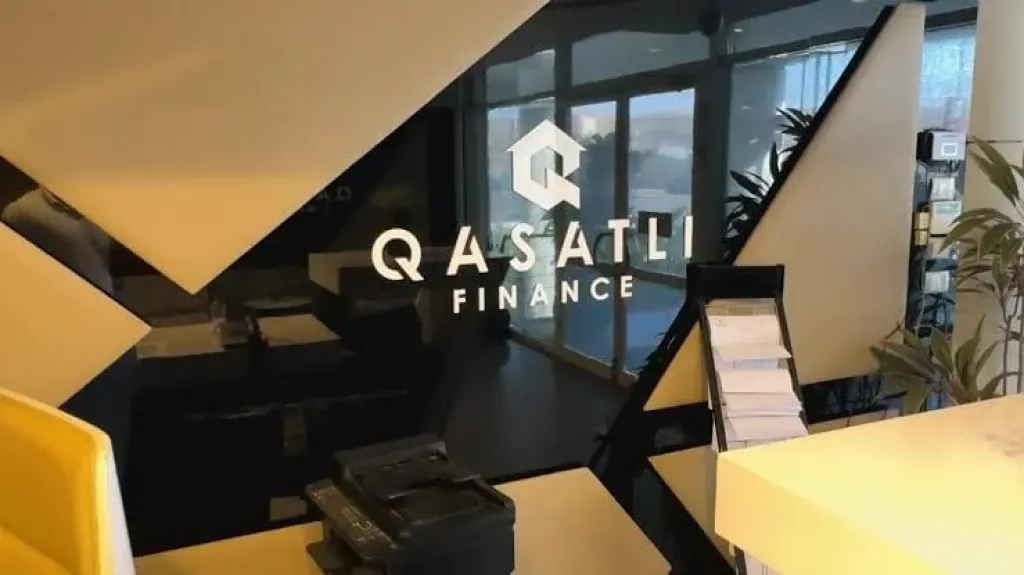
Egyptian mortgage finance company Qasatli is negotiating with three local banks for credit facilities of up to EGP 600 million before the end of 2026, as it seeks to diversify its funding base and accelerate lending to individual homebuyers.
The talks come at an important stage in Qasatli’s expansion. The company is targeting a mortgage portfolio of at least EGP 2.5 billion over the next three years, meaning access to bank funding is becoming increasingly important to how quickly it can originate new loans.
Rather than relying on a single financing channel, Qasatli is seeking to build relationships with multiple banks and financial institutions, giving it greater capacity to recycle capital into new mortgages as its customer base expands.
The latest EGP 600 million target follows a credit facility agreement signed with the National Bank of Egypt in August 2026, part of a wider strategy to increase the company’s access to institutional funding.
Bank Funding Becomes Central to Qasatli’s Expansion
Mortgage finance companies operate differently from banks. They need access to external funding that can then be deployed into loans for customers, making the availability and cost of that funding a critical part of their ability to grow.
For Qasatli, the negotiations with three banks could therefore provide more than additional liquidity.
Securing the facilities would broaden its funding relationships and provide additional capacity to finance individual buyers in Egypt’s residential property market.
The company has been working to increase cooperation with the banking sector and said following its National Bank of Egypt agreement that it intended to expand its partnerships with other banks and financial institutions.
Qasatli Managing Director Ihab Omar has said the company aims to build a financing portfolio of at least EGP 2.5 billion within three years through cooperation with banking institutions.
Qasatli Is Trying to Reach Buyers Traditional Finance Often Misses
The expansion comes as Qasatli attempts to address one of the structural challenges facing Egypt’s property market: a large gap between the scale of real estate activity and the relatively limited role of formal mortgage finance.
Earlier this year, Omar said mortgage finance represented only around 0.3% of Egypt’s GDP, arguing that regulatory and funding constraints have limited the sector’s ability to reach individual buyers.
Qasatli has consequently been developing financing products aimed at customer segments that may be difficult for traditional financial institutions to serve.
In March, the company said it was offering mortgage products with interest rates starting at around 20%, supported by agreements with financial institutions intended to lower funding costs and broaden customer access.
The model focuses particularly on individuals purchasing ready-to-move properties, rather than limiting financing to portfolios originated through major property developers.
National Bank of Egypt Deal Opened a New Funding Phase
Qasatli’s August agreement with the National Bank of Egypt marked an important step in that strategy.
The company said the facility would support its mortgage financing operations and help expand access to financing for customers.
It also linked the banking relationship to its governance, compliance and risk-management framework, including regulatory requirements covering customer identification, credit assessments and due diligence.
The agreement was described by Qasatli as the beginning of a broader strategic relationship that could include additional financing products and services.
Negotiations with three more banks now indicate that the company is seeking to replicate that model across a wider group of lenders rather than concentrating its borrowing with one institution.
Securitization Offers Another Route to Funding
Bank credit is not Qasatli’s only potential source of capital.
The company has previously participated in Egypt’s securitization market, allowing future receivables generated by financing portfolios to be converted into securities and providing another mechanism for releasing capital.
In 2021, Qasatli was among the originators participating in the first EGP 700 million issuance of a wider EGP 6.5 billion securitization program arranged by EFG Hermes alongside Amer Group and Porto Group companies.
EFG Holding later reported completing advisory work in 2023 on a second EGP 159.2 million securitization issuance for Qasatli.
Combining bank facilities with securitization could give the company more flexibility as its mortgage book grows, rather than leaving expansion dependent on a single funding source.
The Bigger Target Is a EGP 2.5 Billion Mortgage Portfolio
The EGP 600 million currently under negotiation becomes more significant when viewed against Qasatli’s longer-term target.
Building a portfolio of at least EGP 2.5 billion would require the company to repeatedly secure funding, originate mortgages and manage the resulting receivables while maintaining credit quality.
That makes funding capacity almost as important as customer acquisition.
Qasatli is also expanding the technology side of its model. The company has said it is developing more flexible mortgage products supported by a digital platform containing hundreds of financeable properties, combining property discovery with access to financing.
The strategy points toward a model in which technology helps customers find eligible properties while institutional funding provides the capital required to finance their purchases.
For Qasatli, the negotiations for EGP 600 million are therefore part of a much larger bet: building enough diversified funding capacity to turn mortgage finance from a relatively narrow product into a scalable route for individual Egyptians to purchase property.
related topics
 Euro Exchange Rate Stabilizes in Egypt Alongside Record Foreign Reserve Surge and...
 US Dollar Exchange Rates Today, Thursday, October 1, 2026: Notable Stability Across...
 Egypt’s FRA Expands Women’s Access to Finance, Highlights New Capital Market Opportunities
 USD vs. EGP Rate Map Across Egyptian Banks
 Egypt’s Non-Banking Financial Sector Tops Weekly Stock Trading Activity
 NBE's Emad Shawky: AI is Shifting Corporate Banking Toward Predictive Services and...
 FRA Concludes 2026 Summer Training Program for Egyptian University Students
 Banque Misr and National Bank of Egypt Reach Preliminary Agreement to Restructure...
 FRA and National Council for Women Sign Cooperation Protocol to Boost Egyptian...
 FRA Moves to Enhance Egypt’s Movable Collateral Registry Services and User Experience
 Egyptian FRA Grants Licensing and Establishment Approvals to 11 Non-Banking Financial Entities
 Dollar Exchange Rate Holds Steady Against the Egyptian Pound at Local Banks