


FRA and National Council for Women Sign Cooperation Protocol to Boost Egyptian Women’s Access to Non-Banking Financial Services
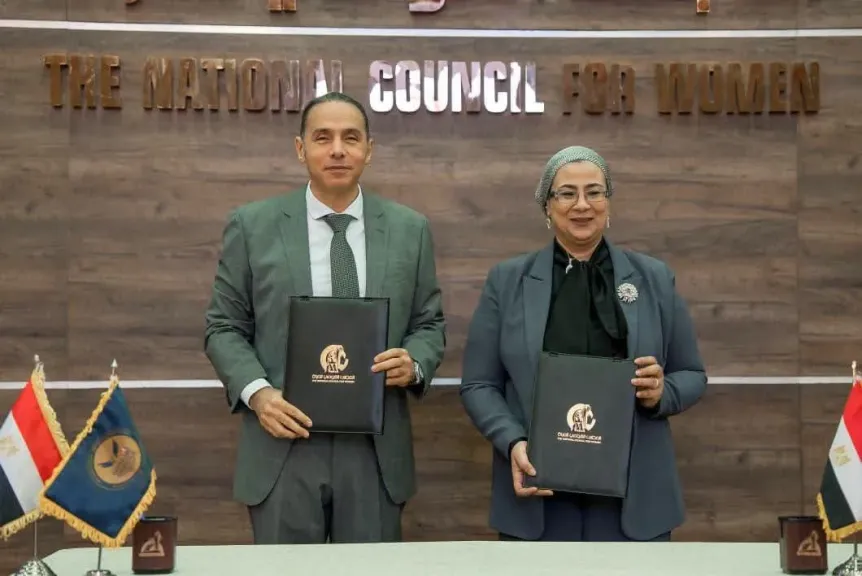
The Financial Regulatory Authority (FRA) and the National Council for Women (NCW) have signed a cooperation protocol aimed at enhancing Egyptian women’s access to non-banking financial services, strengthening financial literacy, and supporting women’s economic empowerment.
The protocol focuses on raising awareness of available non-banking financial products and services, combating financial fraud and harmful market practices, encouraging women’s entrepreneurship, and expanding women’s use of fintech and digital financial solutions.
Under the agreement, the two institutions will exchange data and studies on women’s financial inclusion indicators and organize joint financial education programs, workshops, and training initiatives targeting women and girls. These programs aim to strengthen women’s financial and digital skills and help them make informed financial decisions.
The protocol also seeks to support women-owned micro, small and medium-sized enterprises and increase their participation in investment and non-banking financial activities. A joint committee will be established to monitor implementation, review progress, and develop proposals to expand cooperation.
FRA Chairman Islam Azzam highlighted the authority’s efforts to promote women’s financial inclusion. He said that women accounted for 52.8% of beneficiaries of microfinance in Q2 2026, reaching around 1.8 million women, with financing worth approximately EGP 33.7 billion, representing 45.4% of total microfinance balances.
Azzam also noted that women currently account for more than 26% of board members of listed companies and non-banking financial institutions, with 1,236 women serving on boards by the end of 2025. This exceeds the regulatory requirement of at least 25% female representation.
The FRA chairman stressed the importance of financial awareness in protecting women from fraud and helping them benefit safely from financial services. He also highlighted recent regulatory measures aimed at strengthening customer identification, improving financing procedures, reducing default risks, and addressing fraud.
NCW President Amal Ammar said the protocol reflects the integration of government efforts to strengthen women’s economic participation. She emphasized that women should not be viewed merely as recipients of financial services, but also as producers, entrepreneurs, investors, and economic decision-makers.
The cooperation will also include cybersecurity awareness activities designed to help women identify and prevent digital fraud, particularly as financial technology and artificial intelligence continue to expand. The two sides plan to develop practical, field-based, virtual, and training-of-trainers programs across Egyptian governorates.
related topics
 Egypt's Food Exports to the EU Reach $852 Million in H1 2026...
 FRA Moves to Enhance Egypt’s Movable Collateral Registry Services and User Experience
 Huawei Unveils Grid-Interactive AI Data Center Solution to Maximize 'Tokens Per Watt'...
 Egyptian Fintech 'octo' Joins EBRD’s Star Venture Program to Accelerate Growth
 Egyptian FRA Grants Licensing and Establishment Approvals to 11 Non-Banking Financial Entities
 Orange Egypt and Marakez Bring Fiber Networks and Smart Infrastructure to Four...
 Egypt’s PM Reviews ICT Infrastructure, Digital Transformation and AI Projects
 FRA Expands Regional Center for Sustainable Finance and Carbon Markets to Strengthen...
 FRA Mandates Non-Banking Financial Companies to Adopt 'Bareedi' Registered Email Service
 World Bank: Egypt’s New Cities Drive Urban Expansion and Economic Growth
 Egypt Expands Unified Government Services Card as President El-Sisi Pushes AI, Cloud...
 European Stocks Close Sharply Lower as Deteriorating Macro Backdrop Threatens Earnings