


GITEX 2026: NinjaOne Brings an AI Technician to Enterprise IT Teams
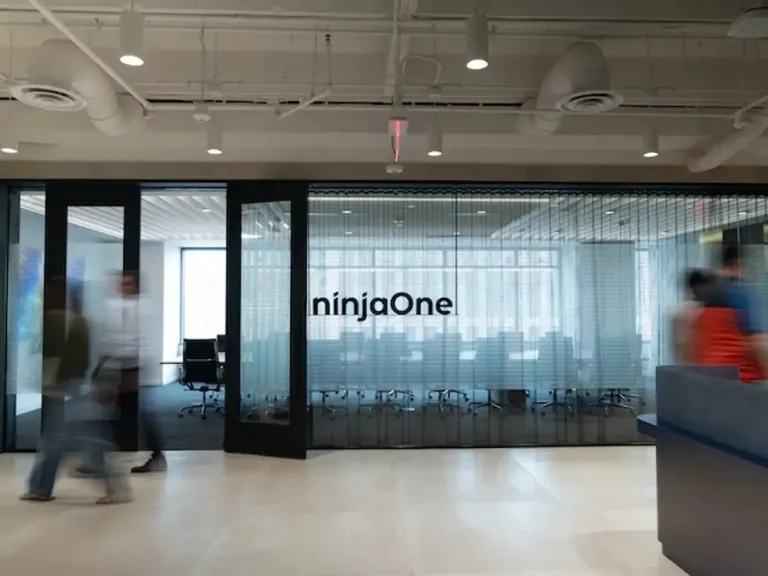
GITEX 2026: NinjaOne Brings an AI Technician to Enterprise IT Teams
Every laptop, smartphone, server and virtual machine inside a large organization represents another endpoint that IT teams must monitor, update, secure and troubleshoot.
With thousands of employees, hybrid workplaces and a constant stream of software vulnerabilities, endpoint management has become an increasingly complex part of digital transformation.
NinjaOne is approaching GITEX GLOBAL 2026 with a new proposition: giving IT teams an AI technician of their own.
The company, a Bronze Sponsor of this year’s event, recently introduced Katana AI, an agentic AI technician built into its Unified IT Operations Platform. Alongside it, NinjaOne MCP enables external AI agents to interact with IT operations through a governed layer.
Together, these technologies represent more than another AI assistant added to an IT dashboard.
NinjaOne is moving toward automating the process of detecting problems, identifying their causes and determining what should happen next.
The Endpoint Has Become an AI Problem
Corporate IT environments have changed significantly.
Employees are no longer limited to desktop computers connected to a traditional corporate network. Organizations now manage Windows PCs, Macs, smartphones, servers, virtual machines, cloud applications and remote devices spread across different locations.
Every endpoint produces large amounts of operational information, including software versions, hardware conditions, alerts, vulnerabilities, failed updates, configuration changes, security events and support histories.
For an IT technician investigating why an employee’s device is malfunctioning, the challenge is often not a lack of information.
It is the sheer volume of information.
Finding the relevant signal can require moving between dashboards, reviewing previous incidents, examining logs and searching documentation before troubleshooting can even begin.
NinjaOne’s latest AI strategy is designed to reduce that investigative workload.
Katana AI Brings an AI Technician Into IT Operations
Katana AI is one of the key technologies to watch from NinjaOne around GITEX.
Launched in October, the technology is designed as an agentic AI technician embedded directly into the NinjaOne platform.
When an IT issue occurs, Katana can analyze device telemetry, historical information, alerts and previous activity to identify potential root causes.
It can then recommend the next step for the IT technician, including possible remediation actions or scripts intended to resolve the problem.
The distinction between Katana and a conventional generative AI assistant is significant.
A chatbot may explain the meaning of an error message.
An agentic IT system, by contrast, can access the operational context surrounding the device generating that error. It can potentially identify what changed, examine what happened previously and determine which action may be appropriate for that particular environment.
This moves AI from being primarily a knowledge tool toward becoming an operational tool.
Why NinjaOne Is Keeping Humans in the Loop
The obvious question is whether an AI technician should be allowed to repair corporate devices without human supervision.
NinjaOne is taking a cautious approach.
Katana is designed to operate within the permissions and governance controls already established inside the platform, allowing IT leaders to determine what AI can access and which actions it can perform.
That distinction matters.
An incorrect recommendation is one problem. An autonomous system executing the wrong script across thousands of corporate devices could have much broader consequences.
Enterprise agentic AI therefore creates a fundamental tension.
The greater the authority an agent receives, the more useful it can become. But greater authority also increases the potential impact of an error.
NinjaOne’s approach is to move toward more autonomous IT operations while retaining policy controls over the actions AI can perform.
That balance between autonomy and governance could become one of the defining issues in enterprise AI.
NinjaOne MCP Connects External AI Agents With IT Operations
Katana AI may attract the most attention, but NinjaOne MCP could prove equally important over time.
MCP, or Model Context Protocol, is an emerging standard for connecting AI systems with external tools and information.
NinjaOne is using the technology to create a governed connection between its IT operations platform and external AI agents.
For example, an enterprise may already use an AI assistant across its business. An employee could tell that assistant that their laptop is running slowly.
Instead of providing generic troubleshooting advice, the AI agent could interact with NinjaOne through MCP, retrieve authorized information about the device and initiate an approved IT workflow.
This effectively connects the AI assistant used by an employee with the endpoint management platform operated by the IT team.
However, the external agent would not automatically receive unrestricted access to the organization’s entire device environment.
NinjaOne can act as a controlled layer between the AI agent and IT infrastructure, applying existing permissions and policies.
This approach could become increasingly important as organizations begin operating hundreds or even thousands of specialized AI agents.
Autonomous Patching Brings AI Into Software Updates
Another important area of NinjaOne’s AI strategy is software patching.
Software updates may appear routine, but patch management is a fundamental component of cybersecurity.
When Microsoft or another software provider identifies a vulnerability, organizations need to determine which machines are affected, evaluate the update and deploy it.
Delaying a patch can leave systems exposed, while deploying it too quickly can create problems if the update itself causes instability.
NinjaOne has been developing Autonomous Patch Management to address this balance.
The platform combines automation, policy-based controls and intelligence designed to reduce the manual work involved in software updates.
One of its notable components is Patch Intelligence AI.
Patch Intelligence AI Helps IT Teams Decide When to Update
Patch Intelligence AI is designed to address a common question for IT administrators: should a particular update be installed now?
The technology analyzes information surrounding Windows updates and generates explanations of known issues and potential risks.
It can combine information from Microsoft and the broader community with anonymized failure and rollback telemetry from NinjaOne’s own environment.
Updates can then be presented with indicators such as “Appears Stable,” “Caution” or “Known Issues.”
The information is refreshed regularly for recently released Windows updates.
NinjaOne has taken the concept further with AI Approval Overrides.
If a patch is scheduled for automatic approval but the system identifies known problems or reasons for caution, AI can override that approval.
An administrator can then review the update instead of allowing it to proceed automatically.
This represents an interesting use of AI.
Rather than using artificial intelligence simply to automate another action, NinjaOne is also using AI to determine when automation should stop.
Vulnerability Management Moves Closer to Remediation
NinjaOne has also expanded its vulnerability management capabilities during 2026.
Traditional security workflows can involve one product identifying a vulnerability, another identifying affected devices and a separate system being used by IT administrators to patch or remediate those devices.
That fragmentation can slow down the response.
NinjaOne is working to bring vulnerability information and endpoint remediation closer together within a unified operating environment.
For security teams, the benefit is straightforward.
Identifying that hundreds of devices contain vulnerable software is valuable. Being able to move quickly from discovery to remediation is considerably more useful.
The convergence of endpoint management, patching and vulnerability management also reflects why NinjaOne increasingly positions itself as a Unified IT Operations company rather than simply a remote monitoring and management provider.
NinjaOne Is Expanding Beyond Traditional PCs
The endpoint itself is also evolving.
NinjaOne’s platform now covers endpoint management, mobile device management, patching, backup, remote access, IT asset management and other operational functions.
The company has also expanded support for Arm-based Windows devices during 2026, reflecting the growing diversity of enterprise hardware.
At the same time, organizations need greater visibility across cloud, on-premises and hybrid environments.
This creates a broader opportunity for NinjaOne.
If the company can maintain a unified operational view across different types of endpoints, AI can potentially reason across that information instead of operating inside separate management silos.
The long-term value of Katana may therefore depend not only on the AI model powering it, but also on the depth of operational context surrounding it.
Why NinjaOne’s AI Strategy Matters for the Middle East
NinjaOne’s presence at GITEX comes as governments and businesses across the Middle East continue to increase their investments in cloud computing, cybersecurity and AI.
That creates a less visible but unavoidable challenge.
Every new digital service ultimately depends on devices, servers or other endpoints that must be configured, updated, monitored and protected.
Large organizations are also under increasing pressure to maintain visibility across distributed workforces while responding more quickly to security vulnerabilities.
AI can help automate parts of this workload, but autonomous IT introduces the same governance questions emerging across enterprise AI.
Who authorized the agent?
Which devices can it access?
What actions is it permitted to perform?
Can it execute scripts?
And what happens when AI decides not to install a security update that an existing policy has already approved?
These are operational challenges rather than distant possibilities.
NinjaOne’s recent product development suggests that they will be important topics in its discussions with CIOs, CISOs and managed service providers in Dubai.
What to Expect From NinjaOne at GITEX GLOBAL 2026
NinjaOne has not published a complete product-launch schedule for its Dubai appearance, so specific GITEX announcements should not be treated as confirmed before the company officially announces them.
Its October product launches, however, provide a strong indication of the areas likely to receive attention.
Katana AI is the obvious centerpiece, representing NinjaOne’s move from automated endpoint management toward agentic IT operations.
NinjaOne MCP expands that strategy by allowing external AI agents to interact with IT infrastructure while maintaining enterprise controls.
Patch Intelligence AI and Autonomous Patch Management offer a practical demonstration of AI applied to everyday IT operations, while the company’s expanding vulnerability management capabilities bring endpoint operations closer to cybersecurity.
This gives NinjaOne a different position from the companies dominating the AI infrastructure race.
The technology industry is investing heavily in increasingly powerful AI models and the data centers needed to run them.
But organizations still need to manage the laptops, servers and other devices through which employees interact with that technology.
NinjaOne’s bet is that the IT technician responsible for those devices will increasingly have another technician working alongside them.
The difference is that the second technician will be AI.
related topics
 GITEX 2026 Preview: NVIDIA Pushes for More AI Computing From Every Watt
 GITEX 2026 Preview: Huawei Brings Agentic AI Infrastructure Race to Dubai
 Trend AI Enhances Vision One Platform to Detect Security Vulnerabilities and Monitor...
 UAE-Based ”Ayan” Secures AED 2.2 Million in Pre-Seed Funding for Global Expansion
 Hatem Dowidar, Former Etisalat amp; CEO, Joins Tactful AI as an Investor...
 ITIDA Organizes Seminar on ”Agentic AI Engineering” at Sultan Hussein Kamel Palace
 Moody’s Identifies Four Key Standards for AI Governance in Financial Institutions
 Fortinet at Cairo ICT 2026: AI-Powered Cybersecurity Redefines Secure Digital Infrastructure
 Cisco at Cairo ICT 2026: AI-Powered Networking and Cybersecurity Shape the Next...
 Huawei at Cairo ICT 2026: AI, Cloud and Data Centers Shape the...
 e& Completes First Contract Evaluation in Procurement via Agentic AI
 OPPO Partners with Manus to Integrate Agentic AI into Upcoming Find X10...