


GITEX 2026: Supermicro Scales AI Data Centers From 5MW to 1GW
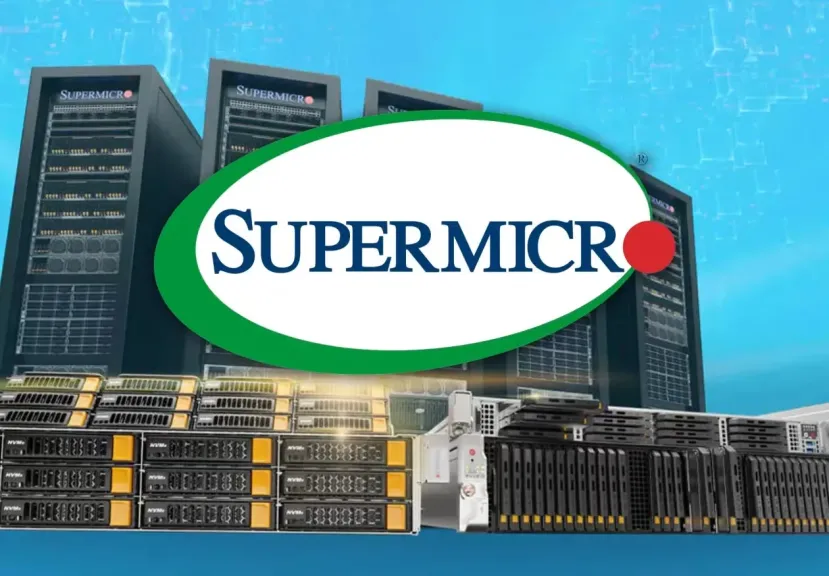
Building an AI data center has traditionally meant putting together a complicated puzzle of servers, networking, power systems, cooling equipment, software and facility infrastructure — often involving multiple suppliers and months of engineering work before the first AI workload can run.
Supermicro wants to change that model.
As the company prepares for GITEX GLOBAL 2026 in Dubai, one of the most important technologies to watch is not simply its latest AI server. It is a much bigger idea: turning the data center itself into a collection of standardized building blocks that can be assembled, expanded and deployed much faster.
That strategy sits behind Supermicro’s Data Center Building Block Solutions, or DCBBS, an increasingly important part of the company’s attempt to move beyond its traditional identity as a server manufacturer.
And with AI infrastructure becoming larger, hotter and significantly more power-hungry, the approach could be particularly relevant to the Middle East, where governments, cloud providers and technology groups are preparing increasingly ambitious AI computing projects.
From Servers to Entire AI Factories
Supermicro built much of its business around what it calls a building-block architecture: designing reusable server components that can be configured rapidly around new generations of processors, GPUs, memory and storage.
AI is now pushing that philosophy beyond the server.
DCBBS expands the concept across almost every layer required to operate an AI data center — compute, networking, storage, racks, power distribution, liquid cooling, management software and site infrastructure.
Instead of asking a customer to procure each layer separately and then integrate everything on site, Supermicro wants to deliver validated combinations that are designed to work together.
The significance becomes clearer at large scale.
A company building a conventional enterprise server room can tolerate a certain amount of integration complexity. An AI factory containing thousands or tens of thousands of accelerators cannot.
A cooling problem, power constraint or networking bottleneck can leave enormously expensive computing hardware sitting idle.
For Supermicro, reducing the time between buying that infrastructure and actually running AI workloads on it has therefore become a product in itself.
The Innovation to Watch: An AI Data Center Blueprint From 5MW to 1GW
One of Supermicro’s most ambitious developments this year is its new generation of DCBBS Blueprints for NVIDIA Vera Rubin infrastructure.
The company says the architecture can begin with a 5MW power envelope and scale as far as 1GW.
That is a dramatic range.
At the lower end, the blueprint can support a substantial AI computing deployment. At the upper end, Supermicro is effectively talking about infrastructure on the scale of an enormous industrial facility.
The starting building block can contain 1,152 GPUs, with additional units added as computing requirements expand.
But the more important point is what surrounds those GPUs.
The blueprint incorporates NVIDIA Vera Rubin NVL72 and HGX Rubin NVL8 platforms alongside networking, storage, power distribution, cooling infrastructure and management software.
Supermicro can also handle the process from site survey and engineering through integration, deployment and ongoing support.
The objective is to make an AI factory less of a bespoke construction project and more of a repeatable infrastructure deployment.
Why Liquid Cooling Is Becoming Unavoidable
There is a physical problem behind this strategy: heat.
Packing more AI accelerators into each rack dramatically increases the amount of heat that needs to be removed.
Traditional air cooling becomes increasingly difficult and inefficient as rack density rises.
Supermicro has consequently made Direct Liquid Cooling, or DLC, one of the foundations of its AI infrastructure strategy.
Its DLC-2 architecture brings liquid directly to high-temperature components using cold plates, coolant distribution units, manifolds and associated infrastructure.
The company says its FlexTwin systems, for example, can use DLC-2 to remove up to 90% of system-generated heat.
That has consequences beyond temperature.
Removing heat more efficiently can allow operators to place more computing into the same physical space, reduce dependence on energy-intensive air-conditioning infrastructure and potentially lower operating costs.
In the AI era, cooling is therefore no longer a secondary engineering detail.
It determines how much computing can physically fit inside the data center.
Supermicro Has Another Answer for Data Centers That Cannot Be Rebuilt
Not every company can construct a new liquid-cooled AI facility from scratch.
That is where another Supermicro innovation becomes interesting.
In July, the company expanded its Rear Door Heat Exchanger, or RDHx, portfolio to ten models, covering cooling capacities from 10kW to 120kW at the door level, with configurations capable of supporting up to 240kW of cooling at rack level.
The principle is relatively simple.
A heat exchanger is attached to the rear of a server rack, capturing heat as hot air leaves the equipment.
That can provide an intermediate path for existing data centers that need to support increasingly dense AI infrastructure without completely redesigning the building.
Supermicro says the systems can work with standard EIA, OCP ORv3 and NVIDIA MGX racks and can be combined with its direct-to-chip liquid cooling architecture.
This could be particularly important as enterprises face a difficult transition: they want the latest AI hardware, but many of their existing facilities were never designed for its thermal density.
Vera Rubin Will Be Important — But Supermicro Has a Different Role From NVIDIA
Supermicro’s relationship with NVIDIA will inevitably be highly visible around GITEX.
The company is already showcasing systems built around the Vera Rubin generation, including NVIDIA Vera Rubin NVL72, HGX Rubin NVL8, Vera CPU and BlueField-4-based infrastructure.
But this is where the distinction between the two companies becomes important.
NVIDIA designs much of the computing architecture.
Supermicro’s opportunity lies in turning those technologies into deployable systems.
A customer does not operate a bare GPU.
It needs processors installed inside systems, systems integrated into racks, racks connected through high-speed networks, electricity distributed safely, heat removed continuously, storage attached and software capable of managing the infrastructure.
Supermicro is trying to own more of that integration layer.
That makes the company less a competitor to NVIDIA than one of the businesses attempting to industrialize NVIDIA’s increasingly complex AI architectures.
The Clock Is Becoming an AI Infrastructure Metric
Supermicro increasingly talks about Time-to-Online, or TTO.
It is an important concept because the economics of AI hardware are unusual.
An expensive accelerator sitting in a warehouse or waiting inside an unfinished data center produces nothing.
Once operational, the same hardware can train models, process inference requests and generate revenue.
That means weeks or months shaved from deployment can have substantial financial value.
Supermicro argues that integrating compute, racks, cooling, power and networking before equipment reaches the customer can reduce many of the engineering and compatibility problems traditionally resolved during data-center construction.
Its latest work with NVIDIA goes even further toward the idea of taking customers from a signed infrastructure contract to live computing capacity as quickly as possible.
In other words, AI infrastructure is creating a new competitive metric.
Performance still matters.
Power efficiency matters.
But increasingly, how quickly thousands of GPUs can actually be switched on matters too.
Open Infrastructure Is Becoming Part of the Strategy
Supermicro is not building its future exclusively around one processor architecture.
During 2026, the company expanded its DCBBS portfolio with Arm-based systems and additional Open Compute Project-compatible infrastructure.
Its OCP ORv3 portfolio now includes high-density GPU configurations, while new Arm-based platforms are designed around improved performance per watt for cloud and agentic AI workloads.
Supermicro also works across processor and accelerator ecosystems involving NVIDIA, AMD and Intel.
That breadth is strategically important.
AI infrastructure is evolving too quickly for many data-center operators to commit to a single hardware configuration for years.
A modular approach potentially allows new processors, accelerators, storage systems and networking technologies to enter the infrastructure without redesigning the entire facility around them.
It is essentially the same logic behind Lego: standardized connections make it easier to change the pieces.
Why Dubai Is a Natural Market for the Supermicro Model
The Middle East provides an unusually strong environment for this strategy.
Countries across the Gulf are not merely adopting cloud services. They are investing directly in sovereign AI computing capacity, hyperscale data centers and the energy infrastructure required to support them.
That creates demand for something different from traditional enterprise servers.
Customers increasingly need infrastructure that can be deployed at enormous scale while dealing simultaneously with power density, cooling, networking and deployment speed.
Supermicro’s 5MW-to-1GW proposition speaks directly to that market.
The company has confirmed its presence at GITEX Technology Week in Dubai in December, while GITEX GLOBAL itself is making compute geopolitics, sovereign AI, data centers and the infrastructure powering the next wave of artificial intelligence central themes of its 2026 program.
What to Watch From Supermicro at GITEX 2026
Supermicro has not yet published a complete list of product announcements specifically scheduled for GITEX, so any claim that a particular new system will launch in Dubai would be premature.
The technology direction, however, is already clear.
Expect its presence to emphasize high-density AI infrastructure, Vera Rubin systems, rack-scale integration, direct liquid cooling and DCBBS as the company attempts to demonstrate that it can deliver much more than individual servers.
The expanded RDHx portfolio will also be worth watching because it addresses an immediate problem facing existing data centers: how to accommodate hotter AI systems without rebuilding an entire facility.
But the larger story is Supermicro’s attempt to change what customers actually buy.
For decades, the server was one of the basic units of data-center infrastructure.
AI is pushing the industry toward something much larger.
At GITEX 2026, Supermicro’s argument will effectively be that the new unit of computing is no longer the server — it is the AI factory itself.
related topics
 GITEX 2026 Preview: NVIDIA Pushes for More AI Computing From Every Watt
 GITEX 2026 Preview: Huawei Brings Agentic AI Infrastructure Race to Dubai
 Vodafone Egypt Expands Social Impact to 11 Million Beneficiaries Through Digital Education,...
 Strategic Partnership Between GrowthLabs and Founder Institute to Empower Startups in Egypt
 HUAWEI Expands in Egypt with a New Experience Store at Dandy Mall,...
 Banque du Caire Sponsors Turathna 2026 for the Sixth Consecutive Year
 Historic Milestone for Ziina: First UAE Fintech to Combine Retail Payments, Stored...
 National Telecommunication Institute Celebrates Graduation of 601 'AI Ambassadors' to Empower Non-Specialists
 Freelancing in Egypt: Safe and Legal Ways to Receive International Payments
 Debit vs. Credit vs. Prepaid Cards: Which Is Best for Online Shopping?
 Digital Financial Security: 10 Golden Rules to Protect Bank Accounts and Digital...
 Digital Gold Investment in Egypt: Gold Funds, Approved Apps and Safer Ways...