


Microsoft Is Preparing for a Workplace With Thousands of AI Agents
For decades, one of the most important jobs of corporate IT was managing people.
Employees received identities, passwords and permissions. Administrators decided which files they could open, which applications they could use and which corporate systems they could access.
Artificial intelligence is creating a new version of the same problem.
What happens when a company no longer has only 20,000 employees to manage, but also thousands of AI agents capable of reading documents, sending messages, accessing applications, analyzing financial information and completing work on behalf of those employees?
Microsoft is increasingly building its enterprise AI strategy around that question.
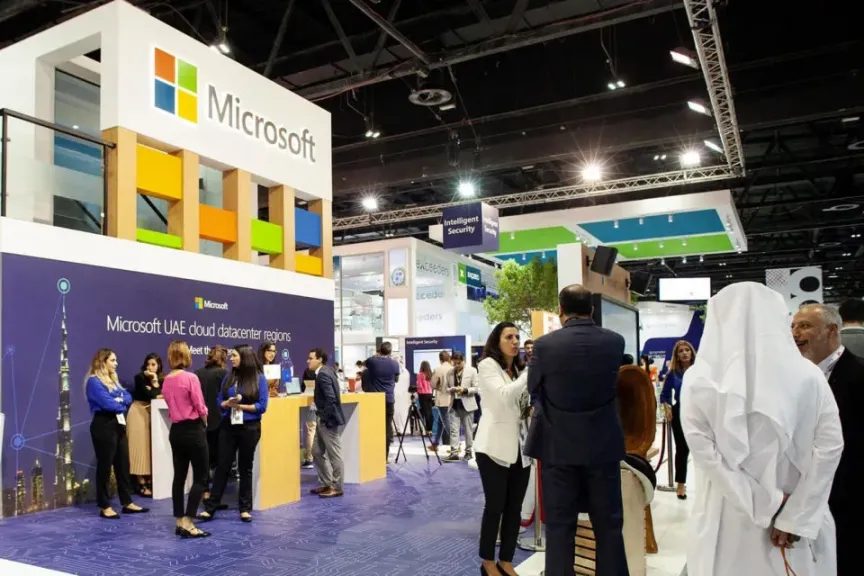
As the technology giant prepares for GITEX GLOBAL 2026 in Dubai, its latest products reveal a significant shift.
Copilot is evolving from an assistant that answers questions into a system capable of accepting delegated work and continuing without the user.
At the same time, Microsoft has created Agent 365, a control plane designed to discover, govern, secure and monitor the growing population of AI agents operating inside an organization.
Together, the technologies suggest that Microsoft sees the next phase of enterprise computing very differently from the chatbot era.
AI agents are becoming digital workers.
And digital workers need management.
The Next IT Problem Is Not Employees - It Is Agents
The problem begins with scale.
A company may eventually deploy agents for sales, finance, customer service, procurement, cybersecurity, software development, legal work and human resources.
Individual employees may create additional agents themselves.
Some may come from Microsoft.
Others may be built using third-party platforms.
Software vendors may increasingly embed their own agents inside applications.
Before long, an enterprise could have more AI agents than employees.
That creates an obvious management problem.
Who owns each agent?
What information can it access?
Which employee authorized it?
Which applications can it use?
What actions has it performed?
Is it still needed?
And what happens when an agent begins behaving in a way nobody expected?
Microsoft's answer is Agent 365.
The Innovation to Watch: Agent 365
Microsoft describes Agent 365 as the control plane for AI agents.
The product became generally available in May 2026 and is designed to give enterprise IT departments a centralized environment for managing agents across an organization.
The concept is significant because Agent 365 is not restricted only to agents created using Microsoft's own AI tools.
Organizations can register and govern agents from Microsoft's ecosystem as well as external agents.
That potentially gives Microsoft a position above individual AI platforms.
Instead of asking enterprises to standardize every agent on one model or development framework, Microsoft wants to become the management layer through which those agents are controlled.
Every AI Agent May Need an Identity
The architecture begins to resemble traditional identity management.
An employee joins a company and receives an identity.
That identity determines what the employee can access.
When the person changes roles, permissions change.
When the employee leaves, access is revoked.
AI agents create similar requirements.
An agent working for the finance department should not automatically receive access to human-resources records.
A sales agent may need customer information but not source code.
A customer-service agent may need permission to issue a refund but should perhaps require human approval above a certain amount.
Microsoft is extending concepts from Entra, its identity and access platform, into the agentic world.
That matters because the security question surrounding AI is changing.
It is no longer simply:
Can an employee access this file?
It increasingly becomes:
Can the employee's AI agent access it, and what can the agent do after it reads it?
Agent 365 Creates a Registry for the AI Workforce
One of Agent 365's core capabilities is its Registry.
The idea is deceptively simple.
Before an organization can secure its AI agents, it needs to know they exist.
The registry gives administrators a central inventory of agents operating across the enterprise.
That becomes important as employees gain easier tools for building their own AI systems.
The same democratization that makes agent creation powerful can also create a new form of shadow IT.
An employee could build an agent to automate a workflow.
Another department could create ten more.
A software vendor could introduce additional agents through an application update.
Without centralized visibility, an enterprise may eventually have autonomous software operating across corporate systems without the security team maintaining a complete picture of what exists.
Agent discovery therefore becomes the first step toward agent governance.
Microsoft Is Building a Map of How Agents Behave
Knowing that an agent exists is only part of the problem.
Administrators also need to understand what it is connected to.
Agent 365 includes an Agents Map designed to visualize relationships between agents and the broader enterprise environment.
That could become increasingly important as agents begin communicating with other agents.
Imagine a sales agent requesting information from a pricing agent.
The pricing agent accesses a database.
Another agent checks inventory.
A fourth generates a proposal.
The final document is then sent to a customer.
From the employee's perspective, one request has been completed.
From the IT department's perspective, multiple autonomous systems have exchanged information and performed actions across several enterprise resources.
The map is intended to make those relationships more visible.
AI Agents Need Least Privilege Too
Cybersecurity has long relied on the principle of least privilege.
A user should receive only the access necessary to perform their job.
The same principle becomes even more important for AI.
An agent capable of completing tasks autonomously should not have unlimited access simply because the employee who created it has broad permissions.
Agent 365 is designed to apply governance and least-privilege controls to agents while monitoring how they interact with enterprise resources.
Microsoft Purview provides data security and compliance capabilities.
Microsoft Defender contributes threat protection.
Microsoft Entra provides identity and access controls.
Agent 365 brings those systems together around AI agents.
This could become one of Microsoft's biggest structural advantages in enterprise AI.
The company does not need to build every agent.
It already controls many of the security and productivity systems surrounding them.
The AI Agent Is Becoming a Cybersecurity Target
The need for that protection is not theoretical.
AI agents introduce unusual security risks because they combine access with autonomy.
Traditional malicious software is designed to perform harmful actions.
An AI agent can create problems while technically doing exactly what it was instructed to do.
A manipulated document could contain instructions intended to influence an agent.
An attacker could attempt to exploit the tools available to it.
Sensitive information could leak through an unexpected workflow.
An agent could also receive excessive permissions and expose information without anyone deliberately attacking it.
This creates a cybersecurity challenge where organizations need to monitor not only users and applications, but also the reasoning systems acting between them.
Copilot Is Becoming Less Like ChatGPT and More Like a Workplace
While Agent 365 governs agents, Microsoft is simultaneously changing what employees see.
In September, the company introduced a major redesign of Microsoft Copilot around three concepts:
Home, Code and Autopilot.
The significance goes beyond interface design.
Microsoft is effectively trying to transform Copilot from a chatbot inside Microsoft 365 into the central environment through which employees interact with AI at work.
Home Becomes the Starting Point for AI Work
Home brings Chat and Cowork together.
Chat remains useful for questions, analysis and everyday assistance.
Cowork moves further toward delegated work.
Instead of asking AI to produce one response, employees can assign larger tasks that require multiple steps.
Microsoft is also integrating Word, Excel and PowerPoint directly into Copilot.
That means documents and spreadsheets increasingly become part of the AI workspace rather than separate applications the employee has to move between.
The long-term implication is significant.
For decades, knowledge workers opened an application depending on what they wanted to create.
Word for documents.
Excel for spreadsheets.
PowerPoint for presentations.
Microsoft is exploring a future where the user starts with an intention instead.
The AI decides which tools are required.
Code Gives Every Employee a Software Developer
The second component, Code, pushes that concept further.
Microsoft is bringing technology derived from GitHub Copilot into the broader workplace so employees can build applications and automations using natural language.
That could reduce the boundary between software users and software developers.
An employee who needs a simple internal application may not have to wait for a development team.
They could describe what they need.
AI generates the solution.
Microsoft then provides a managed runtime intended to keep that generated software within enterprise security and governance controls.
This could dramatically increase the amount of software created inside organizations.
It also makes governance more important.
If millions of employees become capable of creating applications, IT departments need a way to prevent that freedom from turning into another generation of uncontrolled shadow IT.
Autopilot Is Where Copilot Starts Working Without You
The third component may be the most consequential.
Autopilot is Microsoft's persistent and proactive agent.
The key word is persistent.
Traditional Copilot interactions usually begin when the user asks for something.
Autopilot is designed to continue working even when the employee is away from the computer.
That changes the relationship between human and software.
Instead of:
Ask - answer - stop
the workflow becomes:
Delegate - work - monitor - deliver.
The employee assigns an objective.
The agent continues working toward it.
That is much closer to managing a colleague than using a search engine.
Teams Could Become a Shared Memory for AI
Microsoft is also bringing Copilot deeper into Teams.
The new @Copilot experience can use the shared context and permissions of a channel, group chat or meeting.
That gives AI access to something particularly valuable: organizational memory.
Consider a product team that has spent months discussing a launch.
Decisions are scattered across meetings, messages and documents.
A new employee joining the project may need days to understand why particular choices were made.
An AI agent with appropriate access can potentially reconstruct that context.
It can identify previous decisions, dependencies, unresolved questions and responsibilities.
This moves AI beyond generating content.
It begins helping organizations remember.
Microsoft Is Also Letting Enterprises Choose the Model
Another major change during 2026 is Microsoft's increasingly explicit multi-model strategy.
Copilot is no longer simply a front end for one OpenAI model.
Microsoft has been expanding model choice across its AI products, including models from OpenAI and Anthropic.
That indicates where enterprise AI may be heading.
Companies may not choose one model for everything.
One model may perform better at coding.
Another may be preferable for complex reasoning.
Another may offer a better balance between speed and cost.
Microsoft's opportunity is therefore not necessarily to own every model.
It can own the environment in which enterprises choose, secure and use them.
The Middle East Is Becoming Central to Microsoft's AI Strategy
GITEX also comes at an important moment for Microsoft's regional strategy.
In September, Microsoft announced plans to invest more than $10 billion in capital and operating expenditure across the Middle East through 2030.
The investment includes expansion of cloud and AI infrastructure, deeper partnerships with national AI organizations and new digital-resilience initiatives.
Microsoft is working with organizations including G42 in the UAE, HUMAIN in Saudi Arabia and governments across the Gulf.
It also plans to invest more than $400 million in subsea and terrestrial connectivity across the Middle East by 2030.
That makes Microsoft's GITEX presence about considerably more than Copilot.
Sovereign AI Is Becoming a Commercial Requirement
Governments and regulated organizations across the Middle East increasingly want to use advanced AI without surrendering control over sensitive information.
Microsoft has responded by expanding its sovereign cloud strategy.
Its portfolio includes Sovereign Public Cloud and Sovereign Private Cloud approaches designed to give organizations greater control over data and infrastructure.
This is particularly relevant to governments, banks, healthcare organizations and critical infrastructure operators.
The AI model may be global.
The governance requirements remain local.
Microsoft's challenge is to provide both.
The UAE Is Also Becoming a Test Bed for AI Cybersecurity
Microsoft's regional activity extends directly into cybersecurity.
In September, Microsoft, the UAE Cyber Security Council and Core42 announced plans to deploy MDASH across UAE government entities.
MDASH uses AI and automated analysis to identify vulnerabilities, prioritize risks and improve security posture.
The initiative demonstrates another aspect of Microsoft's regional strategy.
The UAE is not simply a market where Microsoft sells AI software.
It is increasingly becoming an environment where large-scale AI systems are deployed across government and national infrastructure.
What to Expect From Microsoft at GITEX 2026
Microsoft is listed among the exhibitors at GITEX GLOBAL 2026, with its presence spanning multiple locations, although the company has not yet published a complete GITEX-specific product announcement schedule.
That means the precise Dubai launch agenda should remain unconfirmed until Microsoft announces it.
But the timing makes several technologies particularly important.
The redesigned Microsoft Copilot will arrive only months after the introduction of Home, Code and Autopilot.
Agent 365 provides the enterprise governance story behind that increasingly autonomous workforce.
Copilot Studio continues moving toward persistent agents capable of handling longer-running business processes.
Microsoft's multi-model strategy demonstrates that the company increasingly wants to control the enterprise AI platform rather than insist on a single underlying model.
And its multibillion-dollar Middle East infrastructure strategy gives those software announcements a substantial regional context.
The first phase of workplace AI was easy to understand.
Employees received a Copilot.
The next phase will be more complicated.
Employees will delegate work to agents. Departments will create their own agents. Software companies will bring additional agents into the enterprise. Those agents will communicate with applications, corporate data and eventually each other.
Someone will have to know who they are, what they can access and what they have done.
Microsoft spent decades building systems for managing human identities, computers and applications.
Its next ambition is to become the company that manages the AI workforce too.
related topics
 GITEX 2026: NinjaOne Brings an AI Technician to Enterprise IT Teams
 GITEX 2026: Snowflake Puts AI Agents at the Center of Enterprise Data
 GITEX 2026 Preview: NVIDIA Pushes for More AI Computing From Every Watt
 GITEX 2026 Preview: Huawei Brings Agentic AI Infrastructure Race to Dubai
 Trend AI Enhances Vision One Platform to Detect Security Vulnerabilities and Monitor...
 UAE-Based ”Ayan” Secures AED 2.2 Million in Pre-Seed Funding for Global Expansion
 Hatem Dowidar, Former Etisalat amp; CEO, Joins Tactful AI as an Investor...
 ITIDA Organizes Seminar on ”Agentic AI Engineering” at Sultan Hussein Kamel Palace
 Proofpoint Taps JPMorgan and UBS for $1.25 Billion Financing of Varonis Acquisition
 Moody’s Identifies Four Key Standards for AI Governance in Financial Institutions
 Fortinet at Cairo ICT 2026: AI-Powered Cybersecurity Redefines Secure Digital Infrastructure
 Apple and Meta Partner to Bring Muse Spark Open AI Model to...