


SanDisk Becomes Meta’s Exclusive Storage Partner as VR Glasses Open the Door to Expandable Memory
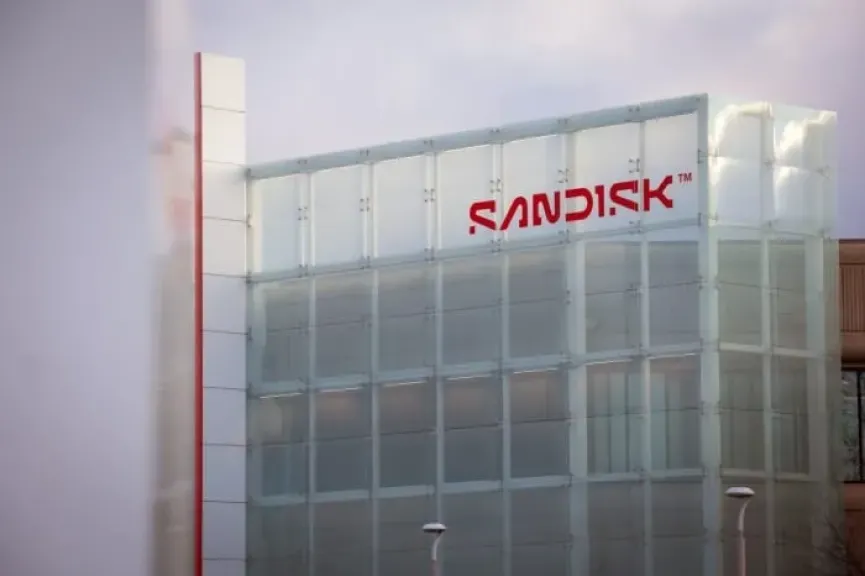
Meta’s next-generation VR Glasses will mark more than a redesign of the company’s virtual reality hardware. They are also changing how users will manage one of the most persistent constraints in standalone VR devices: storage.
SanDisk has been named the exclusive provider of next-generation flash storage solutions for Meta VR Glasses, giving the memory company a central role in the hardware ecosystem surrounding Meta’s new device when it launches in Spring 2027.
Under the partnership, SanDisk is developing microSD Express memory cards and USB-C flash drives in collaboration with Meta. Both will become part of the official “Made for Meta” ecosystem and will be tested and certified specifically for the new VR platform.
Meta Rethinks Storage for Its Next VR Platform
The significance of the agreement extends beyond another branded accessory partnership.
Meta VR Glasses introduce an expandable storage model that differs from the fixed-storage approach traditionally associated with the company’s standalone VR headsets.
The upcoming device separates its lightweight glasses from much of the underlying computing hardware. While the glasses handle displays and sensors, processing, battery and storage are housed inside a separate Compute Puck connected through an optical tether.
That architecture creates room for a more flexible approach to storage at a time when immersive applications, high-resolution media and increasingly sophisticated VR experiences are placing greater demands on device capacity.
Meta has announced the glasses with 128GB of internal storage, while the platform includes a microSD expansion slot in the Compute Puck.
SanDisk Moves Into the ‘Made for Meta’ Ecosystem
Rather than leaving storage expansion entirely to third-party accessory makers, Meta is establishing a certified option from launch.
SanDisk’s microSD Express cards and USB-C flash drives will carry the “Made for Meta” designation, meaning they will undergo testing against Meta’s compatibility and quality requirements.
The use of microSD Express is particularly significant.
Unlike conventional microSD cards, the standard uses PCIe and NVMe technologies to deliver substantially higher data-transfer capabilities, making the format better suited to applications where large amounts of data need to be accessed rapidly.
For VR, that becomes increasingly important as users build libraries containing games, applications, immersive video and other high-resolution content.
Storage Becomes Part of the VR Experience
Susan Park, Vice President of Product Management for Consumer Products at SanDisk, said the company’s high-performance microSD Express cards are designed to integrate directly with Meta VR Glasses and provide immediate access to additional capacity.
“We are thrilled to be the exclusive storage provider to help Meta power the future of virtual reality,” Park said.
The partnership also gives users two different approaches to expanding storage.
microSD Express provides integrated expandable capacity within the device architecture, while USB-C flash drives offer another option for storing and accessing content.
SanDisk says its products will become available in markets where Meta VR Glasses are sold.
Why Meta May Need More Than 128GB
The storage decision becomes more relevant when viewed alongside Meta’s ambitions for the device.
Meta is positioning VR Glasses not simply as a gaming headset but as a lightweight computing and entertainment platform capable of operating as a personal cinema, productivity workspace and gaming device.
The glasses use micro-OLED displays and Qualcomm’s Snapdragon Reality Elite processor, while Meta AI is integrated directly into the operating system.
Meta is also building an extensive entertainment ecosystem around the device, including partnerships involving Disney, YouTube, Prime Video and other content providers, alongside immersive sports and 3D entertainment.
That makes storage more than a specification buried inside the hardware.
As VR moves toward higher-resolution media, richer applications and larger content libraries, the ability to expand capacity could determine how users manage their devices over several years rather than forcing them to choose a larger fixed-storage configuration when buying the hardware.
A New Hardware Ecosystem Around Meta VR
The SanDisk agreement also illustrates how Meta is building an accessory ecosystem around its next generation of VR hardware before the device reaches consumers.
Instead of treating expandable storage as a generic peripheral, the company is incorporating certified memory products into its “Made for Meta” program.
For SanDisk, exclusivity gives the company a privileged position inside that ecosystem at launch.
For Meta, it provides a certified storage route designed around the performance requirements of its new hardware while allowing the company to keep additional capacity outside the device’s standard internal storage.
Neither company has yet announced pricing or the complete range of capacities that will be offered for the SanDisk products.
Those details are expected closer to the Spring 2027 launch.
What is already clear, however, is that expandable storage is becoming part of Meta’s rethink of standalone VR. After years in which headset buyers largely had to decide how much storage they would need at the point of purchase, the next generation is beginning to look considerably more flexible.
related topics
 Carerha Summit 2026 Puts ‘Fear of Becoming Obsolete’ at the Center of...
 Telecom Egypt Wins UBBF Award for Excellence in FTTH Construction
 Amazon Introduces Two Bee AI Wearables With Alexa Plus Integration
 “Siemens Talk” Event Gathers 1,500 Students at Alexandria Library to Shape the...
 ITIDA and Promech Launch 5th Edition of ”ITIDA EME Elevate” to Bridge...
 Egypt Seeks More Qatari Investment as Both Sides Target Energy, Logistics and...
 Government Freezes Fuel Prices Until the End of December 2026: A Move...
 Tesla Unveils Next-Gen Roadster with Air-Thruster Technology
 Abu Dhabi Islamic Bank Launches Smart Branch in Al Ain under Vision...
 Dai Platform Strengthens Its Presence in Training and Recruitment Market with 5,000...
 Philips Taps Storm to Expand Audio and Accessories Business Across Jordan
 Dollar Hits EGP 53.65 Selling Rate at ADIB as Egyptian Banks Update...