


SpaceX Targets First Orbital Flight for Starship in Milestone 14th Test Launch
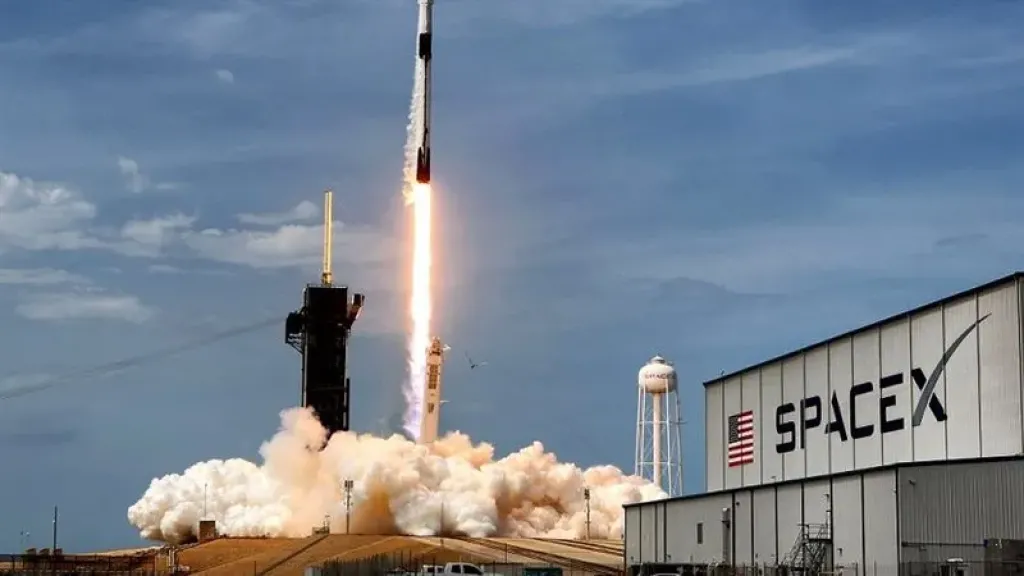
SpaceX is preparing for the 14th test flight of its colossal Starship launch system from its Starbase facility in South Texas. Targeting a launch window on September 22 (pending final regulatory clearance), the mission marks a defining inflection point for the development program: attempting to achieve Earth orbit for the first time after more than three years of suborbital flight tests.
Mission Profile and Orbital Objectives
The upcoming launch will push Starship beyond previous suborbital trajectories into sustained orbital operations:
Orbital Insertion: The upper stage of Starship will target an altitude of approximately 275 kilometers, completing multiple revolutions around Earth to validate thermal protection, orbital mechanics, and attitude control.
Re-entry and Splashdown: Following its orbital phase, the spacecraft will perform an atmospheric re-entry before executing a controlled splashdown in the Pacific Ocean west of Chile.
Super Heavy Booster Recovery: The Super Heavy booster will separate from the upper stage post-launch, maneuver back toward Earth, and attempt a controlled landing in a designated target zone in the Gulf of Mexico, advancing SpaceX’s iterative testing of booster reuse.
Operational Payload: Starlink Gen-3 Deployment
Moving beyond pure test architecture, Flight 14 introduces operational deployment capabilities:
Payload Delivery: Starship is slated to deploy 26 next-generation (Gen-3) Starlink satellites during the mission.
Commercial Validation: Successfully executing a satellite payload deployment in orbit will demonstrate Starship's viability as a commercial heavy-lift workhorse capable of servicing mega-constellations.
Strategic Significance
Achieving orbit represents the most critical engineering gate for Starship to date. Data gathered across prior flights—covering staged separation, engine reliability, heat-shield performance, and descent profiles—converges on this mission. A successful orbital test will pave the way for long-duration space missions, heavy payload commercial launches, and NASA's Artemis lunar landings, ultimately serving SpaceX's broader architecture for interplanetary travel to Mars.
related topics
 CI Capital Completes EGP 883M Securitization for Souhoola
 Ora Communication Targets More Than 30% Business Growth in 2026
 Saudi Arabia’s $5.3 Billion Deposit with Egypt’s Central Bank Due in October
 B Investments to Acquire 53.5% of BIG, Deepening Its Exposure to Madinet...
 Nissan Captures 34% of Egypt’s Locally Assembled Car Sales as Sunny Leads...
 Global 5G Subscriptions Projected to Reach 6.4 Billion by 2031, Driven by...
 Binance Bahrain Introduces Zero-Fee Local Currency Funding and Bank Transfers to Drive...
 Space42 and Viasat to Co-Found $1B 'Equatiss' Joint Venture for Direct-to-Device Satellite...
 US Dollar Nears Two-Week High on Surging Oil Prices, Yield Spikes, and...
 Gold Hovers Near $4,300/oz as Rising Oil and Fed Rate-Hike Bets Counter...
 Egyptian Exchange Closes in the Red as Profit-Taking Triggers Broad Sell-Off Across...
 Tabby Secures $233M at $6.5B Valuation to Fuel Expansion Beyond BNPL in...