


Food Export Council: Successful Exporting Begins with Information, Market Research, and Capacity Building; Services to be Digitized in 2026
hamdy Abdelrashid
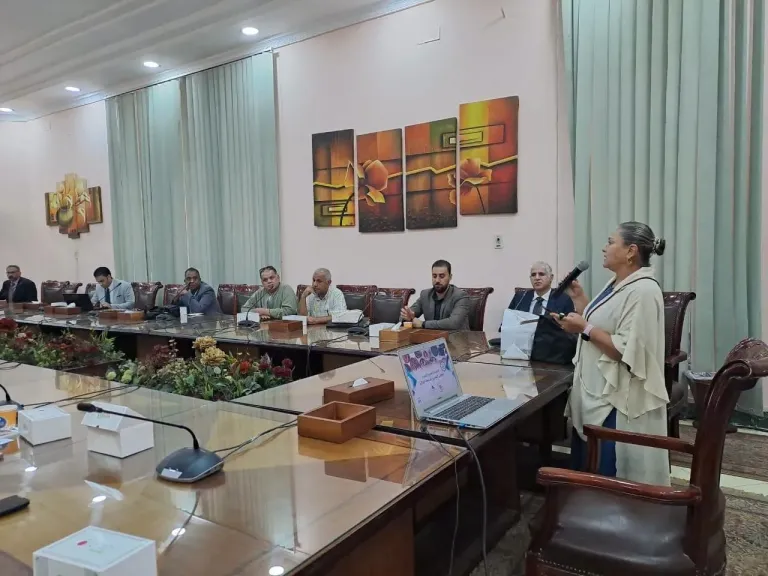
May Khairy, Executive Director of the Food Export Council (FEC), emphasized that successful exporting relies heavily on accurate information, comprehensive market research, and the thorough preparation of companies. Khairy's remarks came during her participation in the food industries sector session at Tanta University, chaired by Trade Commissioner Alaa El-Beily, Chairman of the Egypt Expo and Convention Authority (EECA).
The session was part of the second day of the "Egypt Takes Off with Exports" initiative, organized by the Ministry of Investment and Foreign Trade at Tanta University on July 29 and 30, under the auspices of the Prime Minister.
The event was attended by prominent figures, including Nariman Shehata, Head of the Central Administration for Foreign Exhibitions; Walid Ashour, Regional Director for the Delta region at the Industrial Modernization Centre (IMC); Dr. Ahmed Salem, Technical Office Manager at the Export Development Fund (EDF); and Moheb El-Mowafy, National Expert for the Honey Cluster Development in Gharbia at the United Nations Industrial Development Organization (UNIDO), alongside numerous businessmen and corporate representatives from the governorate.
During her address, Khairy outlined the FEC's comprehensive vision to boost Egyptian food exports, expand the exporter base, and unlock new markets. She affirmed that the Council is building an integrated ecosystem to serve exporters, encompassing banking solutions, shipping, logistics, quality assurance, certification, legal and technical consulting, and trademark registration. A dedicated contact person from service providers is assigned to ensure rapid communication and direct support for member companies.
Khairy added that the Council acts as a strategic link between exporting companies, government entities, foreign trade institutions, and service providers. This role facilitates conveying the business community’s needs to decision-makers and participating in drafting policies that support the growth of Egyptian food exports.
The FEC's role extends beyond promoting Egyptian products; it begins with capacity building and export-readiness preparation. The Council provides crucial market intelligence and helps companies select markets and products with real growth potential, culminating in direct networking with international buyers and importers.
Highlighting the sector's robust performance, Khairy noted that the food industry has become a primary driver of Egypt's non-petroleum exports. In the first half of 2026, the sector's exports reached approximately $3.77 billion, up from $3.41 billion during the same period in 2025. This marks a 10.5% growth, representing an increase of about $357 million. Arab countries accounted for roughly 46% of total sector exports, valued at $1.737 billion. Meanwhile, exports to the European Union rose to $852 million, and exports to the United States reached $255 million.
Participation in specialized international exhibitions remains a key tool for penetrating foreign markets. Khairy explained that the FEC organizes Egyptian pavilions, executes promotional activities, attracts buyers, and arranges B2B meetings. Furthermore, the Council’s trade missions are driven by precise studies of target markets, identifying the most competitive sectors and arranging direct site visits to wholesale and retail markets.
Khairy also pointed out the Council's dedication to developing the technical and managerial skills of corporate personnel through tailored training programs covering export skills, food safety, marketing, financial management, and waste reduction. The FEC has successfully built a knowledge library comprising over 200 specialized webinars on these critical topics.
Looking ahead, Khairy stressed that the digitalization of services is a central pillar of the Council’s action plan for 2026. By upgrading its website, the FEC aims to provide information and services more swiftly and efficiently, thereby accelerating companies' access to export opportunities, training programs, and market studies.
related topics
 Chamber of Woodworking and Furniture Industry Announces New Assiut Branch, Unveils Comprehensive...
 Egyptian Leather Chamber Outlines Global Exhibition Strategy to Boost Exports
 Chemical Export Council and GIZ Host Workshop on Green Transition, Launch EU...
 Egypt's Ready-Made Garment Exports Surge 15% to $1.775 Billion in H1 2026
 Chocolate and Edible Oils Drive the Growth of Egyptian Food Industry Exports...
 Egypt’s Printing and Packaging Exports Surge 14% to $525 Million in H1...
 Egypt’s Investment Minister Explores Boosting Exports to Africa with DP World
 Egypt Explores 4,200-Bed PPP Hospital Project in Cairo with Hassan Allam and...
 Egypt Opens Market to US Vehicle Safety Standards (FMVSS) During Investment Minister's...
 Elsewedy Industrial Development Allocates Land to Seven Egyptian Investors in Tanzania
 Egypt’s Investment Minister Discusses Local Manufacturing and Export Expansion with Procter &...
 Nelly Kids Fashion 2026 Fully Booked Weeks Ahead of Its 86th Edition...