


Green Real Estate in Egypt: Are Sustainable, Energy-Efficient Buildings Worth the Higher Price?
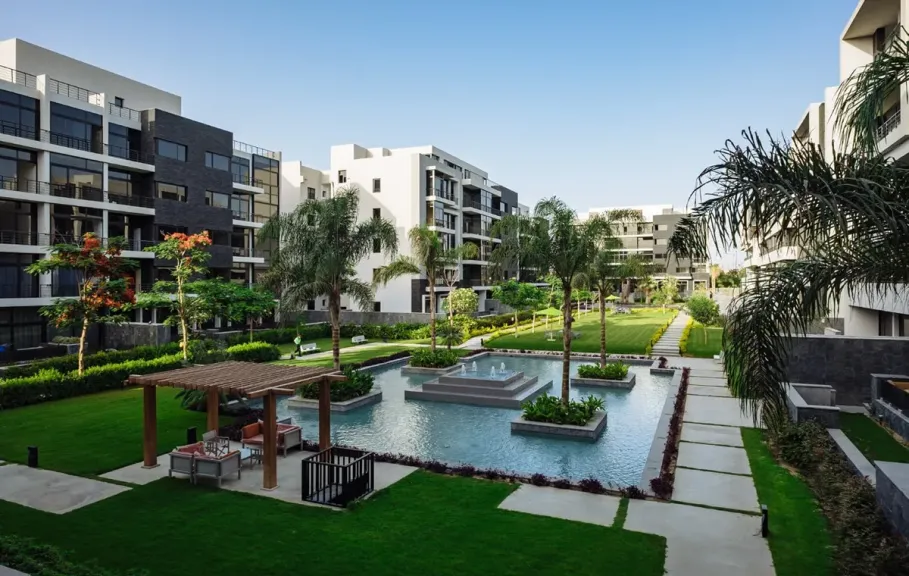
Egypt's real estate sector is gradually embracing green building practices as developers and policymakers place greater emphasis on energy efficiency, water conservation and environmental sustainability. Beyond their environmental benefits, sustainable buildings offer potential long-term savings through lower utility bills and reduced operating costs. This raises an important question for homebuyers and investors: do these benefits justify paying a premium for environmentally friendly properties?
The answer depends on the building's actual performance, construction quality and certification standards rather than its marketing description. Sustainable buildings typically incorporate thermal insulation, natural lighting and ventilation, energy-efficient air-conditioning systems, water-saving fixtures and improved waste management. These features aim to reduce resource consumption while improving indoor comfort.
Egypt's Green Building Framework
Egypt has developed a national sustainability assessment framework known as the Green Pyramid Rating System (GPRS), established by the Housing and Building National Research Center in cooperation with the Egyptian Green Building Council. The system evaluates buildings across several categories, including energy and water efficiency, construction materials, indoor environmental quality, sustainable sites and building management.
Green construction practices have also entered Egypt's social housing program. In September 2022, the World Bank reported that the program had adopted the Green Pyramid Rating System, with an initial pilot covering 7,000 housing units and an expansion target of 25,000 units. The approach includes improved building orientation, thermal insulation and environmentally friendly construction materials to reduce dependence on air-conditioning and fans.
Certification and Sustainable Building Performance
Several green building certification systems operate in Egypt, including the local Green Pyramid Rating System, the International Finance Corporation's EDGE certification, the US-based LEED system and TARSHEED. These frameworks provide measurable criteria for assessing environmental performance rather than relying solely on developers' sustainability claims.
EDGE is particularly relevant to emerging markets because it focuses on energy efficiency, water efficiency and the embodied energy of construction materials. Its certification framework requires buildings to achieve at least 20% savings in each of these three areas compared with a conventional baseline.
Egyptian Projects Demonstrate the Potential
The Grand Egyptian Museum is among Egypt's most prominent examples of sustainable construction. In February 2024, it received EDGE Advanced certification from the IFC, becoming the first museum in Africa and the Middle East to obtain this recognition. According to the IFC, its design is expected to deliver energy-cost savings exceeding 60% and reduce water consumption by 34% compared with a conventional building of similar type and size.
The project incorporates reflective roofing, external shading, efficient lighting and water fixtures, alongside smart energy-monitoring systems.
Sustainability certification has also expanded into commercial real estate. In May 2024, five buildings within Redcon Properties' Golden Gate development in New Cairo received EDGE Advanced certification. Buildings in SODIC's Eastown District development had previously obtained the same certification in December 2023.
Do Energy Savings Justify the Premium?
The financial case for green buildings should be assessed through their total cost of ownership, rather than purchase prices alone. This includes acquisition costs, maintenance, electricity and water bills over the property's lifetime. A higher initial price may be economically justified if operational savings outweigh the additional investment within a reasonable period.
A 2025 academic study examining thermal insulation in residential buildings across 11 Egyptian cities found that extruded polystyrene insulation could reduce cooling energy consumption by between 11% and 67%, depending on climate, building orientation and local conditions. The study estimated annual savings of EGP 1,319 to EGP 3,710 per building under its simulated scenarios. These findings highlight the potential benefits of insulation, although actual savings will vary between properties.
Higher Initial Costs Remain a Challenge
Despite these potential benefits, upfront construction costs remain an obstacle to wider adoption. The OECD's 2024 Green Growth Policy Review of Egypt highlighted the relatively high initial costs of green building design and the need for economic incentives to encourage wider implementation. It also identified weaknesses in the enforcement of existing building regulations.
For buyers, paying a premium is more defensible when developers provide recognized certification, documented energy and water performance, detailed insulation and equipment specifications, and transparent estimates of maintenance and operating expenses. Without measurable evidence, describing a property as environmentally friendly is not sufficient to justify a higher price.
Ultimately, the investment case for sustainable real estate in Egypt depends on verified operating savings, construction quality, maintenance requirements and the time needed to recover the initial price premium.
related topics
 Emirates NBD Announces Participation as Premier Banking Partner at Dubai Fintech Summit...
 Egypt Showcases Its Innovative Financing Strategy and Economic Resilience at the ”SDG...
 Investment and Tech Partnerships Exceeding EGP 6 Billion: ”Uptown 6th of October”...
 Ericsson Brings Next-Generation Connectivity and AI-Driven Network Innovation to Cairo ICT 2026
 Gated Communities vs. Open Neighborhoods in Egypt: Housing Costs, Services and Investment...
 QNET Highlights HomePure Water Purification Solutions at Cairo Water Week 2026
 Al Baraka Bank Egypt Executive Calls for Closer Banking and Non-Banking Integration...
 Commercial Real Estate Investment in Egypt: How to Choose a Shop or...
 Qatari Partnership Between Retaj and Al Jazeera Finance to Provide Real Estate...
 Property Exit Launches in Egypt to Bring Data and Exit Planning Into...
 Real Estate Investment Funds and Crowdfunding Platforms: A New Model Reshaping Real...
 How to Calculate Fair Apartment Prices in Egypt: 7 Key Property Valuation...