


Al Baraka Bank Egypt Executive Calls for Closer Banking and Non-Banking Integration as Regulation Evolves
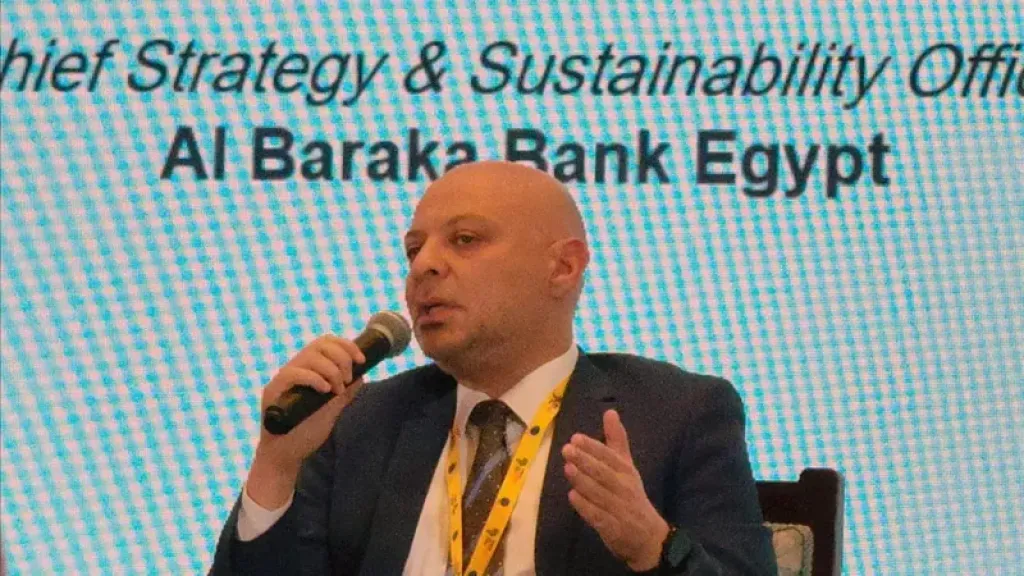
Waseem El-Metwally, Head of Strategic Planning at Al Baraka Bank Egypt, highlighted the strength of Egypt’s financial regulatory system, saying the country has supervisory institutions capable of supporting innovation as fintech companies expand and new financial business models emerge.
Speaking at the eighth Africa Fintech Forum in Cairo during a session focused on the practical governance of regulatory organizations and the alignment of banking and non-banking innovation, El-Metwally said Egypt’s banking industry has demonstrated considerable resilience through successive financial, political and economic challenges.
A Regulatory System Evolving With the Market
El-Metwally pointed to the development of Egypt’s regulatory environment in recent years, particularly in sustainable finance.
He explained that the Central Bank of Egypt initially introduced guidelines for sustainable finance before developing more defined regulatory requirements. This evolution has been accompanied by increasing support from international and development institutions seeking to strengthen sustainable financial practices.
The regulatory transformation has also extended to non-bank financial activities. Rules issued by the Financial Regulatory Authority have contributed to changes across the market, reflecting a broader move away from a purely traditional supervisory approach toward creating an environment that enables businesses to grow while maintaining market integrity and protecting customers.
Traditional Banking Models Face New Pressures
El-Metwally said banks can no longer rely exclusively on traditional operating models as technology continues to reshape financial services and customer expectations.
He emphasized the importance of reaching underserved customer segments and adopting a more collaborative mindset toward non-bank financial institutions.
Rather than treating non-bank finance companies as direct competitors, banks should explore opportunities for cooperation, partnerships and acquisitions, he said.
Greater integration between the two sides could expand access to financial services and allow institutions to serve a wider range of customers as technology-driven business models continue to develop.
Al Baraka Bank’s Financial Leasing Acquisition
El-Metwally cited Al Baraka Bank Egypt’s recent acquisition of a financial leasing company as an example of how banks can broaden their activities beyond conventional banking.
The transaction, completed last month, demonstrates the potential of combining banking and non-banking financial activities and gives financial institutions additional financing models through which they can respond to market demand.
He noted that banks that successfully combine regulatory compliance with business-model development will be better positioned to compete and capture new opportunities.
However, operating across several regulatory frameworks can also create additional challenges, particularly for institutions required to comply with different sets of rules simultaneously.
Multiple Layers of Compliance
According to El-Metwally, Al Baraka Bank Egypt operates under several regulatory and governance requirements.
The bank is subject to Central Bank of Egypt regulations as a banking institution, capital-market rules because it is listed on the stock exchange, and Islamic Sharia requirements governing its activities.
Managing these obligations requires an integrated governance structure capable of addressing banking, capital-market and Sharia requirements at the same time.
El-Metwally acknowledged that multiple regulatory frameworks can sometimes reduce flexibility and add complexity to certain activities. However, he said they also strengthen institutional governance and compliance.
Strong Governance Opens Access to Global Financing
The Al Baraka Bank executive said strong compliance with governance standards, regulatory requirements and Sharia principles can strengthen banks’ relationships with international financial institutions.
Such compliance frameworks can improve access to international partnerships and financing instruments on competitive terms, including financing available at special pricing.
El-Metwally concluded that while dealing with multiple regulators and differing requirements can be challenging, a strong governance and compliance structure ultimately gives financial institutions a stronger foundation for expansion, international cooperation and the development of new financial services.
related topics
 LuLu Financial Holdings Partners with Purpleplum to Enhance Digital Corporate Banking in...
 Egypt Mortgage Finance Initiatives: Eligibility Requirements, Interest Rates and Required Documents
 Fawaterak Partners with Premium Card to Provide Flexible Installment Solutions for Merchants
 SuperPay Reaches Operating Profitability in Under Three Years as It Breaks Into...
 Raya Holding Launches “Raya Ventures” and Secures First Investment in UK AI...
 US Dollar Exchange Rates Stabilize Today, Tuesday, October 27, 2026, in Egyptian...
 Sahl Partners With Egypt’s Water Utility to Digitize Bill Collection
 Central Bank of Egypt Sponsors 13th PAFIX Conference to Discuss the Future...
 iExperts Completes First SOC 2 Audit Report for OPay to Enhance Cybersecurity...
 EBE E-Payments Renews PCI DSS v4.0.1 Compliance Standard in Partnership with Zerosploit...
 Checkout.com Partners with PRYPCO to Advance the Future of Digital Real Estate...
 US Dollar Exchange Rates Hold Steady Against Egyptian Pound on Monday, October...