


UAE Secures Unprecedented Global Record with 70.1% AI Adoption Rate Among Workforce
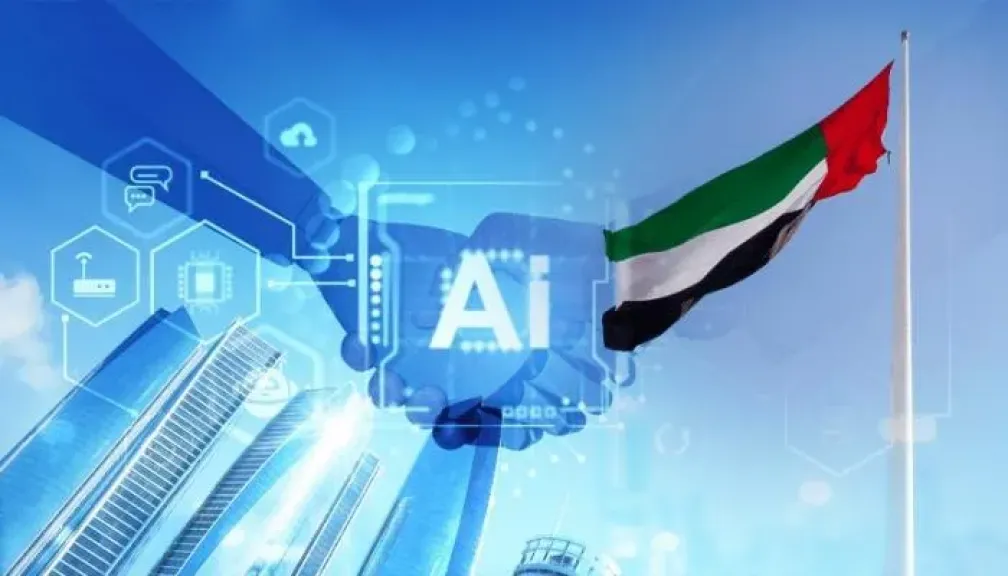
The United Arab Emirates has recorded an unprecedented global milestone in the adoption of artificial intelligence technologies. The utilization rate of smart tools among its working-age population reached a historic 70.1% during the first quarter of 2026, making the UAE the first country in the world to surpass this level of digital penetration.
Outpacing Advanced Global Economies This record-breaking figure reflects an aggressive acceleration in integrating artificial intelligence across various domestic sectors, including corporate workplaces, educational institutions, and daily public services. According to global deployment indices, the UAE has firmly outpaced several of the world's leading advanced economies, including Singapore, Norway, Ireland, and the United Kingdom.
The upward trajectory highlights a rapid surge, with adoption metrics climbing from 59.4% to 64%, before peaking at 70.1% in a short period. This shift underscores a clear transformation in how smart applications are deployed within institutions and by individuals, embedding these technologies deeper into macroeconomic and professional activities.
Infrastructure Investment and Strategic Alliances The compiled data reveals that the UAE outstrips the global average for artificial intelligence adoption by more than fourfold; the international benchmark among the working-age demographic hovered at just 17.8% during the same tracking period. This vast disparity highlights a growing global digital divide in adopting emerging technologies.
Industry analysts attribute the UAE’s leadership to an integrated ecosystem of progressive government frameworks, sustained capital injections into digital infrastructure, and a rapid expansion of cloud computing utilities. Furthermore, aggressive nationwide digital upskilling campaigns and robust institutional support for innovation have accelerated the mainstreaming of AI utilities. Massive capital outlays in hyper-scale data centers and frontier technologies—alongside high-level alliances with global tech conglomerates, led by Microsoft—have structurally enhanced the state's digital capacity. This performance signals a transition toward an AI-driven economy, where smart systems are no longer experimental but serve as foundational components of daily institutional workflows, projected to drive substantial gains in productivity and economic growth.
related topics
 Egypt to Participate in Inclusive Africa Conference 2026 in Nairobi; Events to...
 Block-Clearing Startup Cycles Raises $6.4M Seed Extension Led by Blockchange to Overhaul...
 Egypt University of Informatics (EUI) Hosts Major Job Fair, Bridging Digital Talent...
 Deep Knowledge Group Launches FemTech Platform in Dubai, Mapping a High-Growth Ecosystem...
 UAE Cabinet Approves National Reading Policy: A Strategic Roadmap Towards a Knowledge-Based...
 Knowledge Summit Marks Its 10th Edition Tomorrow at Dubai World Trade Centre
 Decade of Global Influence: Knowledge Summit 2025 Poised to Shape the Future...