


GITEX 2026: Midis Group Bridges the Gap Between AI Technology and Real-World Deployment
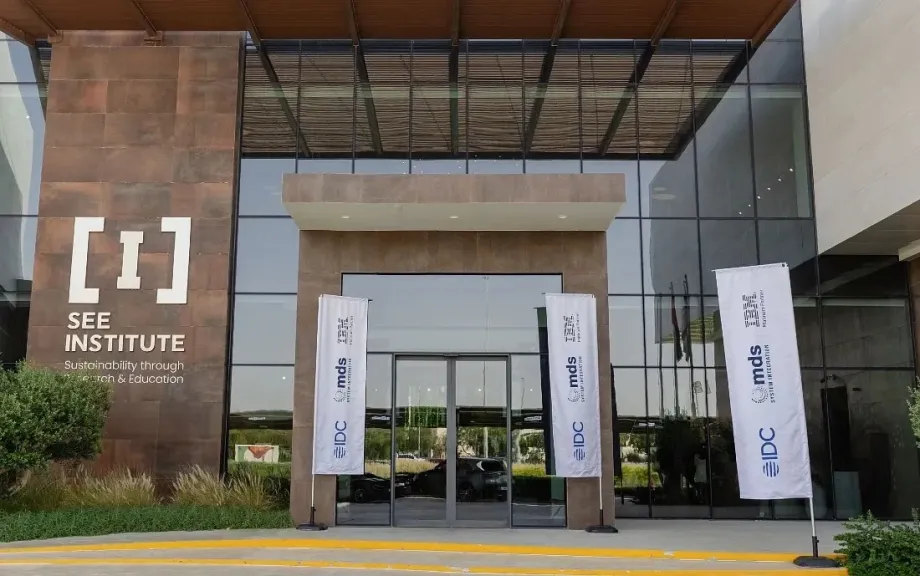
GITEX 2026: Midis Group Bridges the Gap Between AI Technology and Real-World Deployment
Walk through GITEX GLOBAL and almost every layer of the artificial intelligence ecosystem is on display.
There are GPUs designed to train increasingly large models, networking systems connecting thousands of accelerators, storage platforms handling massive data volumes, cybersecurity technologies protecting complex infrastructure and AI agents promising to automate business processes.
The technology is advancing rapidly.
Deploying it inside a bank, government agency, telecom operator or large enterprise is considerably more complicated.
That gap between what global technology companies develop and what organizations can actually deploy is where Midis Group has built its business over several decades.
The group returns to GITEX GLOBAL 2026 as the event’s Majlis Sponsor, but its role extends beyond the VIP lounge carrying its name.
Operating across more than 35 countries, Midis connects more than 100 global technology brands with customers across emerging markets in the Middle East, Africa and Eastern Europe.
As AI infrastructure becomes more complex, that intermediary role is evolving.
The challenge is no longer simply bringing international technology into local markets. It is combining AI, cloud, cybersecurity, networking, data infrastructure and professional services into systems that organizations can actually operate.
AI Has Created an Integration Problem
Artificial intelligence is often described as a software revolution, but enterprise deployment tells a much more complicated story.
A large organization may need accelerators and servers. Those systems require networking, while the network needs security.
AI models also require data, and that data needs storage, governance and protection.
Applications may operate across public cloud, private cloud and on-premises environments, while the entire infrastructure requires power, cooling, monitoring, integration and ongoing support.
No single vendor necessarily provides every component.
As a result, the AI boom is creating a major systems-integration challenge, placing companies such as Midis at the center of the deployment process.
More Than 100 Technology Partners
Midis has developed an ecosystem involving more than 100 global technology partners.
Its businesses operate across several models, including systems integration, multi-brand distribution, single-brand distribution, local representation and retail.
This structure allows the group to participate at multiple stages of the technology value chain.
One Midis company can distribute a technology, another can represent a vendor locally, while another can integrate multiple technologies into an enterprise environment and provide services after deployment.
That approach is increasingly relevant because enterprise AI requires combinations rather than isolated products.
A customer may need compute, storage, networking, cybersecurity, backup, virtualization and professional services working together.
The Innovation Is the Ecosystem
For many technology companies appearing at GITEX, there is a specific product or platform that defines their presence.
Midis Group presents a different proposition.
Its strength lies in assembling technology ecosystems across complex markets.
The group has spent more than 50 years helping international technology companies enter and expand across emerging EMEA markets.
That experience includes navigating local regulations, commercial structures, financing requirements, procurement processes, customer expectations and technical environments.
AI makes that expertise increasingly valuable because a single deployment can involve a growing number of technologies and vendors.
Someone still needs to make those different components operate as one system.
Saudi Arabia Shows How Midis Is Moving Deeper Into AI
A September agreement in Saudi Arabia illustrates how Midis is expanding its AI role.
MDS for Computer Systems, part of the Midis ecosystem, signed a strategic collaboration with Saudi AI company MOZN.
The partnership combines MDS CS’s experience in digital transformation, data and AI, systems integration and complex project delivery with MOZN’s artificial intelligence technologies.
MOZN develops AI products for banks, telecom operators, insurers and other enterprises.
The significance of the partnership extends beyond adding another AI company to the group’s ecosystem.
It demonstrates how Midis can combine regional AI technology with local implementation capabilities.
That model is becoming increasingly important as Middle Eastern countries develop their own AI companies, models and platforms rather than relying exclusively on imported technologies.
The Next AI Stack Could Be More Local
Cloud computing was largely shaped by a relatively small group of global hyperscalers.
AI could develop differently.
Global technology companies will remain critical, particularly at the infrastructure and model layers, but governments increasingly want sovereign computing capabilities.
Enterprises also want sensitive data to remain within specific jurisdictions, while Arabic AI models and regional technology companies continue to develop.
The result could be an AI technology stack combining global and local components.
An organization could use international computing infrastructure, regional AI software, locally hosted data and country-specific cybersecurity and regulatory controls.
Midis is positioned within those combinations.
Cybersecurity Is Becoming Part of Every AI Deployment
AI adoption introduces another major challenge.
Every intelligent system can create additional data flows, identities, applications and potential attack surfaces.
Midis has continued expanding its cybersecurity ecosystem during 2026.
In the UAE, CA MENA strengthened its portfolio through a partnership with DECE Software.
DECE’s technology uses AI for data discovery, classification, enterprise search, masking, remediation and policy-based protection.
Its GEODI data security posture management technology is designed to identify sensitive information across cloud and on-premises environments, understand its context and help organizations govern it throughout its lifecycle.
That capability is becoming increasingly important as organizations give AI systems access to corporate information.
Before an AI agent can safely work with enterprise data, organizations need to understand where that information is, what it contains and whether the agent should have access to it.
AI Makes Data Discovery a Security Requirement
Consider an organization holding millions of files accumulated over decades.
Some could contain customer information, employee records, contracts, financial data, intellectual property or confidential correspondence.
That information may be distributed across servers, applications and cloud environments.
Enterprise AI can make previously difficult-to-access information much easier to discover.
That creates significant productivity opportunities, but it also creates security risks.
If an AI assistant can locate information faster than a human, improperly configured permissions could also allow sensitive information to be exposed more quickly.
Technologies that classify, govern and protect enterprise information are therefore becoming part of the AI infrastructure itself.
Midis’ expanding cybersecurity portfolio reflects this convergence.
GITEX Nigeria Revealed the Broader Strategy
Midis Group’s participation in GITEX Nigeria 2026 offers another indication of the direction of its strategy.
The group participated as Emerging Technologies Partner and brought together affiliates and technology partners including HPE operated by Selectium, IBM operated by MIBB, MBCOM’s VMware division, Quest Software and Cohesity.
The focus was broader than any individual product.
The discussions centered on building a trusted digital economy around AI, including the relationship between AI adoption, infrastructure, cybersecurity, data protection and resilience.
That combination is becoming increasingly important.
Organizations cannot simply deploy AI and consider the transformation complete. The surrounding infrastructure must also be capable of supporting the technology securely and reliably.
AI Data Centers Are Becoming Integration Projects
The growing complexity is particularly visible in AI data centers.
Traditional enterprise data centers already contain equipment from numerous vendors.
AI factories multiply that complexity.
Compute systems may come from one supplier, networking from another and storage from another, while cooling and power infrastructure require additional specialists.
Virtualization, orchestration, backup and cybersecurity introduce further layers.
Midis businesses operate across many of these technology categories.
That creates an opportunity as customers move away from purchasing isolated infrastructure products toward building complete AI environments.
The key commercial question increasingly becomes not which individual server is fastest, but whether the entire infrastructure can be deployed, integrated and supported effectively.
AI Infrastructure Still Needs Power and Cooling
One part of the Midis ecosystem highlights how far the technology stack now extends.
MDS SI Group has worked with Vertiv on critical digital infrastructure, an area becoming increasingly relevant as GPU density rises.
AI servers consume more power than conventional enterprise systems and generate significantly more heat.
This is accelerating demand for liquid cooling, high-density power distribution and new data-center designs.
As a result, AI strategy is increasingly connected to electrical and mechanical infrastructure.
A CIO planning an AI deployment may ultimately need to consider transformers, cooling systems and megawatts alongside AI models and software.
For systems integrators, the traditional boundary between IT and physical infrastructure is becoming less distinct.
Distribution Is Also Changing in the AI Era
Midis is not only a systems integration group.
Its distribution businesses provide another perspective on the changing technology market.
AI vendors need access to resellers, integrators and enterprise customers across multiple countries.
Those markets have different currencies, regulations, financing conditions and commercial risks.
A modern distributor does more than move products between warehouses.
It can provide financing, technical expertise, partner enablement, training, market development and local support.
As AI products become more complex, this technical and commercial layer becomes increasingly important.
Partners selling AI infrastructure need to understand how the technology works, not simply its price.
Financial Strength Becomes a Technology Advantage
Large technology projects also require significant working capital.
Midis describes itself as a multi-billion-dollar organization capable of supporting requirements including startup investments, order fulfillment and project guarantees.
This financial dimension can be overlooked when discussing technology.
A major AI infrastructure project may involve equipment being ordered months before the customer completes payment.
Inventory needs to be financed, guarantees may be required and someone must manage currency and commercial risks.
In emerging markets, these factors can determine whether a technically viable project actually moves forward.
Midis’ role therefore extends beyond engineering and integration to include part of the commercial infrastructure behind technology deployment.
Why the Majlis Sponsorship Matters
Midis Group’s sponsorship category at GITEX is closely aligned with its business model.
The company is the Majlis Sponsor, with the Majlis VIP Lounge serving as a meeting environment for senior executives, technology leaders and enterprise decision-makers.
While that may appear less technology-focused than sponsoring a major conference stage, it fits Midis’ approach.
The group operates through relationships connecting global technology companies with regional organizations and governments.
Large infrastructure, AI and digital-transformation projects are rarely concluded through product demonstrations alone.
They require partnerships, financing, implementation capabilities and local market knowledge.
Many begin with conversations between executives deciding how multiple companies can work together.
Midis Has Been Building Its Technology Network for Decades
Midis Group’s relationship with GITEX extends back more than three decades.
Its Majlis presence has also become a recurring part of its GITEX strategy, while multiple Midis affiliates have appeared across the exhibition floor alongside global technology partners at previous editions.
That distributed presence reflects the structure of the group.
Midis does not need every technology to carry its own brand.
Its influence often exists behind the companies, infrastructure and partnerships being presented.
Why 2026 Is Different
The technology market in 2026 is changing the value of that position.
Enterprise IT once developed across relatively separate categories.
Networking teams managed networks, security teams purchased security technologies, infrastructure teams managed servers and cloud teams handled cloud environments.
AI is increasingly breaking down those boundaries.
A successful AI project can require infrastructure, networking, data management, cybersecurity, cloud services and business-process transformation at the same time.
That favors organizations capable of working across multiple technology domains.
It also creates opportunities for regional integrators to move higher up the technology value chain.
Instead of simply implementing a technology after a vendor sells it, integrators can increasingly help design the architecture itself.
What to Expect From Midis Group at GITEX 2026
Midis Group is confirmed as the Majlis Sponsor for GITEX GLOBAL 2026, although a complete list of group-wide product announcements for Dubai has not yet been published.
Midis should therefore not be viewed in the same way as companies such as NVIDIA, Snowflake or Telnyx.
There is unlikely to be one device or AI model defining its entire presence.
The stronger story is the ecosystem.
Recent activity suggests that AI, cybersecurity, data protection, cloud infrastructure and enterprise transformation will remain central themes.
The MOZN collaboration demonstrates deeper engagement with regional AI.
The DECE partnership highlights the growing importance of AI-driven data security.
Its GITEX Nigeria participation shows how the group is connecting infrastructure, cybersecurity and resilience around AI adoption.
Meanwhile, its network of global partners provides the technologies required to turn these strategies into enterprise systems.
GITEX will be filled with companies explaining what their latest technologies can do.
Midis Group occupies a different position.
Its opportunity is to answer the question that comes immediately afterward: who is going to put all of those technologies together?
related topics
 GITEX 2026: Netris Wants to Turn Massive GPU Clusters Into AI Clouds
 The Next Climate Sensor May Be 500 Kilometers Above Us - SatLeo...
 GITEX 2026: Legora Brings Agentic AI to Transform Legal Work
 GITEX 2026: Telnyx Brings AI Voice Agents to the Middle East
 Airlines Have Spent Decades Guessing What Extras Should Cost - ABRIAL Wants...
 Microsoft Is Preparing for a Workplace With Thousands of AI Agents
 GITEX 2026: NinjaOne Brings an AI Technician to Enterprise IT Teams
 GITEX 2026: Snowflake Puts AI Agents at the Center of Enterprise Data
 GITEX 2026: Supermicro Scales AI Data Centers From 5MW to 1GW
 GITEX 2026 Preview: NVIDIA Pushes for More AI Computing From Every Watt
 GITEX 2026 Preview: Huawei Brings Agentic AI Infrastructure Race to Dubai
 Vodafone Egypt Expands Social Impact to 11 Million Beneficiaries Through Digital Education,...