


Egypt’s Digital Transformation Needs to Move Beyond Putting Government Services Online, Says Ehab Said
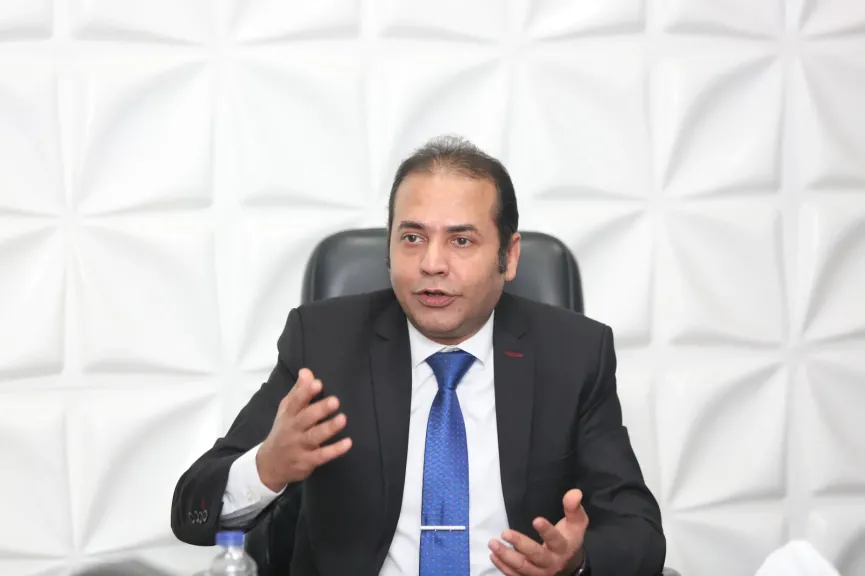
Egypt’s digital transformation has reached a point where success can no longer be measured by how many government services have moved online, according to Ehab Said, who argues that the next phase must focus on whether digitalization actually saves citizens and businesses time, money and repeated bureaucracy.
Said, Chairman of the Communications, Information Technology and Electronic Payments Division at the Federation of Egyptian Chambers of Commerce and a board member of the Cairo Chamber of Commerce, said the upcoming Egypt Forum 2026 should provide an opportunity to assess the country’s digital journey against its real impact on citizens, investors and businesses.
His argument points to a shift in the digital transformation debate. After years focused heavily on infrastructure, platforms and bringing services online, the challenge is increasingly about connecting government databases, redesigning processes before digitizing them and ensuring that different systems can communicate with one another.
Digitizing a Procedure Is Not the Same as Redesigning It
Egypt has made significant progress in telecommunications infrastructure, digital government services, skills development, entrepreneurship and the startup ecosystem, Said noted.
The expansion of Digital Egypt and other government and sector-specific platforms has also changed how a growing number of services are delivered.
But putting an existing administrative process online does not necessarily make it more efficient.
Said called for a shift from simply “digitizing the procedure” toward re-engineering the procedure itself before converting it into an electronic service.
That distinction becomes particularly important when citizens or investors still have to submit the same documents and information to multiple government bodies despite dealing with digital platforms.
For Said, the next challenge is therefore interoperability rather than simply adding more individual online services.
Government Databases Need to Work as One Ecosystem
Data integration between public institutions is one of the most important gaps that the next phase should address, according to Said.
Citizens and investors should not bear the consequences when government databases are unable to exchange information or when separate authorities repeatedly request information already held elsewhere in the state system.
Greater interoperability could allow services to use verified information already available within government databases, reducing duplication and potentially shortening the time required to complete transactions.
This would move Egypt closer to a model where government digital services operate as an interconnected ecosystem rather than a collection of independent platforms.
The Real Digital Transformation KPI Is the User Experience
Said also challenged the way progress in digital government is measured.
Instead of focusing primarily on the number of services made available electronically, he called for indicators that measure completion times, costs, ease of use, adoption rates and interoperability between government entities.
Such metrics would place the citizen and investor experience at the center of evaluating digital transformation.
Accessibility is another part of that equation.
Digital government services must be usable not only by people already comfortable with technology but also by citizens who require assistance navigating electronic systems.
Said therefore called for simpler interfaces, greater digital awareness and alternative support mechanisms for users who may struggle with fully digital processes.
AI Creates a New Regulatory Challenge
The next phase will also require Egypt’s regulatory framework to keep pace with technologies that were far less prominent when earlier digital transformation programs began.
Artificial intelligence is becoming particularly important.
Said called for wider adoption of AI across government services and the economy, including its use for data analysis, decision support and improving service efficiency.
But he argued that expansion should take place under clear governance rules covering responsible use and data protection.
The challenge will be to establish safeguards that maintain trust without creating regulatory barriers that unnecessarily slow innovation or investment.
That same balance applies more broadly to electronic transactions and the growing volumes of data moving through digital systems.
Data Centers Become Part of the Digital Sovereignty Equation
As government services, cloud computing and AI generate greater volumes of data, Said identified data centers as another strategic component of Egypt’s next digital phase.
Expanding domestic data center capacity could allow more digital services and workloads to be hosted locally while creating new technology infrastructure investment opportunities.
The issue becomes increasingly important as AI applications require significantly greater computing and data-processing resources.
For Egypt, Said sees the sector not merely as infrastructure but as part of strengthening the country’s digital sovereignty and its ability to host and operate more services within the domestic market.
Technology Investment Still Depends on People
Infrastructure alone will not determine whether the next stage succeeds.
Said called for continued investment in skills across software development, artificial intelligence, data analytics, cybersecurity and fintech, with training programs more closely connected to the actual requirements of employers.
The private sector should also play a greater role in shaping the next phase, he argued, because telecommunications companies, technology providers, financial services firms and startups are directly exposed to changing market requirements and emerging technologies.
Bringing those companies into the policy discussion could help identify practical barriers to investment and innovation before they become embedded in regulation or implementation.
Egypt Forum 2026 Could Shift the Conversation From Digital Services to Digital Impact
For Said, Egypt Forum 2026 should not become simply a showcase of what has already been achieved.
He sees the event as an opportunity to examine where implementation remains fragmented and what is required to move from building digital infrastructure and electronic services toward a more integrated digital economy.
That means asking different questions.
How long does a digital service actually take to complete? How much bureaucracy has disappeared rather than simply moved online? Can government entities exchange data without asking the citizen to act as the intermediary? Are services accessible to people with different levels of digital literacy? And are regulations evolving quickly enough to accommodate AI without undermining privacy or innovation?
The next phase of Egypt’s digital transformation, in Said’s view, will therefore be judged less by how much technology the country deploys and more by what that technology actually changes — for citizens trying to complete a service, businesses trying to operate efficiently and investors deciding whether the market is easy to navigate.
related topics
 Prime Minister Reviews ”Digital Egypt” Session Pillars Amid Preparations for ”Egypt Forum...
 Egypt Post Marks 160 Years of National Service with a Digital-First Vision
 Egypt Trust Leads the Digital Certification Sector to Enhance Digital Sustainability and...
 Microsoft Takes Center Stage at Cairo ICT, Driving AI Solutions and Digital...
 Noventiq Highlights AI, Cloud and Cybersecurity Strategy Ahead of Cairo ICT 2026
 Cairo ICT Turns 30 With a Bigger Question: Can AI Move From...
 Strategic Partnership Between Communications and Labor Ministries to Boost Digital Transformation and...
 Egyptian EdTech Startup STEMulator Turns Kids Into Robot Builders as Saudi Schools...
 Egypt Opens Government GPU Infrastructure to Universities to Power AI Research
 RAVEN-X, Aorta Vision and RoboCare Lead Winners at Egypt’s University Innovation Summit...
 Hisham Mahran: Meeting President El-Sisi Marks a New Chapter for Orange Egypt’s...
 Egypt Puts Cybersecurity at the Heart of Digital Sovereignty as Arab Security...