


Cairo ICT Turns 30 With a Bigger Question: Can AI Move From Hype to Real Economic Impact?
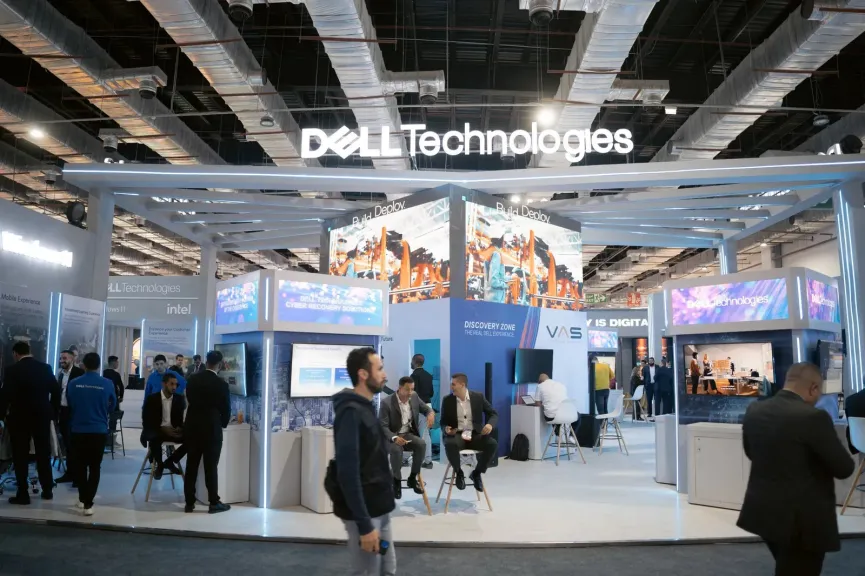
For three decades, Cairo ICT has tracked almost every major shift in Egypt’s technology market — from the early expansion of the internet and mobile networks to cloud computing, fintech, 5G and artificial intelligence.
In 2026, however, the exhibition is arriving at a very different moment.
The question is no longer whether Egyptian companies will adopt AI, cloud infrastructure or digital payments. It is how quickly those technologies can move into real operations — running telecom networks, detecting financial fraud, securing critical infrastructure, improving government services and supporting the next generation of data centers.
That shift sits at the heart of the 30th edition of Cairo ICT, scheduled to take place from November 7 to 10, 2026 at the Egypt International Exhibition Center in New Cairo, under the theme “AI in Action – Turning Intelligence into Impact.”
The theme gives this year’s event a noticeably different proposition: moving the conversation away from what AI might eventually do and toward what businesses can actually deploy today.
From Technology Showcase to an Execution Test
Cairo ICT has grown alongside Egypt’s technology industry since its launch in 1996.
The market it serves today bears little resemblance to the one that attended the exhibition three decades ago.
Egypt now has commercial 5G networks, a rapidly expanding digital payments ecosystem, growing cloud adoption, major data center investment plans and a technology sector increasingly focused on exporting digital services.
That makes the 30th edition more than an anniversary.
It provides an opportunity to measure how far Egypt has moved from building basic digital infrastructure toward extracting economic value from it.
The scale of the previous edition illustrates how large the platform has become. Cairo ICT 2025 attracted 161,280 visitors, more than 580 exhibiting companies and over 550 speakers, with 95 conference sessions and companies representing 17 countries.
Around 30 memoranda of understanding were signed during the event.
For 2026, the organizers are again preparing for more than 580 exhibitors across approximately 55,000 square meters of exhibition space.
But numbers alone are unlikely to define the success of this edition.
The more important measure will be what happens after companies leave the exhibition halls: which demonstrations become deployments, which agreements turn into investments and which AI projects move beyond pilot stages.
AI in Action Changes the Conversation
Artificial intelligence dominated technology conferences throughout the past few years. Cairo ICT 2026 is attempting to push that conversation into its next phase.
AI in Action is expected to focus on applications across cybersecurity, energy, agriculture, water management, media, entertainment, marketing and real estate, alongside its expanding role in telecommunications and financial services.
The distinction matters.
Companies are increasingly under pressure to demonstrate measurable returns from AI spending rather than simply announce experiments with generative models.
For telecom operators, that could mean using AI to optimize networks, anticipate failures and manage energy consumption.
Banks and financial institutions can apply it to fraud detection, risk assessment and customer service.
Cybersecurity providers are increasingly using AI to detect abnormal behavior and accelerate incident response, while enterprises are deploying it to automate workflows and analyze growing volumes of operational data.
Cairo ICT 2026 will therefore provide an interesting snapshot of whether the Egyptian market is beginning to cross the gap between AI experimentation and AI at scale.
The Infrastructure Behind AI Takes Center Stage
Perhaps the most important technology story at this year’s exhibition will not be AI itself.
It will be the infrastructure required to run it.
The dedicated AIDC Expo will bring artificial intelligence, data centers and cloud computing into one platform, reflecting the growing relationship between computing power and the next phase of digital transformation.
AI workloads require far greater computing capacity than traditional enterprise applications, putting data centers, processors, networking, cooling and electricity infrastructure under increasing pressure.
This is particularly relevant for Egypt.
The country is seeking to leverage its geographic position and extensive international connectivity to expand its role in the regional data economy, while new data center projects are beginning to attract substantial investment.
That changes the discussion from simply asking where data will be stored to asking where AI will actually be computed.
AIDC is expected to bring together data center operators, cloud providers, system integrators, infrastructure companies and public-sector stakeholders.
Energy efficiency, cooling, cybersecurity, data sovereignty and AI computing capacity are likely to become some of the most important conversations surrounding the exhibition.
5G Faces Its First Real Cairo ICT Test
Telecommunications will also enter Cairo ICT 2026 under different conditions.
Egypt has moved beyond discussing when 5G will arrive. Commercial services are already operating.
The next question is what the market will actually do with them.
For Telecom Egypt, Vodafone Egypt, Orange Egypt and e& Egypt, the opportunity increasingly lies beyond selling faster mobile connections.
5G can support enterprise connectivity, industrial applications, Internet of Things deployments, smart infrastructure and private-network use cases.
That means network demonstrations at technology exhibitions are becoming less relevant unless they are connected to practical applications.
Cairo ICT could therefore provide one of the first major opportunities after Egypt’s 5G rollout to see how operators and technology vendors intend to convert network investment into new enterprise services.
Data Centers Could Become the Bigger Investment Story
Behind both 5G and AI sits another market that could attract particular attention this year: data centers.
Egypt has several structural advantages, including its position between Africa, the Middle East and Europe and its importance to international subsea cable routes.
Yet connectivity alone does not automatically create a data center hub.
The next stage requires investment in computing infrastructure, reliable power, cooling, cloud services, cybersecurity and the technical workforce needed to operate increasingly complex facilities.
AI adds another layer.
As demand for AI computing increases, competition is beginning to move from conventional data storage toward high-density infrastructure capable of supporting accelerated computing.
That makes Cairo ICT 2026 a potentially important meeting point between telecom infrastructure, cloud platforms, AI vendors and investors.
PAFIX Looks Beyond the Digital Payment Boom
Financial technology will remain another major pillar through PAFIX, Cairo ICT’s dedicated platform for digital payments and financial inclusion.
Egypt has already moved through a significant phase of digital payment adoption, driven by mobile wallets, instant transfers, banking apps and a growing fintech ecosystem.
The next phase is more complex.
Financial institutions are beginning to examine how AI, digital identity, alternative data and automated processes can change lending, payments, fraud prevention and customer acquisition.
That means the fintech conversation is moving beyond replacing cash with digital transactions.
Banks and fintech companies increasingly want to understand customers through data, deliver more personalized financial products and automate processes that previously required extensive manual intervention.
PAFIX is expected to bring together banks, payment companies, fintech businesses, regulators and technology providers around that transition.
Cybersecurity Becomes the Price of Everything Else
Every major technology trend expected at Cairo ICT 2026 creates another requirement: security.
More cloud services mean more infrastructure to protect. More digital payments create more potential targets for financial fraud. More connected devices expand the attack surface. And AI can be used by both defenders and attackers.
Cybersecurity is consequently becoming less of an isolated technology category and more of an underlying requirement for virtually everything else displayed at the exhibition.
The conversation is also changing from attempting to prevent every attack toward cyber resilience — how quickly organizations can identify an incident, contain it, recover data and restore operations.
Regional cooperation is expected to feature in the cybersecurity discussions, with organizations including AICTO, Smart Africa and the African Network of Cybersecurity Authorities involved in the wider ecosystem surrounding the event.
That gives Cairo ICT an opportunity to connect Egypt’s cybersecurity market with a wider African and Arab conversation around digital trust and critical infrastructure protection.
Connecta Puts Talent Behind the Technology
One of the less visible constraints on Egypt’s digital ambitions is not infrastructure. It is talent.
Cairo ICT’s Connecta platform will again focus on students, graduates, skills and employment, connecting technology companies with people preparing to enter the industry.
The scale is already significant. Around 62,000 students and fresh graduates participated in Connecta activities during the previous edition.
The challenge in 2026 will be particularly relevant because AI is changing the skills companies need.
Demand is expanding for expertise in AI, data, cloud computing, cybersecurity and advanced infrastructure at the same time that AI tools themselves are automating parts of traditional technology work.
The question is therefore no longer simply how many people Egypt can train in technology, but whether they are being trained for the jobs companies will need three or five years from now.
Startups Need Customers, Not Just Competitions
The Innovation Arena will bring another layer to the exhibition by connecting startups with investors, corporations and potential customers.
For Egypt’s startup ecosystem, that distinction is important.
Pitch competitions and funding announcements have helped build visibility around entrepreneurship, but technology startups ultimately need paying customers and scalable business models.
An exhibition bringing banks, telecom operators, government institutions, large enterprises and investors into the same venue creates an opportunity that goes beyond fundraising.
A cybersecurity startup could meet a bank. An AI company could find an enterprise customer. A fintech could connect with a financial institution capable of distributing its product.
The real measure of the Innovation Arena will therefore not be how many startups appear on stage, but how many leave with commercial opportunities.
Who Will Be at Cairo ICT 2026?
The 30th edition is expected to bring together the major layers of Egypt’s digital economy: telecom operators, technology vendors, banks, fintech companies, cybersecurity providers, cloud and data center companies, government institutions, regulators, startups, investors and educational organizations.
The organizers are targeting more than 580 exhibiting companies, although the final comprehensive list of exhibitors, sponsors and speakers is still being announced ahead of the November opening.
This distinction matters. Companies that participated in previous editions should not automatically be presented as confirmed 2026 exhibitors until their participation is formally announced.
What is already clear is the breadth of the ecosystem the event is trying to connect.
The exhibition is also strengthening its regional profile. Cairo ICT has signed Forbes Middle East as the official media partner for its 30th edition, expanding the event’s visibility across the Middle East and Africa.
The partnership was signed by Osama Kamal, CEO of Trade Fairs International, organizer of Cairo ICT, and Hashem Al Omayan, Digital Media Director at Forbes Middle East.
Thirty Years Later, Cairo ICT Faces Its Own Test
The technology industry Cairo ICT showcased in 1996 was largely about connecting people to computers, mobile phones and the internet.
Thirty years later, the infrastructure is far more sophisticated.
Egypt has fiber networks, 5G, cloud platforms, digital payment rails, expanding data center capacity and a growing technology-export industry.
The challenge has shifted accordingly.
Building infrastructure is no longer enough. The market must demonstrate that it can use that infrastructure to improve productivity, create businesses, export technology and compete for investment.
That is why AI in Action may prove to be more than an exhibition slogan.
Cairo ICT 2026 arrives at the point where the technology conversation is moving from “What can AI do?” to “What has AI actually changed?”
For the companies gathering in Cairo this November, that may be the most important question of all.
related topics
 National Bank of Egypt at Cairo ICT: Digital Banking and AI Innovations...
 eFinance at Cairo ICT: An Integrated Ecosystem for AI and Digital Finance...
 ZTE Egypt’s Ivan Yang: “We Are in Egypt for Egypt” as Company...
 Egypt Opens Government GPU Infrastructure to Universities to Power AI Research
 Egypt Concludes Third Edition of African Presidential Youth Competition in AI and...
 RAVEN-X, Aorta Vision and RoboCare Lead Winners at Egypt’s University Innovation Summit...
 Orange Egypt Puts Cybersecurity at the Core of Enterprise Digital Transformation at...
 Egypt Ranks Fourth in MENA for AI-Human Skills Readiness as AI Security...
 Egypt’s ICT Minister Highlights Entrepreneurship as Key Driver of Economic Growth
 «AI in Action» في قلب الدورة الثلاثين.. CairoICT يطلق جوائز للمؤثرين ومسابقة...
 CairoICT 2026 Puts ‘AI in Action’ at Center Stage With New Awards...
 Egypt’s Digital Platform Shortlisted for Digital@UNGA 2026 Awards Among Top 15 Globally