


Egypt’s FRA Prioritizes Responsible Finance and Customer Protection
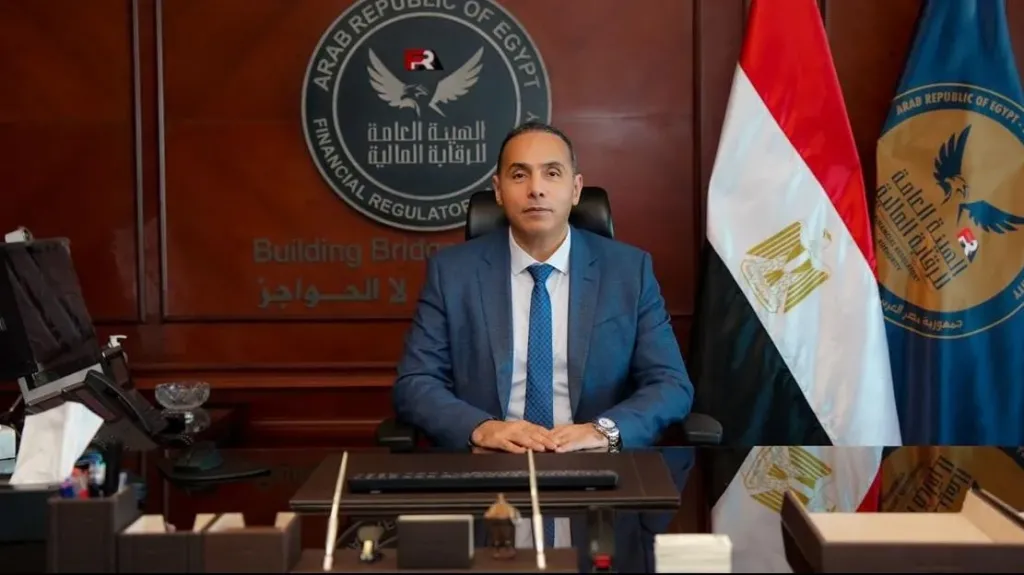
Islam Azzam, Chairman of Egypt’s Financial Regulatory Authority (FRA), said the development of the non-banking financial sector should be measured not only by financing balances and customer numbers, but also by service quality, product suitability, repayment capacity and customer protection.
FRA advances responsible finance rules
Speaking at the CERISE+SPTF Global Meeting 2026, hosted by the Egyptian Federation for Micro, Small and Medium Enterprises Finance under the patronage of Prime Minister Mostafa Madbouly, Azzam said clear information, data protection, effective complaint mechanisms and measuring the real impact of financial services are essential to protecting and empowering vulnerable groups and supporting market stability.
He reviewed regulatory measures aimed at strengthening responsible finance, including greater reliance on credit inquiries, field assessments, cash-flow analysis and debt-burden calculations to reduce risks linked to multiple borrowing, defaults and fraud.
Azzam also highlighted the requirement for financing providers to use one-time passwords (OTP) to confirm that customers are aware of and have approved financing transactions under FRA Decision No. 133 of 2026. The measure is due to be implemented before November 11, while Decision No. 27 of 2026 addresses insurance coverage for microfinance customers.
Bazel III preparations and digital supervision
Azzam said preparations are underway to apply Basel III standards to the non-banking financial sector starting next January. The framework will expand risk management beyond credit risk to include areas such as market and operational risks.
The FRA will introduce companies to the new requirements, prepare them for implementation and organize awareness sessions explaining the mechanisms involved. Some companies have already begun pilot applications of the requirements, he said.
The authority is also studying regulatory and technological measures covering wider use of artificial intelligence, data analysis and indicator generation, alongside a centralized anti-fraud system that would facilitate information sharing on fraud cases across different sectors.
Azzam stressed the importance of electronically connecting all companies under the FRA’s supervision to provide daily and real-time data, enabling advanced analysis and allowing selected findings to be shared with the market to support more efficient decisions.
Review of pricing rules and stronger customer protection
Azzam said the FRA is prepared to hold discussions with financing companies, MSME finance providers and the relevant federation to review responsible-pricing rules and formulas, with the aim of balancing business sustainability and expansion with customer rights.
He said the authority’s approach focuses on whether financial practices deliver fair, safe and sustainable outcomes for customers, rather than merely assessing compliance with regulations. This requires stronger early-warning indicators and greater use of data analytics, particularly as digital services expand and create additional cybersecurity and fraud risks.
Sector targets wider customer protection
Hala Abou El-Saad, Chairwoman of the Egyptian Federation for MSME Finance, said the federation aims to extend customer-protection services to more than 90% of beneficiaries. She noted that the sector relies on more than 55,000 employees serving business owners, farmers and women.
Mona Zulficar, founder and first chairwoman of the federation, said the microfinance portfolio had increased 17-fold since 2016, while average customer outstanding balances rose from EGP 3,000 in 2016 to EGP 27,600 at the end of June 2026.
Hossam Bashir, supervisor of the FRA’s Central Administration for Project Finance Supervision, said the authority seeks to strengthen oversight, prevent excessive indebtedness and develop governance and risk-management standards while supporting a secure transition to financial technology.
related topics
 National Bank of Kuwait Egypt Launches Apple Pay for Customers
 Egypt and Qatar Discuss Cooperation on E-Invoicing and Digital Tax Systems
 Bank NXT Grants Ezz Elarab El Sewedy EGP 2.1 Billion Financing to...
 To Protect Children Digitally.. NTRA Expands Field Efforts to Introduce ”Otmen” and...
 Egypt Hosts Arab Security Conference 2026
 Nvidia Expands Share Buyback Program by $150B, Pushing Total Authorization to $235B
 Al Ansari Exchange Wins ”Best Remittance and Foreign Exchange Service Provider” for...
 CBE Opens Bidding for EGP 60 Billion Treasury Bonds on Behalf of...
 Dell Technologies Targets 100% Growth in Egypt’s Data Center Business as AI...
 World's First AI-Native Islamic Finance Platform ”Maal” Unlocks Career Paths for UAE...
 AI and Digital Transformation Take Center Stage in Preparations for the 58th...
 WideBot Teams Up with ”El Daheeh” for Free Arabic AI Educational Series,...