


Egypt’s FRA Expands Cooperation with Arab Securities Regulators on Training and Capital Market Development
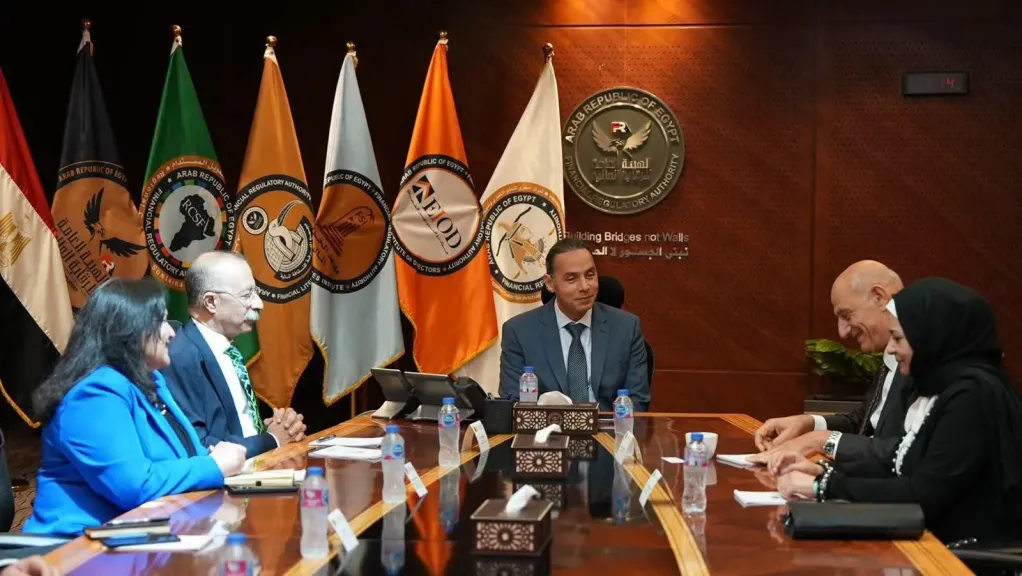
The Financial Regulatory Authority (FRA) is working to expand cooperation with the Union of Arab Securities Authorities (UASA) in training, financial awareness, and capacity building across the Arab financial sector.
FRA Chairman Dr. Islam Azzam met with UASA Secretary-General Jalil Tarif to discuss opportunities for joint training programs through the Financial Services Institute and the Regional Center for Sustainable Finance and Carbon Markets.
The discussions focused on expanding knowledge-sharing and professional development programs covering non-banking financial technology, derivatives, carbon markets, sustainable finance, and responsible investment.
Azzam also highlighted the latest developments in Egypt’s capital market, including preparations to officially launch short selling within the coming weeks. The launch follows the establishment of a centralized securities lending system, technical integration between Misr for Central Clearing, Depository and Registry (MCDR) and brokerage firms, and pilot training for market participants.
The FRA chairman said the regulatory framework for short selling, introduced under FRA Board Decision No. 155 of 2026, aims to strengthen transparency, governance, and investor protection in line with international practices.
He noted that the move forms part of a broader modernization program for Egypt’s capital market, following the launch of the derivatives market in March and the introduction of futures contracts on selected leading stocks. The FRA has also regulated hedge fund activities and allowed the establishment of hedge funds for the first time.
According to Azzam, the modernization process is aimed at deepening the market, improving pricing efficiency, boosting liquidity, and providing investors with a wider range of investment instruments.
He said the number of newly coded investors exceeded 171,000 by the end of the second quarter of 2026, while trading values surpassed EGP 6.4 trillion during the quarter, marking an annual increase of approximately 78.3%.
Market-making was also identified as a key priority for the next phase, with the FRA seeking to enhance liquidity and encourage institutional investment. The authority is also considering additional incentives for market makers alongside the planned listing and offering of several major state-owned companies.
Tarif praised the FRA’s efforts to support the development of Egypt’s non-banking financial sector, strengthen investor protection, and expand training and awareness initiatives.
The two sides also discussed regulatory developments across Arab capital markets, as well as challenges arising from financial technology, online trading, cybersecurity risks, market manipulation, fraud, money laundering, and terrorist financing.
Both sides emphasized the importance of continued consultation, information exchange, and specialized training to improve the efficiency and transparency of Arab financial markets.
related topics
AUSTRIACARD Delivers First Jaywan Cards to Wio Bank as UAE Builds Its...
 UNDP Praises Egypt’s Digital Transformation and Digital Egypt Platform
 Egypt’s FRA Orders Consumer Finance Firms to Link Data Systems
 Raya Holding Approves Up to $60M Investment for Proposed Egyptian Data Center...
 GrowthLabs and Amenli Forge Strategic Partnership to Launch Tailored Digital Insurance for...
 Egypt’s National AI Council Reviews 2026 Strategy
 Macron Launches Global Coalition for Child Protection in the AI Era at...
 Egypt’s ICT Minister Reviews Plans for 80MW Kemet Data Center
 FRA Concludes 2026 Summer Training Program for Egyptian University Students
 Arab African International Bank Strengthens Digital Payment Security With IBM Fraud Prevention...
 Elon Musk: AI Could Outsmart Humans in All Fields by Next Year...
 Egypt’s FRA Issues First Egyptian Standards for Valuing Machinery, Equipment and Infrastructure