


Huawei’s Kirin 9050 Pro beats Apple A17 Pro in multicore benchmark despite 7nm-class technology
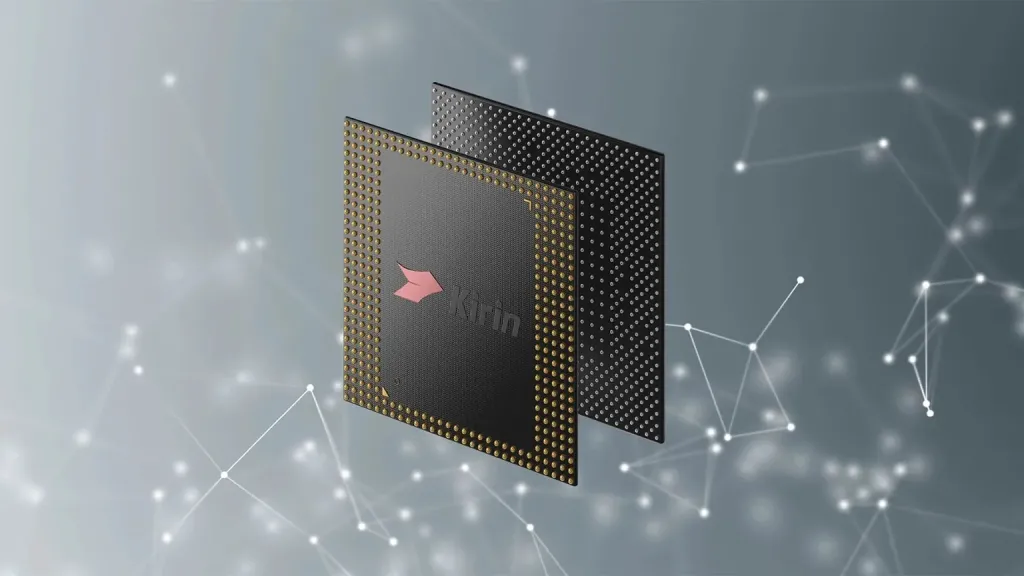
Huawei’s new Kirin 9050 Pro has outperformed Apple’s A17 Pro in Geekbench 6 multicore testing, marking a significant step in the Chinese technology giant’s efforts to narrow the performance gap with leading global smartphone chips.
The result is particularly notable because Bernstein estimates Huawei’s processor is manufactured using technology equivalent to a 7-nanometre process, while Apple’s A17 Pro, introduced in 2023, was the first mass-produced smartphone processor built on a 3nm process.
According to Bernstein research cited by the South China Morning Post, the Kirin 9050 Pro has helped narrow Huawei’s mobile chip technology gap with Apple to around three years, compared with roughly four years for the previous generation.
The processor made its debut earlier this month in Huawei’s Mate XT 2 tri-fold smartphone and is the first Kirin chip to use the company’s new LogicFolding architecture based on its Tau Scaling Law.
Huawei looks beyond smaller process nodes
Rather than relying solely on shrinking transistor sizes, Huawei’s LogicFolding technology vertically integrates selected logic circuits across interconnected layers, shortening the distance signals need to travel inside the processor.
Huawei says the architecture has increased transistor density by 55% in a single generation, from around 155 million to 238 million transistors per square millimetre.
The company says the shorter connections also improve energy efficiency. At equivalent performance levels, power consumption is reduced by 66% for the neural processing unit, 58% for the GPU and 41% for the CPU performance core compared with the previous planar design.
When operating for maximum performance, Huawei says the new architecture delivers an 18% CPU performance increase, a 42% improvement in GPU performance and lifts NPU computing power to 70 TOPS, representing a 141% increase from the previous generation.
Huawei still trails Apple’s latest chip
The benchmark result does not mean Huawei has overtaken Apple across overall processor performance.
Bernstein’s findings specifically refer to Geekbench 6 multicore performance, which measures how effectively a processor uses multiple CPU cores simultaneously.
In single-core performance, the Kirin 9050 Pro remains closer to processors manufactured using TSMC’s older 4nm-class technology.
The gap is also clearer when Huawei’s new processor is compared with Apple’s latest generation. Bernstein estimates that the Kirin 9050 Pro remains around 30% behind Apple’s new 2nm A20 Pro.
The findings nevertheless underline how smartphone chip competition is increasingly moving beyond the traditional race toward smaller manufacturing nodes.
For Huawei, architectural innovation has become particularly important as the company works to improve processor performance through its domestic semiconductor ecosystem. The Kirin 9050 Pro suggests that chip architecture, transistor density and vertical integration could provide another route to higher performance even when access to the most advanced manufacturing processes remains limited.
The next test will be whether those architectural gains translate beyond benchmark scores into sustained performance, power efficiency and real-world smartphone applications.