


Egypt Targets Doubling Local Content in Car Manufacturing to 40% by 2030
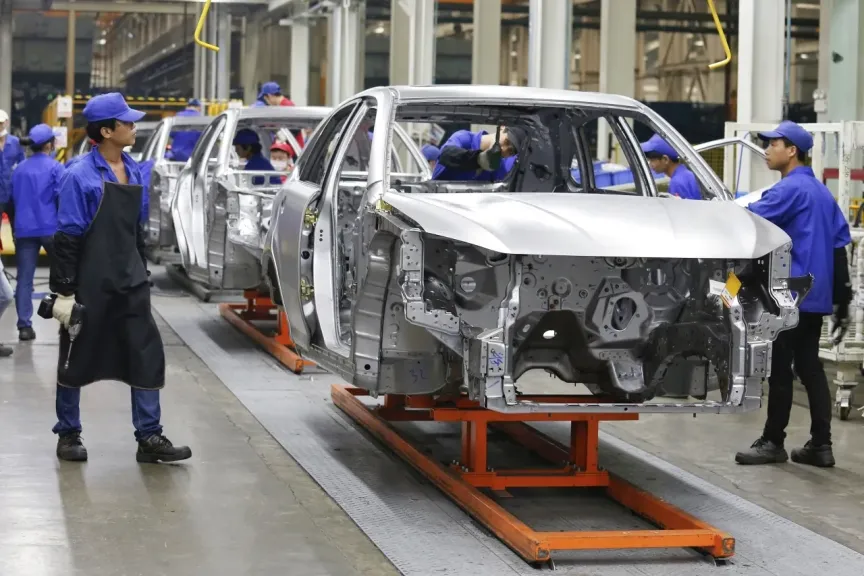
Egypt is looking to double the share of locally produced components in its automotive industry over the next four years, as the government shifts its focus from attracting vehicle assembly lines to building a deeper domestic supply chain.
Mohamed Sami, Assistant Minister of Industry for Strategic Affairs, said locally manufactured components currently account for around 20% of vehicle production, with the government targeting 40% by 2030.
The target puts component manufacturing at the center of Egypt’s next phase of automotive localization. Rather than measuring progress simply by the number of vehicles assembled locally, the government wants a larger proportion of the parts going into those vehicles to be produced inside the country.
Sami said reaching the 40% target will depend largely on expanding Egypt’s automotive feeder industries and bringing more local suppliers into manufacturers’ production chains.
Egypt already has fully local factories producing components including automotive glass, seats and discs, he said, while the Ministry of Industry is monitoring new investments entering the component manufacturing sector.
The next challenge is what goes into the car
Egypt has attracted a growing number of global automotive brands to local production and assembly, but the economic impact of those investments depends heavily on how much of each vehicle can eventually be sourced locally.
A higher local-content ratio means more of the value created by vehicle production remains inside the domestic economy, while potentially creating opportunities for Egyptian component manufacturers to become suppliers to international automotive groups.
It can also reduce manufacturers’ exposure to imported components and foreign currency requirements, particularly if local suppliers can meet the technical, quality and production standards demanded by global automakers.
That explains why the government is increasingly treating feeder industries as a central part of its automotive strategy rather than an industry operating separately from vehicle assembly.
Sami said the ministry continues to hold discussions and negotiations with foreign manufacturers and investors interested in establishing or expanding operations in Egypt, describing the arrival of new component factories as an indication of confidence in the sector.
Beyond assembly
The 40% target fits into a wider government strategy to build what officials describe as an integrated automotive industry.
Industry Minister Khaled Hashem said in August that Egypt’s strategy is designed to move beyond vehicle assembly by expanding local component production, deepening industrial localization, transferring technology and developing a manufacturing base capable of serving domestic demand as well as export markets.
The government’s Automotive Industry Development Program is also structured around local value creation, with incentives linked to deeper manufacturing and the localization of additional components.
Sami said the automotive sector therefore needs to be viewed as an interconnected industrial ecosystem covering manufacturers, suppliers, investment programs, incentives and government policy — rather than simply the final assembly line.
That distinction will become increasingly important as Egypt approaches 2030.
Attracting more vehicle production can increase output, but moving local content from 20% to 40% would represent a different measure of progress: whether Egypt can build more of the car itself rather than simply assemble more cars.