


Glenn Wilkinson at CAISEC’26: Legal Integration, Global Cooperation, and Modern Defenses are the Pillars of Cybersecurity in the AI Era
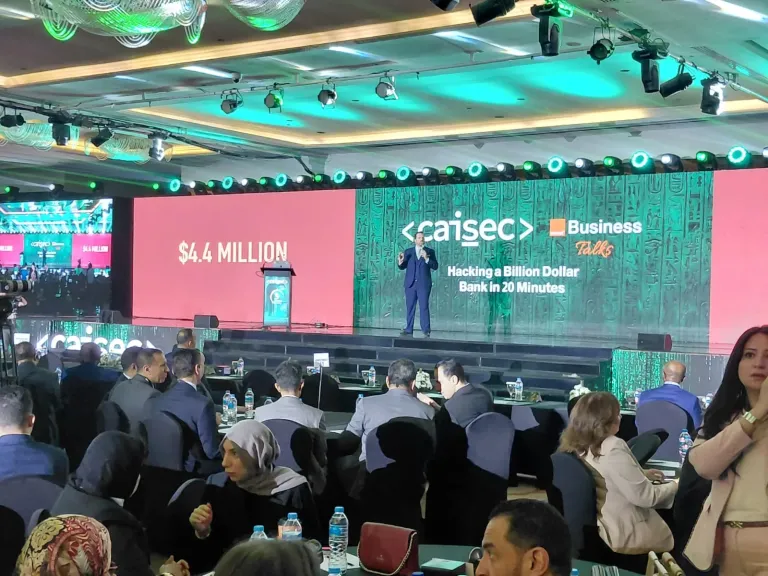
During his keynote address at the Information Security and Cybersecurity Conference and Exhibition (CAISEC’26), renowned Ethical Hacker Glenn Wilkinson reviewed the global evolution of cyber threats, asserting that Artificial Intelligence (AI) has significantly increased the complexity and unprecedented pace of cyberattacks.
Wilkinson opened his speech with a critical question: "How can we achieve an effective level of protection against hacking operations?" He explained that the nature of cyberattacks has undergone radical transformations over the past decades.
The Evolution of Cybercrime Tracing the history of cybercrime back to the 1970s, Wilkinson noted that hacking operations evolved gradually until 2010 marked a major turning point. During that year, attackers successfully breached banking systems and executed complex operations undetected by security teams—a stark contrast to the random and unorganized attempts of earlier phases.
Cybercrime later transitioned into a more dangerous phase characterized by ransomware and digital extortion, where data is encrypted or stolen, and victims are extorted for financial payouts. Wilkinson highlighted key milestones in this evolution:
2013: Cryptocurrencies emerged as a primary tool for digital fraud and money laundering.
2017: The digital supply chain witnessed one of its most prominent attacks, where legitimate software was replaced with malware in an incident linked to the Russian-Ukrainian conflict, setting a precedent for advanced attacks on digital infrastructure.
The AI Threat and Current Vulnerabilities Wilkinson warned that the massive expansion of AI applications in recent years has driven up cybercrime rates, as these technologies are weaponized to develop highly sophisticated hacking and manipulation tactics. He shared real-world examples of financial institutions breached via AI-driven techniques, noting that many banks now mandate periodic training and simulated penetration tests to elevate staff awareness and security readiness.
He stressed that cyber risks are no longer confined to the financial sector but have expanded to target critical infrastructure networks, including electricity, energy, and public utilities, amplifying the need for advanced defensive ecosystems.
Furthermore, email remains a primary attack vector. Attackers rely on meticulously crafted phishing messages designed to provoke curiosity or a sense of urgency, tricking users into interacting with seemingly important content that actually contains malicious code. Successful breaches grant attackers access to sensitive files, passwords, and customer databases, necessitating strict access control policies limited to authorized personnel.
The Path Forward Concluding his address, Wilkinson emphasized that building a secure cyber environment requires the integration of national legislation, law enforcement agencies, and international cooperation. He called for bolstering digital monitoring systems, adopting multi-layered defense strategies, and investing in proactive data management solutions.
"Cyber resilience is now a fundamental requirement for institutions in the digital age," Wilkinson stated, urging continuous updates to security tools and periodic system audits to safeguard digital assets and data.
related topics
 eFinance showcases its advanced solutions to enhance cybersecurity and protect digital services...
 Banque du Caire Successfully Renews PCI-DSS v4.0.1 Certification in Collaboration with Zerosploit
 Connect PS CEO: Egyptian Talent Is Capable of Exporting Cybersecurity Services to...
 CyShield Unveils Its Fifth Cybersecurity Product During CAISEC 2026
 Cisco Egypt Director: CAISEC Addresses Future Cybersecurity Challenges and Supports Egypt’s Position...
 Mohamed Shebl: CAISEC Has Evolved From a Specialized Conference Into a Regional...
 Kaspersky Warns of Sophisticated Phishing Attacks Using ASCII-Based QR Codes to Bypass...
 CAISEC’26 to Launch Monday as Largest Arab-African Cybersecurity and Digital Sovereignty Summit
 Noventiq Secures Tier 1 NTRA Accreditation, Announces Titanium Sponsorship for CAISEC’26 in...
 Noventiq Participates as Titanium Sponsor at CAISEC’26 Amid Escalating Global Cyber Threats,...
 Raya IT Partners with Cisco for CAISEC 2026 to Showcase AI Security...
 CONNECT-PS Strengthens Regional Cybersecurity Leadership with Gold Sponsorship at CAISEC’26