


Sahlah CEO: Expansion of Installment and Consumer Finance Apps to Improve Repayment Rates and Capital Efficiency
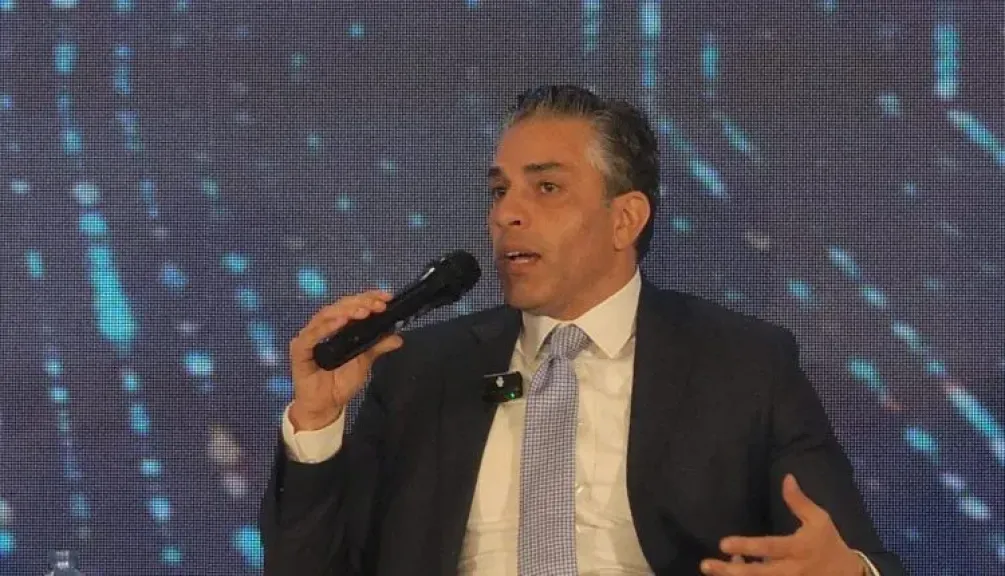
Ahmed El-Shenawy, CEO of Sahlah, expects the continued expansion of installment payment and consumer finance applications in the coming period to lead to improved repayment rates, enhanced capital cycle efficiency, and a stronger role for these solutions in improving citizens’ quality of life.
Speaking during a panel discussion titled “Non-Banking Financial Services and Digital Transformation: Regulatory Frameworks, Growth Opportunities, and Innovative Business Models,” El-Shenawy stressed that some of the criticism occasionally directed at the consumer finance sector does not reflect its true nature.
He explained that the issue is not poor regulation, but rather a misunderstanding of how consumer finance operates, noting that all companies offering installment and consumer finance services operate under the supervision of the Financial Regulatory Authority (FRA), within a clear regulatory framework that governs financing mechanisms, protects customer rights, and ensures market stability.
El-Shenawy pointed out that one of the key challenges lies in limited customer awareness of the full details of financing offers, as marketing campaigns are often linked to specific timeframes—such as six-month interest-free installment plans—while some customers mistakenly assume the same terms apply to longer periods of 12, 24, or 36 months.
He added that consumer finance is still a relatively new activity in the Egyptian market, which explains why some concepts are still evolving. However, awareness continues to improve year after year, driven by the growing adoption of digital applications, particularly among younger generations.
Default Rates and Risk Management
Regarding repayment performance, El-Shenawy noted that default rates naturally fluctuate, especially during the early stages of launching new applications or business models. Nevertheless, acceptable and targeted default rates typically range between 3% and 4%, which he described as safe levels given the risk profile of digital financing.
He emphasized that disciplined and data-driven portfolio growth plays a crucial role in improving default ratios, as measured expansion based on analytics and behavioral data helps diversify risk and reach customer segments with stronger credit performance.
El-Shenawy also explained that digital financing models rely on fully digital onboarding without traditional paperwork, which may increase risk exposure. However, companies mitigate this by leveraging a broad set of analytical indicators, including age, marital status, place of residence, car ownership, club memberships, medical insurance, and other data points used to build accurate credit profiles.
He concluded that as installment applications become increasingly embedded in daily life—similar to the earlier adoption of bank cards—repayment behavior improves, as customers grow more disciplined through repeated use and reliance on these services for essential needs.
related topics
 Aboulmakarem: Egyptian Exports to India Grow by 28% in 2025
 Egypt Aims to Deliver Seamless Digital Government Services to Citizens, Says ICT...
 Flowers Fade, but HUAWEI Lasts: Celebrate Valentine’s Day with HUAWEI FreeBuds 7i,...
 Sky Ports and AASTMT’s College of Engineering and Technology Sign Cooperation Protocol...
 QNB Launches Private Banking Services in Egypt, Targeting Elite High-Net-Worth Clients
 QNB Group CEO: Launch of Private Banking at QNB Egypt Redefines Premium...
 Raya Holding Recognized as Early Adopter at UN Global Compact 25th Anniversary...
 MNT-Halan Partners with Visa to Expand Its Prepaid Card Offering and Accelerate...
 Egypt’s Telecom Minister: $3.5 Billion Spectrum Deal Is Historic and Unprecedented
 Egypt Signs Largest Mobile Spectrum Allocation Deal Worth $3.5 Billion
 Egypt Sets Five-Year Dollar-Based Payment Plan for New Mobile Spectrum Licenses
 Al Baraka Bank Egypt Launches First Fully Digital Branch in the Egyptian...