


Egypt Leads North Africa”s Startup Ecosystem with 718 Startups Valued at $10.6 Billion
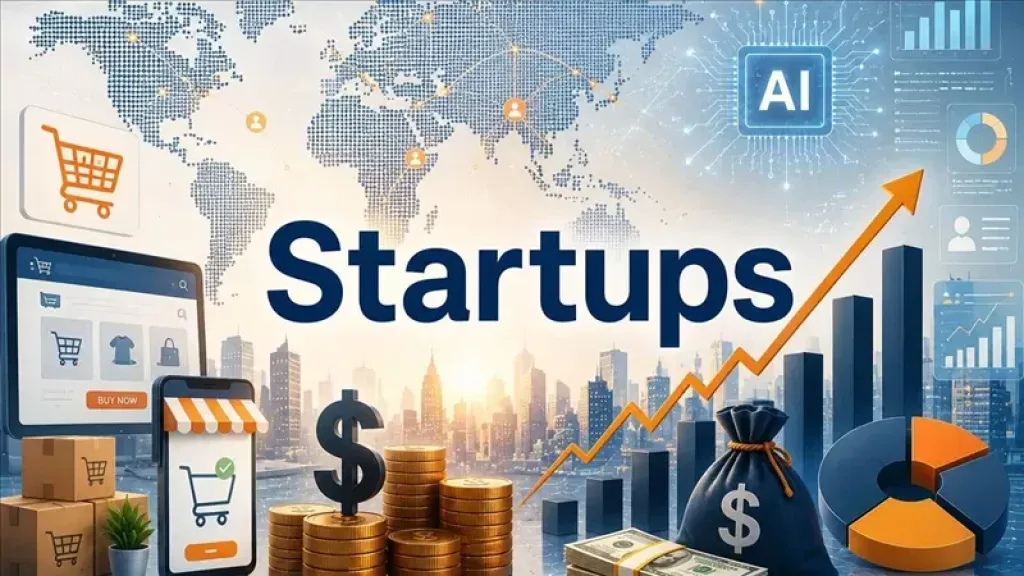
Egypt has secured its leading position in North Africa's startup ecosystem, with 718 startups and an estimated ecosystem value of $10.6 billion, according to a recent analysis released by the Cabinet's Information and Decision Support Center.
The report examines the development of entrepreneurship worldwide, international competition to attract entrepreneurs and Egypt's efforts to establish a supportive environment for startups and innovative businesses.
Egypt ranked 65th globally in the Global Startup Ecosystem Index 2026, maintaining its position as North Africa's leading startup hub. The country also placed 35th worldwide in the National Entrepreneurship Context Index (NECI) for 2025 and fifth among 27 African countries in the African Entrepreneurship Ecosystem Index (AEEI) for 2026.
According to the analysis, these rankings indicate that Egypt's entrepreneurship ecosystem is moving beyond its initial institution-building phase toward broader expansion and growth.
Entrepreneurship Drives Economic Growth and Innovation
The report identified entrepreneurship as a major contributor to economic development and sustainability, particularly amid rapid technological and economic changes.
Entrepreneurial activity goes beyond establishing new businesses. It involves identifying market opportunities, developing innovative products and services, managing risks and mobilizing resources to create economic and social value.
The sector also contributes to job creation, productivity improvements, stronger competitiveness and GDP growth. In addition, startups support technological advancement and economic diversification, particularly in emerging fields such as the digital economy, renewable energy and biotechnology.
Promoting Inclusion Through Women and Youth Entrepreneurship
The analysis highlighted the role of entrepreneurship in expanding economic opportunities and promoting social inclusion, especially among women, young people and underrepresented groups.
According to the Global Entrepreneurship Monitor 2025/2026 report, nine out of 23 middle-income economies achieved gender parity or near-parity in early-stage entrepreneurial activity.
Furthermore, 84% of early-stage entrepreneurs reported considering social or environmental factors when making business decisions, reflecting the growing importance of sustainable and socially responsible business models.
Egypt Strengthens Its Startup Policy and Regulatory Framework
The Egyptian government has introduced several institutional and legislative measures to support entrepreneurship.
These include establishing the Micro, Small and Medium Enterprise Development Agency in 2017 and introducing the MSME Development Law in 2020.
In 2024, Egypt established the Ministerial Group for Entrepreneurship to coordinate government policies and initiatives targeting startups.
The government also launched a National Startup Charter in 2026, aiming to empower 5,000 startups and contribute to creating approximately 500,000 direct and indirect jobs.
The charter includes more than 80 measures and policy actions designed to improve the business environment and simplify government procedures.
Digital Services and Business Reforms Facilitate Startup Growth
Government efforts also include introducing a unified government guide for startups and providing digital services through the Ministerial Group for Entrepreneurship's online portal.
These initiatives aim to accelerate company registration and licensing procedures while reducing operational costs and administrative burdens.
Additional reforms cover the adoption of a unified startup definition, simplified tax procedures, easier liquidation and exit processes, and the assessment of regulatory challenges affecting emerging industries.
$1 Billion Financing Initiative Targets Startups Through 2030
To expand access to capital, Egypt launched a unified financing initiative worth $1 billion through 2030, providing different investment mechanisms for startups at various stages of development.
The MSME Development Agency also injected $50 million through a program funded by the World Bank Group. The initiative benefited 15 investment funds and contributed to creating approximately 48,000 jobs by June 2026.
Other support mechanisms include the Tahalof wa Tanmeya initiative, access to European funding through the Horizon Europe program and expanded crowdfunding opportunities.
The National Startup Charter also seeks to establish a dedicated allocation for entrepreneurs within the government's investment plan.
Creativa Centers Expand Innovation and Entrepreneurial Skills
Egypt is also investing in innovation and capacity building through the Ministry of Communications and Information Technology's Creativa Digital Innovation Centers network, which operates in more than 20 governorates.
Other initiatives include the Ebda'a Misr platform and the establishment of the Egypt Entrepreneurship and Innovation Center in 2023.
These programs aim to support the knowledge economy and help young innovators transform their ideas into competitive startups.
Meanwhile, the government is working to strengthen international market access through its Soft Landing program, which supports startups seeking to expand into and out of Egypt, alongside partnerships with international institutions and specialized investment funds.
Three Priorities for Egypt's Startup Ecosystem Through 2030
The government analysis identified three major priorities for developing Egypt's entrepreneurship ecosystem between 2026 and 2030.
These include expanding startup financing throughout different growth stages, investing in advanced technology sectors and transforming university research outputs into commercially viable projects and competitive startups.
The implementation of the National Startup Charter, increased venture capital flows and stronger regional and international partnerships are also expected to support the sector's expansion over the coming years.
Global Entrepreneurship Activity Continues to Expand
Internationally, World Bank data covering formal entrepreneurial activity across 188 economies between 2006 and 2024 showed that newly registered limited liability companies per 1,000 working-age people increased by approximately 50%.
The figure rose from 2.88 companies in 2006 to 4.33 companies in 2024.
However, business formation has remained sensitive to global economic disruptions, declining during the 2008 financial crisis and experiencing a slight slowdown in 2020 amid the COVID-19 pandemic before recovering in subsequent years.
The report also highlighted the increasing global competition to attract entrepreneurs, noting that successful startup ecosystems depend on financing availability, human capital, infrastructure quality, effective governance and market access.
Middle East and Africa Record Strong Startup Ecosystem Growth
The Global Startup Ecosystem Index 2026 showed that the Middle East and Africa, alongside Latin America and the Caribbean, recorded the strongest regional growth rates.
The Middle East and Africa achieved 20.2% growth, while Latin America and the Caribbean recorded 14.9%, both exceeding the global average of 10.3%.
The analysis also highlighted the growing presence of Asian and Middle Eastern economies among the world's leading entrepreneurial markets.
Their combined representation in the top 20 entrepreneurial economies increased from three countries in 2016 to six in 2026, with Japan, South Korea and the United Arab Emirates joining the list.
These developments underline the importance of investment in digital infrastructure, financing solutions, workforce skills and regulatory efficiency to attract startups, sustain innovation and strengthen long-term economic competitiveness.
related topics
 Egypt’s National Economic Transformation Programme Targets 3 Million New Jobs
 A New Step to Boost Exports: GOEIC’s Certification Unit Included in Africa’s...
 Calm Prevails in the Foreign Exchange Market: US Dollar Rate Today, Tuesday,...
 Following Yesterday’s Strong Gains: Gold Prices Stabilize in Egypt Today, Tuesday, November...
 Buying an Electric Car in Egypt: Battery Life, Charging Costs and 7...
 Egypt Plans to Produce Three Electric Car Models in 2027, Targeting 100,000...
 Egypt's EIPS Proposal: How Could International Transfers and E-Commerce Payments Work in...
 InstaPay Egypt Guide 2026: Transfer Limits, Fees and Instant Payment Network Services
 RBI Proposes Digital Payment Stop Switch and Trusted-Person Approval: Could Egypt Adopt...
 What Do Venture Capital Funds Look for in Arab Startups?.. 7 Key...
 Nvidia Reinstates Jensen Huang as CEO: Why Shares Jumped 31.5% and What...
 Egypt and Iraq Seek Stronger Economic Ties as Madbouly and Al-Zaidi Chair...
