


Buying an Electric Car in Egypt: Battery Life, Charging Costs and 7 Things to Check
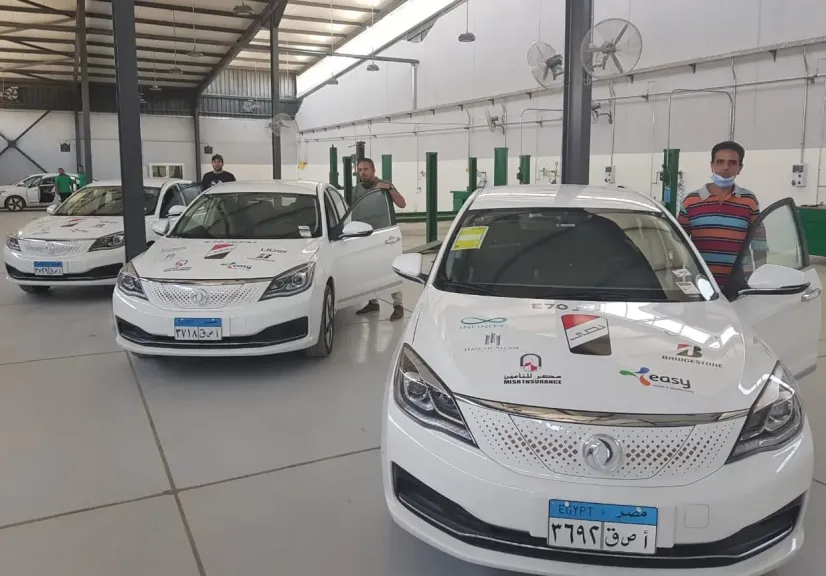
Buying an electric vehicle (EV) in Egypt requires more than comparing purchase prices and advertised driving ranges. Prospective buyers must also consider battery durability, access to charging stations, electricity tariffs, maintenance expenses, warranty coverage and potential resale value. These factors are becoming increasingly relevant as Egypt expands its EV charging infrastructure and moves towards local production of electric vehicles and batteries.
This practical guide examines seven key considerations for consumers evaluating the real cost of owning an electric car in Egypt, against the backdrop of government efforts to develop the country's automotive industry and charging network.
1. Battery capacity and long-term performance
The battery is one of the most important components to assess because its condition directly affects driving range and resale value. Buyers should check the battery's capacity, measured in kilowatt-hours (kWh), the vehicle's expected real-world range and whether its battery management system includes liquid cooling or other thermal protection technologies.
Battery degradation does not necessarily mean that the battery needs replacing. Its ability to store energy gradually declines with use. A May 2025 study by Geotab, covering more than 22,700 electric vehicles across 21 models, found an average annual battery degradation rate of 2.3%. The study also identified higher temperatures and frequent high-power charging as factors associated with faster degradation.
2. Battery warranties and after-sales support
Battery warranty terms should be examined separately from the vehicle's general warranty. Buyers need to establish the coverage period, mileage limit, minimum battery health threshold required for a warranty claim and the conditions governing repairs.
For example, BYD's published warranty policy provides eight years or 200,000 kilometres of coverage for the power battery, whichever comes first. Its complete vehicle warranty is six years or 150,000 kilometres. Such differences make it important to obtain the warranty conditions in writing before signing a purchase agreement.
3. Home charging versus public charging
Access to home charging can significantly influence the convenience and economics of EV ownership. Apartment residents should check whether their building allows charger installation and whether the property's electrical connections can safely accommodate the additional load. Installation should be carried out by qualified professionals using equipment compatible with the vehicle.
Drivers relying on public charging should assess station locations along their regular routes and travel destinations rather than relying solely on advertised network sizes. Charging infrastructure remains concentrated in Greater Cairo, new urban communities and selected coastal destinations, with more limited coverage in some governorates and less-travelled routes.
Companies operating licensed charging networks include Infinity, ELSEWEDY Plug, IKARUS, Sha7en and Raya. Egypt's electricity regulator continues to update operating licences and approve additional stations, subject to technical and operational requirements.
4. Understanding electricity tariffs and charging expenses
Charging costs vary according to where the vehicle is charged, the charging technology used and the applicable electricity tariff. Home charging is billed according to residential electricity consumption brackets, while commercial charging stations operate under a separate pricing framework.
Ministerial Decision No. 101 of 2025 established a pricing formula for commercial charging. AC charging at up to 22 kW is priced at the station's electricity supply tariff plus 45%, while DC fast charging carries an additional 180%.
In August 2026, Infinity announced prices of EGP 3.97 per kWh for AC charging and EGP 7.67 per kWh for DC fast charging. These are company-specific prices rather than a universal tariff across all charging networks. Consumers should check the applicable price through the operator's application before starting a charging session.
5. Maintenance, insurance and resale value
Electric vehicles eliminate several maintenance requirements associated with conventional combustion engines, including engine oil changes and exhaust-system servicing. However, owners still need to account for tyres, suspension components, brakes, air-conditioning systems and electronic components.
Insurance premiums, registration expenses, home charger installation, spare-parts availability and specialist servicing should also be included in the ownership budget. The availability of authorised service centres and a reliable warranty provider can make a significant difference, particularly when purchasing vehicles from brands with limited local representation.
6. Egypt's battery localisation plans
Egypt is seeking to develop domestic electric vehicle manufacturing and component production under its National Automotive Industry Development Programme. The strategy aims to increase local content, attract international manufacturers and reduce dependence on imported automotive components.
On September 13, 2026, Prime Minister Mostafa Madbouly witnessed the signing of an agreement between Egyptian battery manufacturer BME and China's CATL to establish an electric battery production facility. The first phase is designed to deliver annual production capacity of 1 gigawatt-hour, with initial investments exceeding EGP 2 billion and a targeted local component ratio of 40%.
The project will initially focus on batteries for heavy commercial vehicles, with plans to expand into passenger-car batteries and energy-storage solutions.
7. What battery production could mean for buyers
On November 22, 2026, Industry Minister Khaled Hashem announced that a major international electric vehicle battery manufacturer was expected to begin production in Egypt by mid-2027. He also said the government planned to introduce additional incentives for electric vehicle manufacturers and component producers before the end of 2026.
These developments could support the gradual creation of a domestic battery supply chain and strengthen Egypt's automotive manufacturing capabilities. However, local production does not automatically translate into lower vehicle prices. Its impact will depend on actual production volumes, local content levels, manufacturing costs and distribution arrangements.
For consumers considering an electric car today, the most practical approach is to compare the complete cost of ownership rather than the initial purchase price. Battery warranty, real-world driving range, charging access, electricity costs and after-sales support should all be assessed before making a final decision.
related topics
 Egypt Plans to Produce Three Electric Car Models in 2027, Targeting 100,000...
 Electric Cars in Egypt 2026: A Complete Guide to Buying, Charging, Maintenance...
 Mercedes-Benz Egypt Launches its All-Electric GLC in the Egyptian Market Priced at...
 5 Brand New Electric Cars in Egypt Priced Under EGP 1 Million:...
