


Egypt Plans to Produce Three Electric Car Models in 2027, Targeting 100,000 Vehicles Annually by 2032
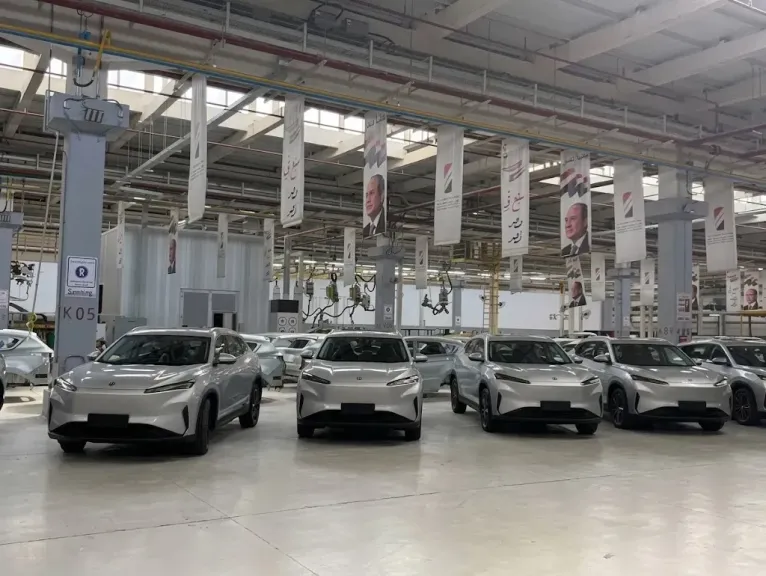
Egypt is preparing to expand its electric vehicle manufacturing industry, with a major international automaker planning to begin local production of three electric vehicle models in 2027. The project targets annual production of 100,000 vehicles by 2032, while increasing the local content ratio from an initial 10% to 27% by the end of the target period.
The plan was outlined during a November 4, 2026, meeting between Prime Minister Mostafa Madbouly and Industry Minister Khaled Hashem, which reviewed Egypt's strategy for localising automotive manufacturing and supporting industries. The discussions covered electric vehicles, batteries, electric motors, automotive components and charging infrastructure.
Three EV Models Planned for 2027
According to the Industry Ministry's presentation, an unnamed major international company intends to start manufacturing three electric vehicle models in Egypt during 2027. The project aims to gradually expand production capacity to 100,000 vehicles annually by 2032.
Local content is expected to start at 10% before increasing to 27% by 2032. This makes domestic component manufacturing a central performance indicator, alongside vehicle production volumes.
However, the government has not disclosed the automaker's identity, the three models, the manufacturing locations or an annual production schedule covering 2027–2032.
The project should also be distinguished from Dongfeng's existing partnership with SN Automotive and El Nasr Automotive, which represents a separate initiative within Egypt's broader automotive localisation strategy.
Battery and Electric Motor Manufacturing
Egypt's localisation strategy also covers key electric vehicle components. The November meeting highlighted a partnership between an international company and Manufacturing Commercial Vehicles (MCV) to use batteries in buses, alongside a separate agreement under development to supply batteries for locally manufactured passenger vehicles.
The ministry is also exploring cooperation with an international manufacturer and the Arab Organisation for Industrialisation (AOI) to produce electric motors locally.
On November 22, Industry Minister Khaled Hashem announced that a major international EV battery manufacturer would begin production in Egypt by mid-2027. The company, factory location and production capacity have not yet been disclosed.
Dongfeng MAGE EV: An Existing Manufacturing Project
Separately, Egypt launched local production of the Dongfeng MAGE EV at El Nasr Automotive's Helwan facilities on October 31, 2026. The project is being implemented through SN Automotive, Dongfeng's local agent, in partnership with Al Safy Group.
The vehicle has a local content ratio of up to 45%. El Nasr Automotive CEO Nabil Hamad said the company targets production of 3,000 vehicles during the first year. This project demonstrates an existing local EV manufacturing operation, but the government has not confirmed any connection between it and the three models planned for 2027.
Supporting Industries and Government Incentives
The broader strategy includes manufacturing seven automotive metal components locally, with targeted annual production of eight million units through cooperation involving an international company, El Araby Group and AOI.
Other initiatives include developing local testing capabilities, upgrading the Engineering Industries Technology Centre in 10th of Ramadan City, establishing vocational training for mould and die manufacturing, and expanding EV charging infrastructure.
The government is also reviewing additional incentives under the Automotive Industry Development Programme (AIDP). On November 22, the industry minister said new incentives for EV manufacturers and component suppliers would be introduced before the end of 2026.
The main indicators to monitor are the automaker's eventual announcement, the launch of the three models in 2027, actual annual production, and progress in raising local content from 10% to 27% by 2032.
related topics
 AI Agents in Saudi Arabia and UAE: 75% Adoption, but Only 10%...
 HUMAIN Launches Voice AI Supporting Najdi and Hijazi Dialects.. When Will AI...
 Nissan Egypt and Valu Forge Strategic Partnership to Launch ”Valu Shift” Digital...
 Nissan Egypt and Its Authorized Dealer Network Support Baheya Foundation with a...
 11th Egypt Automotive Summit Kicks Off Sunday to Discuss Auto Localization and...
 Technological Alliance Between AIQ and Siemens to Lead the Future of AI...
 LG Electronics Reaches 10 Million Laundry Appliances Produced at Its Tennessee Manufacturing...
 Egypt to Launch Export System Modernization Projects at Four Ports Soon
 China’s Hongqi Prepares for Global Unveiling of All-Electric EHS4 in Venice Tomorrow
 Volkswagen Egypt Opens New EGP 100 Million Showroom on the Ring Road...
 Kasrawy Group Plans to Locally Produce 6,000 ”Jetour X70 Plus” Vehicles in...
 Kia Makes History in Germany, Sweeping a Hat-Trick at the 2026 Golden...
