


RBI Proposes Digital Payment Stop Switch and Trusted-Person Approval: Could Egypt Adopt the Model?
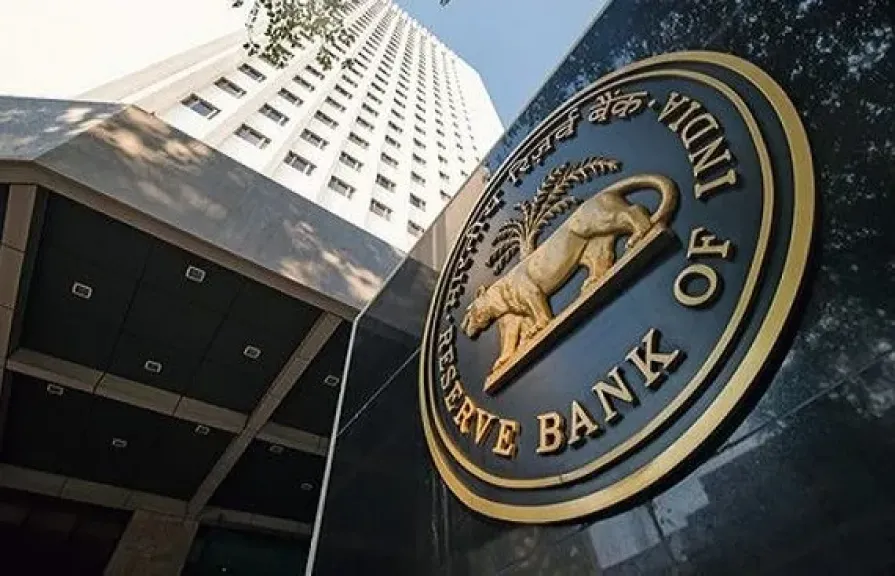
The Reserve Bank of India (RBI) has proposed a new framework to strengthen protection against digital payment fraud, giving bank customers the ability to instantly block outgoing transactions through a single emergency facility and nominate a trusted person to approve high-value transfers. The draft amendments, issued on November 23, 2026, aim to give customers greater control over digital banking while increasing banks' accountability for fraudulent electronic transactions.
India shifts from compensation to fraud prevention
The proposed measures remain at the consultation stage, with the RBI inviting feedback from the public and stakeholders until December 14, 2026.
The initiative builds on a discussion paper published in April 2026, which examined additional safeguards against authorised push-payment (APP) fraud. These scams occur when criminals manipulate victims into personally authorising transfers through impersonation, social engineering or fabricated emergencies.
Rather than relying primarily on recovering money after fraud occurs, the RBI is seeking to introduce preventive controls that allow customers and banks to intervene before funds leave an account.
Stop Switch: One action to block outgoing payments
The proposed Stop Switch would allow customers to immediately disable all customer-initiated outgoing debits from their bank accounts.
Incoming transfers would remain unaffected, while certain existing obligations, including loan instalments, bank charges and recurring payment instructions, would be excluded from the proposed restrictions.
Banks would also be required to offer controls allowing customers to disable individual digital payment channels, establish transaction-level, beneficiary-level and daily limits, and schedule periods during which selected channels remain inactive.
These measures are designed to provide customers with an immediate response when they suspect their accounts or banking credentials have been compromised.
Trusted-person approval for high-value transfers
Another major element is the Trusted Person Mechanism, which would allow customers to nominate an individual aged 18 or above to provide additional authentication for transfers exceeding a customer-defined threshold.
The nominated person would receive transaction details, including the amount and beneficiary information, and have one hour to approve the payment. Transactions would be rejected if approval is refused or no response is received within the specified period.
The facility would be voluntary, with a 24-hour waiting period before activation. The trusted person would not have access to the customer's account balance, deposits or investments.
Importantly, the proposed mechanism excludes UPI transfers, merchant payments and recurring payments based on standing instructions and electronic mandates.
International models: Singapore and the UK
India is not the first market to explore emergency payment restrictions. Singapore has introduced similar mechanisms through individual banks. Citibank Singapore, for example, offers a Kill Switch that can immediately block access to banking services, cards and outgoing transfers, including PayNow and FAST payments. Reactivation requires identity verification.
The UK has adopted a different approach, focusing on financial responsibility and mandatory reimbursement. Since October 7, 2024, eligible victims of authorised push-payment fraud have benefited from mandatory reimbursement rules covering transfers through Faster Payments and CHAPS.
The reimbursement framework provides coverage of up to £85,000, with eligible claims generally reimbursed within five business days. Together, these approaches demonstrate two complementary priorities: preventing fraudulent payments and ensuring victims receive appropriate financial protection.
Egypt's instant-payment ecosystem and existing safeguards
Egypt has developed a nationwide instant-payment infrastructure through the Instant Payment Network, launched by the Central Bank of Egypt (CBE) in March 2022. The network enables instant transfers between bank accounts, Meeza cards and mobile wallets through services including InstaPay.
The published InstaPay limits stand at EGP 70,000 per transaction, EGP 120,000 daily and EGP 400,000 monthly per registered bank. These limits regulate transaction values but do not, by themselves, provide the same functionality as a unified emergency payment switch or trusted-person approval mechanism.
The CBE already warns customers against phishing, fraudulent calls and attempts to obtain banking credentials, while urging them to report suspicious activities through official bank channels. Its consumer-protection framework also provides a formal complaints process, requiring banks to issue complaint reference numbers within two working days and respond within 15 business days in standard cases.
Separately, Egyptian banks were instructed in 2026 to establish dedicated anti-fraud departments, according to local financial reporting.
What could Egypt adopt from India's proposal?
The Indian initiative offers three areas for consideration in Egypt: a unified emergency facility to block outgoing payments across digital channels, additional approval for high-value transfers involving customers particularly vulnerable to fraud, and stronger bank accountability when security failures or delayed responses contribute to financial losses.
Implementing these measures would require coordination between the CBE, commercial banks and payment-service providers, alongside clear rules governing excluded transactions, identity verification and service reactivation.
The challenge is to introduce stronger safeguards without disrupting everyday digital payments or creating additional procedures that fraudsters could exploit through social engineering.
For Egypt, the broader question is how to evolve its existing instant-payment infrastructure into a more comprehensive customer-protection system, combining preventive controls, rapid intervention and clearer institutional accountability.
related topics
 Central Bank of Egypt Enables Payment Card Tokenization on Android Devices
 US Dollar Holds Below EGP 55 Against the Egyptian Pound in Banks...
 Egypt's Digital Banking Market Set for Three New Entrants: What Will onebank,...
 US Dollar Rate Today, Sunday, November 22, 2026, in Egyptian Banks: American...
 CLOUD11 Co-CEO: Digital Transformation Breaks Corporate Monopolies as ”Two-Person” Startups Now Compete...
 Complete Stability in the US Dollar Rate Against the Egyptian Pound Today,...
 US Dollar Stabilizes Against the Egyptian Pound Today, Friday, November 20, 2026,...
 Aman Holding Partners with National Bank of Egypt and International Investor to...
 Stability Prevails in US Dollar Exchange Rate Against Egyptian Pound Today, Thursday,...
 Sponsored by saib Bank: Arab Academy Team Wins Second Place Locally and...
 AlexBank Profits Hit EGP 11.2 Billion in 9 Months Driven by Operating...
 Live Update: US Dollar Exchange Rate Against the Egyptian Pound Today, Tuesday,...
