Egypt”s Digital Banking Market Set for Three New Entrants: What Will onebank, yomo and Easy Bank Offer Customers?
Egypt's banking sector is preparing for a new phase of competition with three digital banking ventures: onebank, yomo and Easy Bank, backed by three major financial institutions operating in the country: Banque Misr, Commercial International Bank (CIB) and Qatar National Bank (QNB). The projects aim to reshape how customers access financial services by shifting banking operations towards digital platforms and mobile applications rather than traditional branch networks.
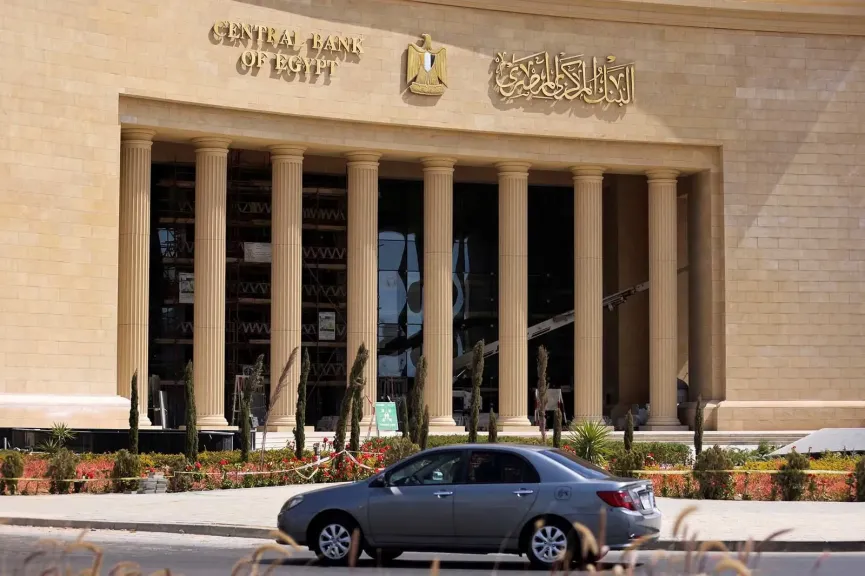
On November 8, 2026, Ehab Nasr, Assistant Deputy Governor of the Central Bank of Egypt (CBE), announced during the PAFIX 2026 fintech conference that the three banks had received approvals to operate in the Egyptian market. However, they are at different stages of regulatory readiness. onebank received its operating licence in March 2026, while CIB announced preliminary approval for yomo in August, and QNB had previously disclosed approval to establish Easy Bank.
onebank: Egypt's First Fully Licensed Digital Bank
onebank is the most advanced of the three ventures in terms of licensing. It became Egypt's first digital bank to receive an official operating licence under Central Bank Board Decision No. 106 of 2026, issued in March.
The project originated from Misr Digital Innovation, established in 2020 with Banque Misr as its main shareholder. Its stated objective is to provide individuals and businesses with accessible financial services through digital channels, focusing on simplifying banking transactions and expanding financial inclusion.
Unlike conventional banks that rely on physical branches, onebank is designed to operate through an entirely digital model. Its approach aims to combine technology, security and customer-focused services, with plans to expand its banking products and services during 2026.
yomo: CIB's $300 Million Digital Banking Investment
CIB is entering the digital banking market through yomo, which received preliminary approval from the Central Bank in August 2026 to establish an independently licensed digital bank.
The bank announced a $300 million investment in yomo Holding's digital banking platform, with Egypt selected as the first market for deployment.
yomo is being developed as a digitally native bank rather than a conventional bank offering its existing services through a mobile application. Its stated strategy combines CIB's banking experience and governance standards with faster, more accessible digital services.
The platform also aims to provide intelligent support to help customers manage their finances and make better financial decisions. Rashwan Hammady has been appointed CEO. The project must complete its operational and technological preparations, including cybersecurity testing and regulatory compliance, before launching its services.
Easy Bank: QNB's Digital Banking Expansion
The third project, Easy Bank, is backed by QNB Egypt, which disclosed its approval to establish a new digital banking entity.
The venture has issued capital of EGP 4.5 billion, with QNB and its subsidiaries holding approximately 32% of the total capital.
The announced strategy focuses on mobile-based banking platforms, artificial intelligence and intelligent risk-management tools. These technologies are intended to support banking services for individuals and businesses, making everyday financial transactions and money management more accessible.
Easy Bank will also draw on QNB's regional and international banking experience as it prepares to compete in Egypt's emerging digital banking market.
What Will Customers Actually Get?
For customers, the main proposition behind digital banks is the ability to conduct banking transactions remotely. This includes opening accounts, completing identity verification, transferring money, making payments and accessing savings and financing products, subject to each bank's licence and lending policies.
Competition is expected to extend beyond the availability of mobile applications. Transaction speed, application usability, service fees, savings returns, lending rates and customer support will all influence consumers' choices.
However, the three banks have not yet published comprehensive details of their final product portfolios, account fees, interest rates or transfer limits. It is therefore too early to conclude that their services will necessarily be cheaper than those of conventional banks.
The regulatory environment is also evolving to support this transition. In August 2026, the Central Bank approved regulations governing Egypt's Digital Financial Identity platform, enabling electronic customer identification and verification through eKYC. The framework allows customers to open accounts and access banking products remotely, while establishing requirements for transaction authentication and data protection.
Will Digital Banks Replace Traditional Branches?
The arrival of digital banks does not necessarily signal the end of traditional banking branches. Instead, it introduces another operating model competing for customers who prefer managing their finances electronically, particularly younger consumers, small-business owners and people increasingly reliant on digital payments.
An important feature of Egypt's emerging digital banking market is that all three ventures are backed by established banking institutions. This means competition will not simply pit technology-driven banks against conventional lenders. Rather, it will involve different banking models operating alongside established institutions and, in some cases, within the same banking groups.
The ultimate challenge for onebank, yomo and Easy Bank will be converting institutional backing and technology investments into services that attract customers, maintain depositors' confidence and deliver secure, efficient and sustainable banking operations.
related topics
 Souhoola Expands Alternative Data Analytics to Boost Financial Inclusion and Insures Customers...
 Kiwe Officially Launches Its App and Card in Egypt with a Social...
 iScore: 14.5 Million Credit-Registered Citizens… and Challenges Facing First-Time Financing for Non-Borrowers
 banknbox Launches ”nexura” Platform to Build and Operate Full-Fledged Digital Banks Within...
 US Dollar Rate Today, Sunday, November 22, 2026, in Egyptian Banks: American...
 Finance and Tech Leaders Chart Roadmap for ”Sustainable Growth” and Navigating Market...
 Vodafone Egypt Reports 2025/2026 Sustainability Achievements, Saving 1.5 Million Liters of Diesel...
 Complete Stability in the US Dollar Rate Against the Egyptian Pound Today,...
 Vodacom and Ahmed El Beheiry Win at the 2026 Africa Tech Festival...
 US Dollar Stabilizes Against the Egyptian Pound Today, Friday, November 20, 2026,...
 Visa Partners with Egypt’s TradeTech Sandbox to Advance Digital Payments and Cross-Border...
 Financial Literacy: A Cornerstone of Inclusive and Sustainable Entrepreneurship