


Tamara Secures SAR 749 Million from MUFG: How Global Banks Finance Buy Now, Pay Later Platforms
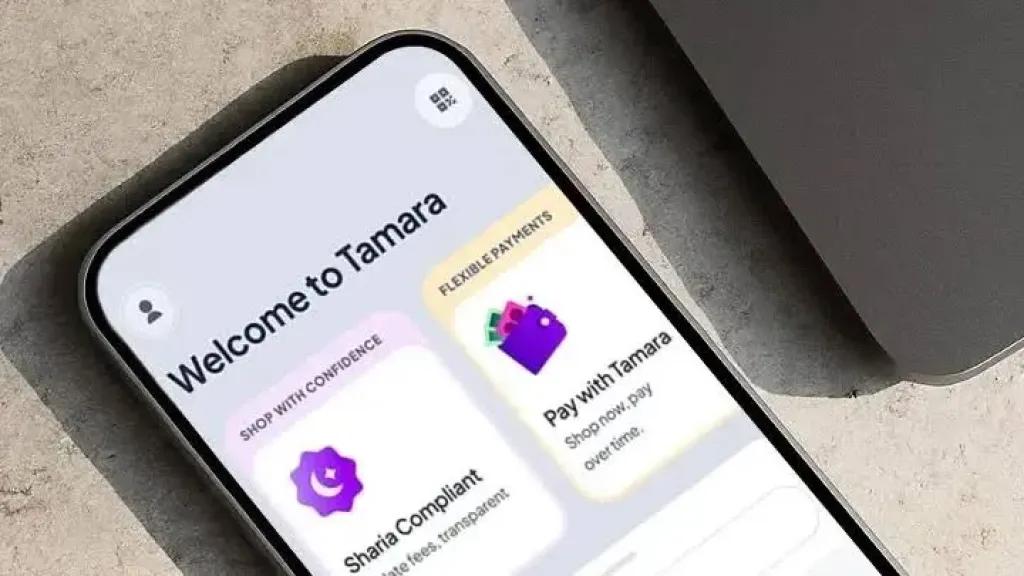
Saudi fintech company Tamara has signed a SAR 749 million (approximately $200 million) financing facility with Japan's Mitsubishi UFJ Financial Group (MUFG), marking another significant step in the growing relationship between international banks and the Middle East's buy now, pay later (BNPL) industry.
Announced on November 23, 2026, the agreement forms part of an initial $400 million asset-backed financing package involving MUFG and Standard Chartered. The package includes the SAR-denominated facility from MUFG and an additional $200 million expansion of Tamara's existing US dollar-denominated financing facility with Standard Chartered.
According to Tamara and MUFG, the transaction marks the first time an international bank has provided a regional fintech company with Saudi riyal-denominated securitisation funding. The structure also draws on MUFG's expertise in Shariah-compliant financing.
How Do BNPL Companies Finance Their Operations?
Buy now, pay later platforms allow consumers to split purchases into instalments while merchants receive payments under their commercial agreements with the financing provider.
Behind this seemingly simple shopping experience is a capital-intensive business model. BNPL companies must maintain sufficient liquidity to finance customer purchases, settle merchant payments and support growing transaction volumes.
Rather than relying exclusively on shareholder capital or equity investments, these companies can obtain financing from banks and institutional investors. Their existing consumer financing receivables can serve as collateral, allowing them to raise funds against expected future repayments.
This is where asset-backed financing (ABF) becomes important. Under this model, financing is supported by identifiable financial assets that generate cash flows, such as outstanding consumer instalments.
Securitisation is one structure used to organise this type of funding. It involves placing eligible receivables within a financing arrangement that allows lenders to provide capital against the expected collections.
What Happens to Customer Instalments?
Tamara's financial statements provide a practical example of how this mechanism works.
Its financing structure involves a special-purpose financing vehicle, Tamara Capital DAC, which facilitates asset-backed transactions. Tamara Finance Company provides financing through a Murabaha arrangement with this vehicle, supported by eligible consumer receivables.
The company's disclosures show that collections from the secured portfolio are channelled according to contractual payment priorities, including financing costs, repayment obligations and the replenishment of eligible collateral.
Importantly, securitisation does not automatically mean that the company transfers all the underlying credit risk to lenders. Tamara's September 2026 financial statements indicate that it retains the risks and rewards associated with the secured consumer receivables, including exposure to customer defaults.
Why Are International Banks Interested?
The financing agreement comes as Tamara expands its regional operations. The company says it serves more than 26 million customers and works with over 160,000 merchants across Saudi Arabia and the wider GCC.
Its financial statements illustrate the scale of this expansion. Net consumer receivables reached approximately SAR 8.44 billion at the end of September 2026, compared with SAR 4.05 billion at the end of 2025. Borrowings increased to approximately SAR 7.52 billion from SAR 3.76 billion over the same period.
For the first nine months of 2026, Tamara reported revenue of SAR 2.26 billion, compared with SAR 829 million a year earlier. Net profit reached SAR 411 million, up from SAR 92.4 million.
However, expansion also brings higher financing requirements. The company's funding costs increased to SAR 316.8 million during the first nine months of 2026, compared with SAR 152.4 million in the corresponding period of 2025.
The transaction also highlights the growing role of international financial institutions in funding digital consumer finance businesses. For banks such as MUFG and Standard Chartered, these arrangements provide exposure to structured financing opportunities in a rapidly developing fintech market.
The exact pricing, maturity and repayment schedule of the new MUFG facility have not been disclosed. The announcement also does not indicate any direct changes to customer instalment schedules or fees.
Ultimately, the agreement illustrates an important part of the BNPL business model: while consumers interact with a mobile application to split their purchases into instalments, the company's ability to keep financing those purchases depends on a broader institutional funding network, secured receivables, liquidity management and credit risk controls.
related topics
 SAR 749 Million Strategic Partnership Between MUFG and Tamara to Boost Saudi...
 Egypt’s FRA Introduces Standard Consumer Finance Contracts to Strengthen Customer Protection
 Souhoola Expands Alternative Data Analytics to Boost Financial Inclusion and Insures Customers...
 Kiwe Officially Launches Its App and Card in Egypt with a Social...
 Global Partnership Between UnionPay and Transsion to Boost Digital Payments via T...
 For the Second Year Under the Auspices of the Ministry of Communications......
 Network International Gathers 150 Government and Financial Leaders in Abu Dhabi to...
 Visa Partners with Egypt’s TradeTech Sandbox to Advance Digital Payments and Cross-Border...
 Binance Secures Global Court Order to Freeze $6.5 Billion in Digital Assets
 Aman Holding Partners with National Bank of Egypt and International Investor to...
 Contact Financial Holding Reports EGP 1.8 Billion in Operating Income for 9M...
 AMAN Holding Reports 23% Revenue Growth to EGP 8.086 Billion in the...
