CONNECT PS Highlights Project Management as a Competitive Advantage for Technology Companies
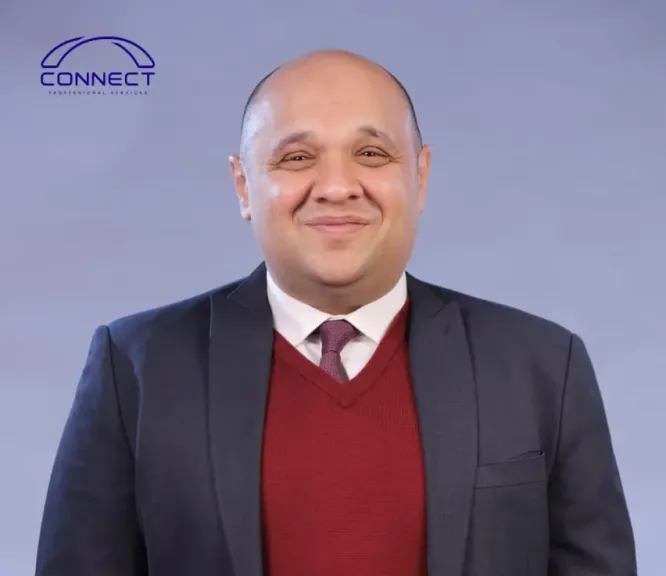
Mohamed Nair, Head of Project Management Operations at CONNECT PS, emphasized that project management has evolved beyond an administrative function focused on tracking tasks and deadlines into a major competitive advantage for technology companies.
He explained that effective project management plays a central role in transforming technological solutions into tangible business outcomes and measurable value for customers.
Nair noted that CONNECT PS's methodology is built around connecting strategic objectives with practical execution through an integrated project lifecycle management framework. The process begins with understanding customer requirements and defining project objectives and scope, followed by planning, implementation, monitoring, and formal closure, including performance evaluation and lessons learned.
An Integrated Approach to Project Lifecycle Management
Nair explained that CONNECT PS adopts internationally recognized practices and standards aligned with the Project Management Institute (PMI) and the Project Management Body of Knowledge (PMBOK).
These frameworks are adapted to the specific nature, size, and complexity of each project rather than being applied as rigid models, allowing the company to address different customer requirements more effectively.
He added that successful project delivery depends on balancing several essential factors, including adherence to agreed timelines and budgets, fulfillment of the defined project scope, and compliance with quality and acceptance standards.
These elements provide key benchmarks for assessing implementation efficiency and customer satisfaction.
Governance and Collaboration Across Project Teams
Nair highlighted governance as a fundamental pillar of CONNECT PS's project management model.
The company's approach establishes a clear decision-making structure involving customers, implementation teams, and relevant stakeholders.
This structure includes steering committees, project sponsors, project managers, commercial and technical teams, consultants, quality assurance teams, and the Project Management Office (PMO).
Such an arrangement strengthens coordination among stakeholders and helps bridge the gap between commercial requirements and technical implementation.
Proactive Risk and Change Management
He stressed the importance of managing risks and project changes proactively.
CONNECT PS works to identify potential risks, assess their likelihood and impact, and develop response plans before they become obstacles that could disrupt project progress.
Change requests are also subject to detailed assessments to determine their potential impact on project scope, timelines, costs, and quality before approval and integration into the implementation plan.
This approach helps maintain project stability while ensuring that adjustments remain aligned with the agreed objectives.
Combining Discipline with Flexibility
Nair explained that one of the defining features of CONNECT PS's methodology is its ability to combine structured execution with operational flexibility.
The framework establishes consistent performance and governance standards while allowing adjustments based on each customer's requirements and the project's specific characteristics.
He emphasized that project management effectiveness should not be measured by the number of meetings held or reports produced, but rather by the clarity of decisions, the quality of deliverables, and the ability to meet agreed commitments.
Project Management as a Foundation for Long-Term Partnerships
Nair concluded that effective project management is essential to building sustainable, long-term customer relationships.
It provides clients with clear visibility into project progress, enables teams to understand their responsibilities, and helps management identify deviations early and address them before they affect delivery.
According to Nair, this approach transforms successful project execution from an occasional outcome into a structured and repeatable organizational process, strengthening customer confidence and enabling technology companies to deliver sustainable value.
related topics
 Mastercard Supports Egyptian Banks in Adopting AI to Improve Banking Efficiency and...
 pulse by solutions Makes a Historic Return to Cairo ICT 2026 with...
 Digital Transformation in Healthcare: New Draft Law and Smart Strategies to Upgrade...
 Raya Digital’s Strong Presence at Cairo ICT 2026 Featuring Over 40 AI...
 Governance and Security of Enterprise AI Take Center Stage at ”Multi-Agent Systems”...
 ”AI Factories” at Cairo ICT 2026: A Global Race to Build Ultra-Infrastructure...
 Geidea Aims to Double Its Merchant Base in Egypt by 2027 and...
 Dubai Media Academy Wins ”AI in Arab Media” Award at Cairo ICT...
 CIB Looks Toward the Future of Digital Banking and AI at Cairo...
 Strategic Partnership Between Mastercard and Housing and Development Bank to Enhance Digital...
 Osama Kamal at PAFIX Opening: Financial Inclusion in Egypt Has Become a...
 Egypt Participates in the ITU Plenipotentiary Conference (PP-26) in Doha