Mastercard Supports Egyptian Banks in Adopting AI to Improve Banking Efficiency and Combat Fraud
Mastercard is expanding its cooperation with banks operating in Egypt to accelerate the adoption of artificial intelligence across banking operations and services, providing technical consulting, digital solutions, and practical use cases to improve transaction efficiency, strengthen security, and protect customer data.
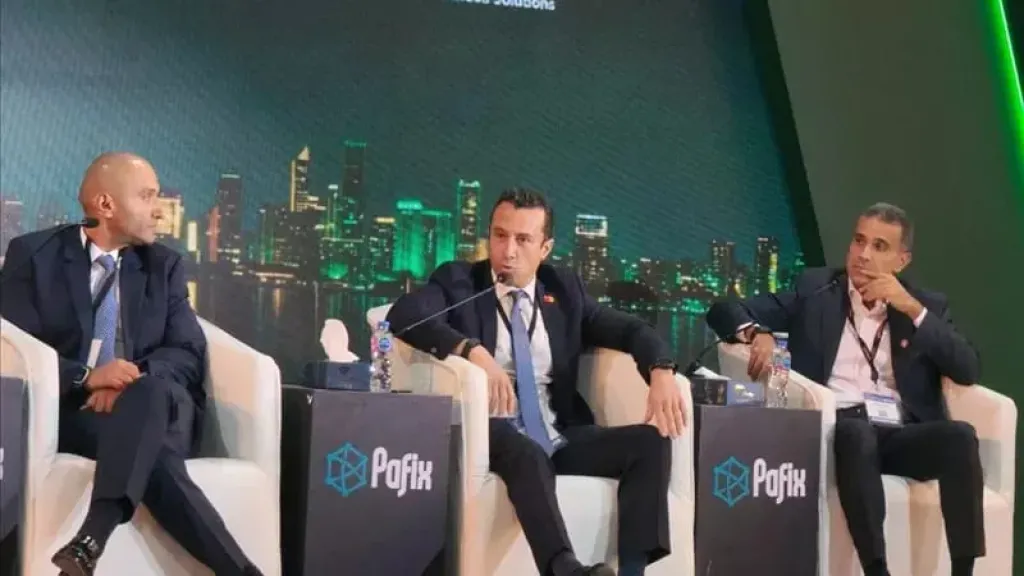
Ahmed Metwally, Mastercard's Vice President and Country Manager for Egypt, said during a session titled "Beyond the Transaction: AI as the Next Frontier in Payments" at the PAFIX conference on Monday that the company works with Egyptian banks to develop AI strategies, identify relevant applications, and provide the technological tools required to integrate these solutions into existing banking systems.
Metwally noted that Mastercard has been using artificial intelligence internally for more than 20 years, particularly in cybersecurity, fraud prevention, suspicious transaction detection, commercial applications, and operational optimization.
AI Governance and Cybersecurity for Banks
Metwally explained that Mastercard's cooperation with Egyptian banks includes advisory services to establish appropriate AI governance frameworks, develop technology strategies, and identify the infrastructure requirements needed for secure and effective implementation.
The company also provides digital tools, technological solutions, and software components that can be integrated into existing banking applications and systems while meeting security, data protection, and governance requirements.
He emphasized that securing AI applications is a major priority, as the rapid development of these technologies is accompanied by new cybersecurity threats. Banks therefore need to continuously update their protection measures and strengthen their ability to detect and respond to emerging risks.
AI Agents Transforming Banking Services
The collaboration also covers the exploration of artificial intelligence agents, or AI Agents, for both internal banking operations and customer-facing services.
According to Metwally, these technologies can support the development of digital assistants capable of independently performing specific tasks within the permissions granted to them.
Within banks, AI agents can help employees complete routine tasks, process documents, retrieve information, and access institutional knowledge, improving workflow efficiency and supporting staff productivity.
For consumers, these agents could perform tasks on behalf of customers, including booking cinema tickets and making restaurant and entertainment reservations through interactions with merchants and service providers.
Metwally stressed that such transactions require reliable mechanisms to verify an AI agent's identity and confirm that it has received customer authorization before executing payments.
He added that payment card information must be protected through encryption and tokenization technologies, ensuring that sensitive payment credentials are not directly exposed.
Mastercard is also working to enable merchants to verify that an AI agent is authenticated and authorized by the customer before completing bookings and payments.
AI-Powered Fraud Detection and Personalized Offers
Metwally highlighted the role of artificial intelligence in strengthening banks' fraud detection capabilities by analyzing customer behavior and transaction patterns.
These systems can identify unusual activities and transactions that differ from customers' regular behavior, allowing banks to generate alerts and take action to protect accounts and financial transactions.
AI applications supported by geolocation data can also help banks develop more personalized banking offers.
By analyzing available information about customers' locations, spending habits, budgets, and account balances, banks can identify relevant offers and deliver them at more appropriate times and locations.
This approach can improve customer targeting and make banking services more closely aligned with individual consumer needs.
Regulatory Compliance and Customer Data Protection
Metwally stressed that AI applications in the banking sector must comply with regulatory requirements issued by the Central Bank of Egypt.
He also highlighted the importance of selecting appropriate cloud infrastructure, maintaining data integrity, and strengthening cybersecurity measures when handling sensitive banking information.
Mastercard's cooperation with Egyptian banks ultimately aims to use technology to improve operational efficiency and customer experiences while maintaining strong standards of security, governance, and regulatory compliance.
related topics
 pulse by solutions Makes a Historic Return to Cairo ICT 2026 with...
 Tabby Cash Attracts One Million Accounts in the UAE Within Two Months...
 ”Zero Trust” at Cairo ICT 2026: Hacker Return to Old Tactics and...
 Cyshield Awards Winners of Cybersecurity CTF Competition at Cairo ICT 2026
 Local Investments Drive Fintech: Banks and Telecoms Integrate to Support Innovation and...
 Digital Transformation in Healthcare: New Draft Law and Smart Strategies to Upgrade...
 Egypt, ITFC Explore Export Financing, Startup Support and Development of Up to...
 Central Bank of Egypt Shifts to ”Financial Inclusion 2.0”: Focus Moves to...
 Axis Pay CEO: Egypt Has the Potential to Build Billion-Dollar Fintech Companies...
 Raya Digital’s Strong Presence at Cairo ICT 2026 Featuring Over 40 AI...
 Governance and Security of Enterprise AI Take Center Stage at ”Multi-Agent Systems”...
 ”AI Factories” at Cairo ICT 2026: A Global Race to Build Ultra-Infrastructure...