


Erada Finance Portfolio Hits EGP 5 Billion as Partnerships Drive Half of Its Lending
Erada Finance has grown its financing portfolio to around EGP 5 billion across 100,000 customers, with partnerships now generating roughly half of its business as the e& Egypt-backed company increasingly uses technology and external data ecosystems to reach small businesses.
Amr Abou El Azm, Co-Founder, CEO and Vice Chairman of Erada Finance, said the company currently works with around 12 partners whose technology and customer databases help it identify potential borrowers, understand their needs and deliver financing products more efficiently.
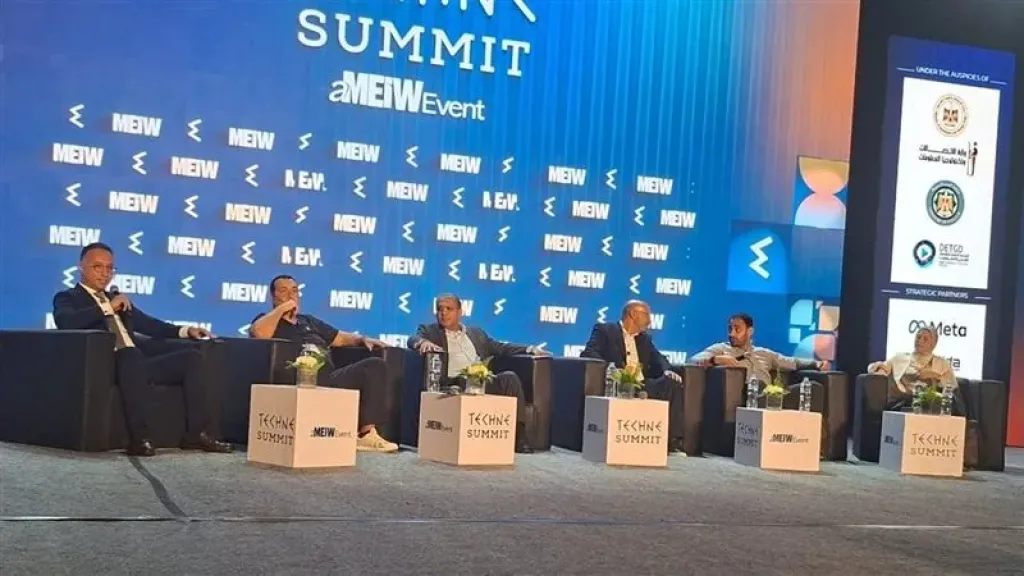
Speaking during the “Beyond Banking: How Startup Innovation Is Reshaping Financial Services” session at Techne Alexandria 2026, Abou El Azm said the portfolio covers micro, small and medium-sized enterprises.
The numbers also reveal a relatively young customer base: around 75% of Erada’s customers are between 21 and 35 years old.
Half of Erada’s Portfolio Comes Through Partnerships
Partnerships have become a central part of Erada’s distribution model rather than an additional sales channel.
Abou El Azm said approximately half of the company’s portfolio is generated through partners that already have customer databases.
Working with companies that have established relationships with businesses and individuals allows Erada to reach potential borrowers without relying entirely on conventional customer acquisition.
The model also gives the lender access to additional data that can help it understand different customer segments and develop financing products around their actual requirements.
Erada currently has around 12 partners supporting this ecosystem.
The company’s connection to e& Egypt adds another technology and customer-data dimension, combining financing expertise with the capabilities of a major telecommunications and technology group.
100,000 Customers — and Three-Quarters Are Under 35
Erada has now reached approximately 100,000 customers, with around three out of every four aged between 21 and 35.
That demographic profile is significant for a financing company focused on micro, small and medium-sized businesses.
It suggests that alternative financing providers are increasingly serving younger entrepreneurs and business owners who may interact with financial services differently from previous generations.
Abou El Azm said technology has changed how financial institutions approach these customers.
Instead of starting with a predefined financing product and finding customers for it, lenders can increasingly use data to understand what a business actually needs and then offer a more appropriate financing structure.
From One Loan to a Longer Customer Relationship
Erada’s strategy is also shifting the focus from completing individual financing transactions to building longer relationships with customers.
Abou El Azm said the objective is not simply to provide financing, but to identify the product that fits each customer’s requirements and supports the continuity and growth of their business.
That could mean providing different products as a company develops, including asset financing and working-capital financing.
Greater transparency in a customer’s transactions can also create a financial track record.
Abou El Azm said many Erada customers are becoming more transparent in their transactions, with tax records and a growing move toward operating within the formal economy.
More consistent and visible financial data can eventually help customers qualify for larger financing amounts as their businesses expand.
Egypt’s MSME Finance Market Has Expanded to 4 Million Customers
The growth of Erada is taking place against a much larger expansion in Egypt’s financing market for micro, small and medium-sized enterprises.
Abou El Azm said the sector’s customer base has grown from an earlier level of around 100,000 to 200,000 customers, later reaching two million and eventually approximately four million customers.
Over the same broad period, financing volumes increased from around EGP 10 billion to EGP 120 billion, he said.
The number of institutions operating in the market has also expanded sharply, moving from only a handful of companies to close to 20 players.
He attributed the development of the market to regulatory progress, cooperation involving the Central Bank of Egypt and the Financial Regulatory Authority, and the growing role of banks and non-bank financial institutions in extending financing to underserved customer segments.
Securitization and Factoring Expand Funding Options
Growth in the sector is also changing how financing companies fund themselves.
Abou El Azm said institutions are no longer dependent exclusively on traditional sources of liquidity, with instruments including securitization and factoring providing additional funding alternatives.
Banks and non-bank lenders can play complementary roles within this structure.
Banks can provide funding to financial institutions, while specialized financing companies can use their distribution capabilities and customer knowledge to reach smaller businesses requiring different ticket sizes and financing structures.
Greater competition, meanwhile, is forcing providers to improve products and services even as credit risks remain elevated.
Data Could Become the Next Growth Engine
Despite the sector’s expansion, Abou El Azm identified the shortage and poor quality of business data as one of the biggest obstacles facing SME finance.
Small businesses do not always have the structured financial information lenders traditionally use to assess creditworthiness.
Technology could increasingly close that gap.
Abou El Azm pointed to electronic tax invoices and technology-enabled cash-flow analysis as tools capable of giving lenders a clearer view of the real activity taking place inside a business.
Transaction volumes, frequency, history and continuity can provide additional indicators of how a company is actually performing.
That could gradually shift credit assessment away from heavy dependence on conventional documentation toward a model in which real transaction behavior plays a larger role.
InstaPay Shows How Quickly Financial Behavior Can Change
Abou El Azm also highlighted InstaPay as an example of how financial technology can rapidly change the movement of money and the way individuals and merchants handle transactions.
The broader implication for lenders is significant.
As more transactions become digital, financing companies can potentially work with richer financial signals, shorten customer journeys and develop products more closely aligned with actual business activity.
For Erada, that transition is already visible in its numbers: a EGP 5 billion portfolio serving 100,000 customers, with half of the business flowing through partnerships and 75% of customers aged between 21 and 35.
The next stage of competition in SME finance may therefore depend less on which lender has the largest branch network and more on who can combine partnerships, technology and transaction data to understand businesses faster and finance them more accurately.
related topics
 e& money Leads Digital Wallets in Egypt in H1 2026
 ITIDA Highlights Egypt’s Startup Opportunity in the Age of AI at Techne...
 Techne Summit Alexandria 2026 Opens in Egypt with 45,000 Participants Expected
 Banknbox Targets Five New Markets as Egyptian Banking Technology Moves Beyond Payments
Erada Finance Targets EGP 2.5 Billion Financing Portfolio by End of 2026
 inDrive Highlights the Future of Smart Mobility and Urban Services at Techne...
 Egypt’s Finance Minister at Techne Summit: Dialogue with Startups Drives Innovation and...
 Egyptian Tax Authority Unveils Simplified Tax Regime to Fuel Startup and SME...
 Sawari Ventures' Ahmed El Alfi Highlights Funding Gaps and Urges Pivot to...
 CBE Announces Winners of FinTech Got Talent 2026 to Support Student Innovation
 Ericsson Outlines AI's Dual Impact on Telecom Networks and Advances 5G Rollout...
 e& Egypt Named Egypt’s Best-Performing Mobile Network by P3, Earns P3 Test...