


Egyptian Tax Authority Unveils Simplified Tax Regime to Fuel Startup and SME Growth at Techne Summit
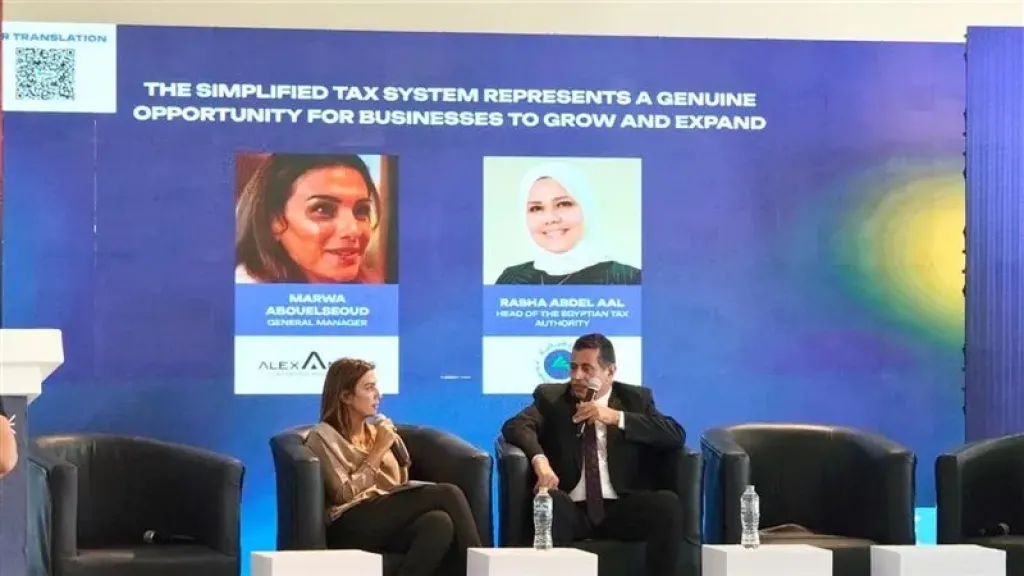
The Egyptian Tax Authority (ETA) is fundamentally transforming its relationship with the business community, shifting from a traditional collection and enforcement mindset toward building a transparent, supportive partnership with investors, startups, and micro-enterprises to foster their growth and expansion.
Speaking at a Techne Summit panel titled 'The Simplified Tax System Represents a Genuine Opportunity for Businesses to Grow and Expand,' Ragab Mahrous, Advisor to the Head of the ETA, highlighted a major paradigm shift in fiscal policy since Finance Minister Ahmed Kouchouk took office in July 2024. While acknowledging that taxes constitute 75% to 80% of the state treasury's resources, Mahrous emphasized the government's commitment to streamlining procedures for the business ecosystem.
**Streamlined Registration and Proportional Tax Rates**
Targeting the needs of taxpayers, particularly early-stage and e-commerce ventures, the ETA now allows founders to open a tax file using solely their National ID, effectively eliminating the previous requirement for physical proof of commercial headquarters.
Furthermore, Mahrous detailed the newly enacted Law No. 26 of 2025 regarding the simplified tax system. This legislation introduces a proportional tax mechanism based on annual turnover, empowering taxpayers to seamlessly determine their liabilities rather than awaiting ETA assessments at year-end. The simplified turnover brackets are structured as follows:
• 0.4% for turnover from EGP 1 to EGP 500,000.
• 0.5% for turnover between EGP 500,000 and EGP 1 million.
• 0.75% for turnover between EGP 1 million and EGP 3 million.
• 1% for turnover between EGP 3 million and EGP 10 million.
• 1.5% for turnover between EGP 10 million and EGP 20 million.
**Fostering Trust and Restructuring MSMEs**
In a bid to bolster trust, the ETA is relying heavily on self-assessment through electronic tax returns. Mahrous noted that physical field audits may be deferred for up to five years, allowing businesses to adjust and rectify data in subsequent years without disrupting their early growth phases.
Under the MSME Law, businesses are classified by turnover: Micro-enterprises (EGP 1 to EGP 1 million), Small enterprises (EGP 1 million to EGP 50 million), and Medium enterprises (EGP 50 million to EGP 200 million). Scaling across these tiers poses no tax hurdles, though founders must notify the ETA when onboarding new investors or transferring shares—procedures that differ slightly for companies listed on the Egyptian Exchange (EGX).
**Proactive Advisory and Digital Transformation**
To provide regulatory certainty, the ETA has established an 'Advance Ruling Unit,' enabling startups and investors to request binding tax opinions on the implications of future financial transactions.
Addressing the digital leap, Mahrous explained that the Unified Tax Procedures Law mandates the use of E-invoicing for B2B transactions and E-receipts for B2C sales. Integrated with the electronic tax returns system—active since 2018—this real-time data transmission ensures higher security, credibility, and transparency between buyers, sellers, and the state.
related topics
 Sawari Ventures' Ahmed El Alfi Highlights Funding Gaps and Urges Pivot to...
 Akamai Technologies Inks $11.6 Billion Cloud Deal with Anthropic, Shares Surge 22%
 Kaspersky Warns of Digital Privacy Risks for Minors Amid Viral 'Aura Farming'...
 -PayPal Stock Surges 4% on Renewed Tech Buyout Speculation Following Stripe Deal...
 WhatsApp Tests New Feature to Display Contact Birthdays Directly in Chat Info
 Egypt Targets Up to 5.4% Economic Growth as S&P Reviews Sovereign Credit...
 Egypt’s ICT Minister Opens DevOpsDays Cairo 2026 to Explore the Future of...
 Egypt Prepares to Restart LNG Shipments from Idku in October
 Egypt’s FRA Expands Cooperation with Arab Securities Regulators on Training and Capital...
 ”ايسكور iscore” تطلق خدمة رقمية للاستعلام عن الأحكام الجنائية بالتعاون مع النيابة...
 Huawei's latest report proposes 10 key directions to Intelligent World 2035
 Up to 75% Off and 60-Month Installments: 2B and Valu Launch Mega...