


DIFC Report Warns Traditional Banks Face $170 Billion Profit Hit by 2030 Unless AI-Driven Models Are Adopted
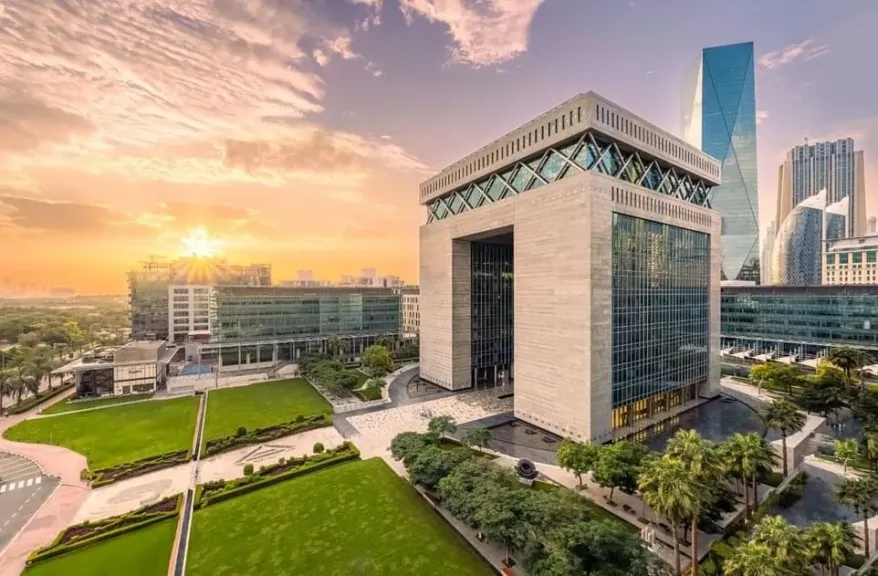
public output from the Dubai International Financial Centre (DIFC) published today under its "Future of Finance 2026" series highlights that the future of banking no longer resides in legacy asset sizes or institutional scale. Instead, sector survival depends strictly on building organizational agility and responsive frameworks capable of navigating hyper-accelerated volatility.
The blueprint, titled “The Changing Face of Banking: Building Resilience Through Change,” analyzes how global commercial lenders adapt operating models to counter disruption, optimize cloud infrastructure, and maintain market metrics amidst the heavy influx of artificial intelligence, agile neo-banks, and evolving global consumer demand.
According to the report, cloud-native, asset-light digital banks are resetting benchmarks for settlement speed, hyper-personalization, and cost efficiency. This expansion exposes structural bottlenecks within legacy bank architectures, forcing established players to rapidly accelerate tech deployments to defend their market share.
The Traditional Banking Crisis and the AI Solution
The Valuation Risk: The report forecasts that legacy banking profits will compress by $170 billion by 2030 if institutions fail to execute structural overhauls. This contraction risks dragging multiple tier-one firms below their minimum required cost of capital.
The AI Infrastructure: Generative AI is identified as the primary vector to bridge this operational gap. Transitioning into core banking infrastructure, AI is driving immediate productivity gains and setting the baseline for next-generation operating protocols.
Arif Amiri, Chief Executive Officer of the DIFC Authority, stated: "Banking institutions must accelerate innovation and expand adaptive resilience to thrive within an environment disrupted by AI, digital assets, and global market fluctuations. In Dubai and specifically at the DIFC, we are fully committed to enabling this macroeconomic pivot by providing a future-ready hub connecting global institutions to growth pockets across MEASA, while supporting lenders to secure long-term operational readiness."
Crowdsourced Insights and Regional Testbeds The findings synthesize conclusions from a high-profile round-table hosted by the center earlier this year, supplemented by network analysis and interviews with elite sector specialists, including:
Ambareen Musa: Regional CEO at Revolut.
Rohit Garg: Head of Retail Products and Chief Digital Officer – Retail Banking & Wealth Management at Emirates NBD.
Fernando Morillo: Group Head of Retail Banking at Mashreq.
The data reveals that early adopters will not only safeguard net interest margins but will successfully penetrate untapped demographics, unlock fresh geographical trade corridors, and capture emerging asset classes.
Furthermore, the report notes that banking capital flows naturally toward sovereign jurisdictions that provide supportive regulatory sandboxes to stress-test algorithmic governance. As the world’s first finance hub to fully integrate artificial intelligence into market infrastructure and regulatory operations, the DIFC allows institutions to validate AI-powered solutions in a secure environment prior to scaling across the region. Housing 290 banks and financial entities—including 17 of the world’s top 19 globally systemic banks—the center remains the ultimate strategic staging ground for structural banking evolution.
Niche Capital Flows and Family Offices The text highlights a major demographic shift: entrepreneurs, family offices, and female investors have emerged as the most influential wealth drivers in the banking pipeline. However, their evolving requirements demand highly targeted wealth management solutions. By leveraging predictive AI analytics to deliver customized advisory models, lenders can unlock distinct revenue pools.
Dubai stands out as a premium capital magnet in this ecosystem. Through the DIFC, the emirate supports family offices with institutional-grade private banking models that combine algorithmic customer experiences with progressive digital asset regulation and fluid operating frameworks.