


Huawei Digital Power Unveils Grid-Interactive AI Data Center Strategy to Optimize ”Energy-to-Token” Conversion
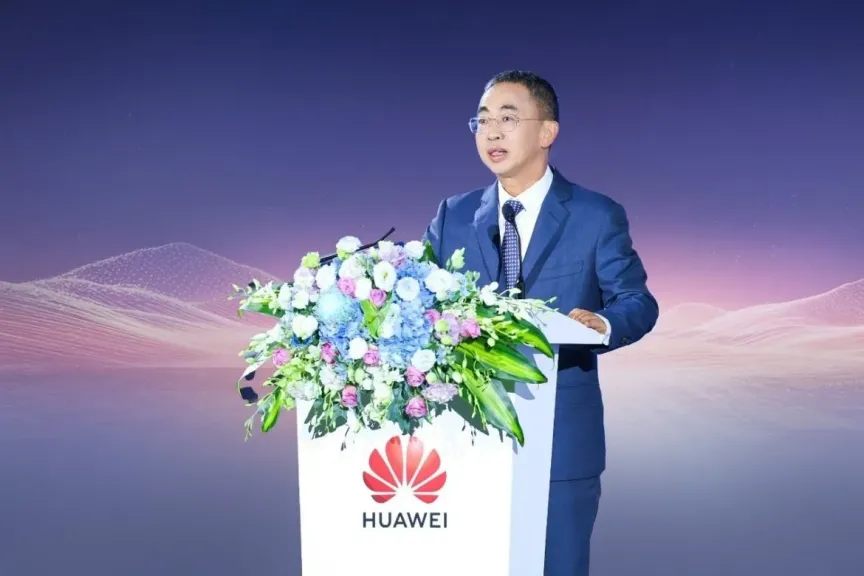
Huawei Digital Power hosted the 2026 Global AIDC Industry Summit & Huawei AIDC Strategy and Product Launch in Dongguan under the theme "Advancing the AI Era." The summit brought together approximately 1,000 global leaders, tech experts, and key ecosystem partners across the energy, intelligent computing, and telecommunications sectors to discuss the evolution of next-generation AI data center architectures and witness the rollout of Huawei’s grid-interactive AI data center strategy.
Hou Jinlong, Board Member of Huawei and President of Huawei Digital Power, delivered a keynote address outlining the massive power demands generated by the boom of the AI sector, the widespread adoption of large models, and the exponential growth of AI agents. Hou noted that electricity has become the fundamental currency for computing, stating that power is the baseline for long-term AI development. He projected an accelerating synergy between computing and electricity that will gradually lead to an integrated framework merging new power systems with AI infrastructure.
Engineering Requirements for Ultra-High Density
The tech executive emphasized that reliable power supplies and grid interactivity are vital to ensure stable, long-term operations for AI data centers. To support ultra-high-density computing loads, high-voltage direct current (HVDC) architectures, power electronics, and advanced liquid cooling systems have transitioned from operational choices to mandatory engineering requirements. Furthermore, because AI data centers function fundamentally as power-to-computing production systems, the velocity of deployment directly influences commercial returns and return on investment (ROI).
Huawei Digital Power is leveraging its closely coupled "4T" technology stack—Bits, Watts, Heat, and Battery—to anchor its position in renewable power generation, grid-forming capabilities, high-density power supply, and liquid cooling. Amid massive sector transformations, Hou confirmed Huawei Digital Power’s commitment to acting as a long-term strategic partner to drive high-quality, sustainable industry development, aiming for optimized sustainability, maximized tokens per watt, and minimized cost per token.
The "3+1" Strategic Innovation Framework
Bob He, Vice President of Huawei Digital Power, delivered a technical keynote titled "Building Grid-Interactive AI Data Centers and Maximizing Tokens per Watt." He explained that as the global AI sector enters the "Token Era," diversified high-density computing introduces severe challenges regarding power density, scale, and high load fluctuations. Concurrently, increased renewable energy penetration introduces volatility to power grids, while frequent load spikes from AI workloads complicate data center reliability.
To mitigate these operational strains, Huawei launched its grid-interactive AI data center strategy, centered on a "3+1" innovation framework designed to deliver reliable, energy-efficient, rapidly deployable, and grid-compliant infrastructure:
Watt Innovation (Grid-to-Chip Power): Addressing load diversity, Huawei is engineering a multi-input, multi-output power architecture. Backed by grid-interactive Uninterruptible Power Supply (UPS) units and grid-forming energy storage systems, the architecture will evolve toward an integrated grid-forming power router utilizing Solid-State Transformer (SST) technology to flexibly meet high-density AI computing demands.
Heat Innovation (Full-Lifecycle Thermal Management): Shifting focus from basic equipment cooling to holistic full-lifecycle thermal systems, Huawei introduced an AI-driven, megawatt-level liquid cooling system engineered to transition large-scale liquid cooling deployments from basic availability to long-term operational reliability.
Bit Innovation (AI-Enabled Full-Lifecycle Operations): Utilizing digital and intelligent systems across the entire lifecycle—from design and delivery to asset management—the platform provides end-to-end visibility, holistic reliability, and optimized O&M efficiency.
Construction Innovation (Prefabricated Modular Prefabrication): Transforming traditional engineering outputs into standardized products, Huawei utilizes prefabrication and modular design to execute full-scale design, production, testing, and validation inside the factory, leaving only assembly for the site to compress time-to-market and ensure deployment quality.
Transitioning from PUE to Energy-to-Token Value Metrics
The Vice President highlighted a paradigm shift in industry evaluation models, stating that the upper ceiling of AI computing is ultimately dictated by the upper ceiling of power supply—coining the concept "Energy as the Foundation for Token Production."
Under this framework, traditional Power Usage Effectiveness (PUE) metrics are no longer sufficient to fully measure the economic value of AI data centers. Huawei is proposing a structural transition from "energy efficiency metrics" to "value metrics," introducing the Energy-to-Token Index to calculate the comprehensive conversion efficiency of raw power into computing tokens. He concluded that in the AI era, data centers have evolved from traditional server rooms into hyper-factories dedicated to token production, mandating sustained R&D investment into grid-interactive architectures to advance the global AI landscape.
related topics
 EFG Finance Revenues Rise 20% to EGP 1.6B in Q1 2026, Driven...
 Revolut Launches First Physical Crypto Card Featuring Dogecoin Design and Interactive LED...
 NVIDIA Launches New Research Center in Singapore to Advance Embodied AI and...
 Egypt Launches Unified Environmental Data Registry for Industrial Sector to Comply with...
 The conclusion of the activities of the diplomatic football tournament 2026 at...
Businessman Bassam El-Feky announces the acquisition of the ”Jad” brand to develop...
 New cities authorities are carrying out large-scale campaigns to remove encroachments and...
 Dr. Ahmed Saqr: Generation Z accounts for approximately 55% of transactions on...
 Oriental Weavers Launches Unified Digital Platform to Drive E-Commerce Growth Across the...
 Tech Giant's Annual Developers Conference Kicks Off with Major AI and Android...
 Agricultural Bank of Egypt Receives 464,000 Tons of Wheat Worth EGP 7.2B...
 Basata App Integrates Apple Pay to Deliver Seamless, Secure Transactions for iOS...