


Global Drone Taxi Market Set to Skyrocket to $3.83 Billion by 2032
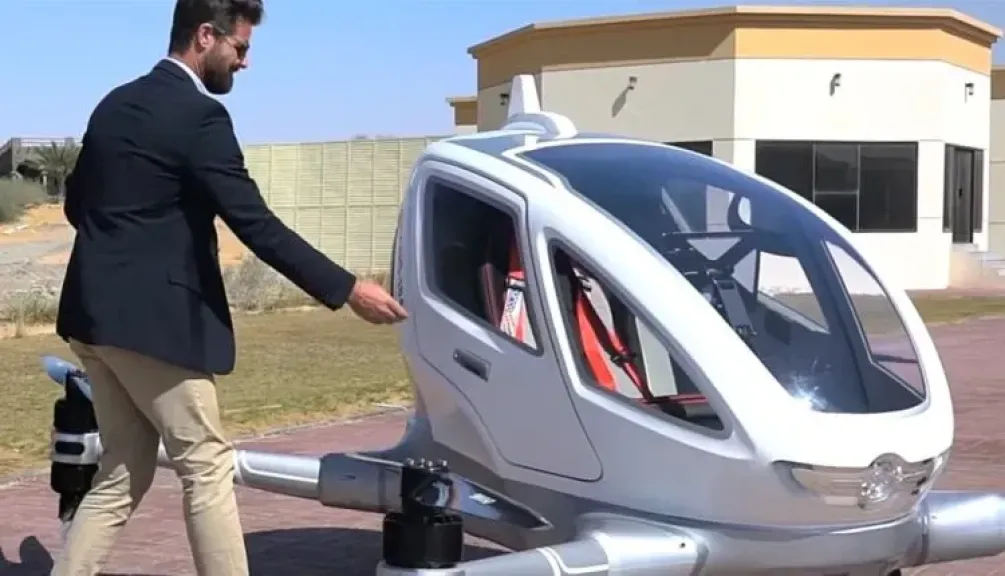
A report by DataM Intelligence revealed that the global drone taxi (eVTOL) market reached $71.93 million in 2024 and is projected to surge to $3.83 billion by 2032, achieving a compound annual growth rate (CAGR) of 62.4% between 2025 and 2032.
The growth reflects a shift from pilot programs to early commercial deployment of urban air mobility services, as governments, aviation authorities, and private investors collaborate to reduce city congestion, cut emissions, and open new horizons for electric vertical takeoff and landing (eVTOL) taxis.
The market is increasingly driven by regulatory advances, infrastructure planning, and airline participation rather than innovation alone. Regulatory frameworks in the U.S., EU, Japan, South Korea, China, and the Middle East now provide dedicated certification pathways for eVTOL technologies, allowing companies to move from testing to conditional approvals.
Airline and airport involvement is accelerating, with traditional carriers investing in drone taxi subsidiaries to expand short-haul airport-to-city services. Advances in autonomy, battery density, and lightweight materials have enhanced flight range, reliability, and operational efficiency.
Propulsion Systems and Passenger Capacity
All-electric eVTOLs dominated 64% of the market in 2024, totaling $46 million, favored for low emissions, low operating costs, and easy adoption. Hybrid propulsion accounted for 21% ($15.1 million), offering longer ranges and higher payloads suitable for intercity travel and defense applications. Hydrogen-powered eVTOLs made up the remaining 15% ($10.8 million), attracting attention for long-range, multi-passenger flights due to fast refueling and high energy density, particularly in Japan and Europe.
Single-seat eVTOLs held nearly 39% of the market, followed by two-seaters at 34%, and multi-passenger models at 27%. This segment is expected to grow rapidly after 2027 as regulatory approvals and infrastructure improve.
Key Applications
Ride-sharing services generated 41% of revenues, followed by airport transfers at 22%, and emergency medical transport at 14%, including organ transport and urgent medical response.
Regional Insights
The U.S. represented about 37% of the global market in 2024, expected to exceed $1.4 billion by 2032, driven by airport transfers and premium urban mobility. Japan accounted for 8%, supported by clear regulations and airline participation, with a market expected to surpass $350 million by 2032.
Leading Players
Major market players include FlyPix AI, Wisk Aero, JAL Air Mobility, Eanan, Lilium, EHang, Joby Aviation, Volocopter, and Archer Aviation, all developing eVTOL technology, autonomous flight, and urban mobility services.
Future Outlook
By 2032, the drone taxi ecosystem is expected to undergo a structural transformation, operating commercial services in over 50 cities, reducing cost per kilometer by 65%, expanding autonomous flight approvals, integrating with multimodal transport, and cutting carbon emissions by up to 90% compared to conventional taxis.