Trump Urged Nvidia’s Jensen Huang to Fight for His Job Before Resignation
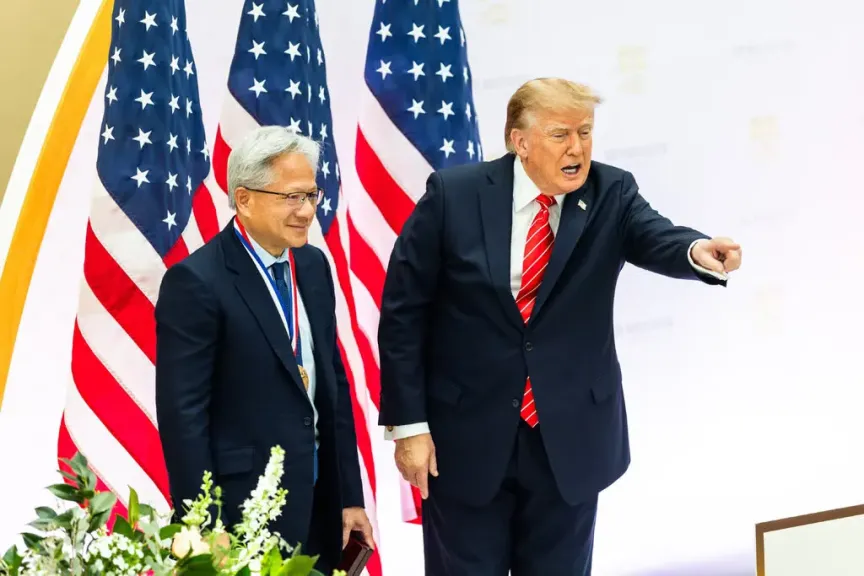
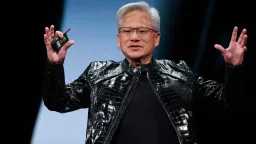
President Donald Trump personally urged Jensen Huang to fight to retain his position at Nvidia during a phone call on Tuesday, shortly before the company's chief executive stepped down amid a growing espionage scandal, according to two people briefed on the conversation.
The call marked another show of support for Huang, who had become a prominent presidential ally and influential adviser on artificial intelligence, despite mounting intelligence concerns over his alleged relationship with a woman suspected of working for China.
Nvidia announced on Thursday that Huang, who built the company into the world's leading supplier of advanced AI chips, had been replaced as chief executive. Reports had raised questions about his relationship with a Chinese woman suspected of espionage, as well as a separate relationship with one of his employees.
Neither Huang's representative nor the White House provided a response to requests for comment.
Intelligence Warnings Failed to Change Trump's Position
The New York Times reported that Trump had been warned at least twice about Huang's relationship with a Chinese citizen known as Alice Huang. U.S. intelligence agencies concluded that she had been recruited by China's Ministry of State Security.
The first warning came late last year, followed by another in the spring. Trump took no action on either occasion and subsequently brought Huang along on his May visit to China.
Even as the controversy intensified, Trump continued to defend the Nvidia executive publicly. In a social media post on Thursday, he described Huang as a "legend."
According to presidential advisers, Trump showed little concern about the national security implications of the intelligence assessments. He reportedly viewed the controversy primarily as a case of adultery and dismissed suggestions that Huang's alleged relationships posed a threat to the United States.
Trump also considered Nvidia too important to fail. The company is among the world's largest by market capitalization and plays a central role in the global economy and Washington's ambitions to maintain an AI advantage over China.
How Huang Became a Presidential Ally
Trump's last-minute effort to protect Huang marked a dramatic shift in a relationship that barely existed two years earlier.
During Trump's first term, Huang had little presence in Washington. He rarely engaged in political lobbying, did not make campaign contributions and showed limited interest in political affairs.
The Biden administration's restrictions on chip exports eventually pushed him to become more involved in Washington.
By late 2024, Trump had come to recognize Huang's importance. Nvidia controlled at least 80 percent of the market for chips used to train the most advanced AI models.
Their relationship developed further in April 2025, when Huang and his wife, Lori, attended a dinner at Mar-a-Lago with Trump and prominent technology and cryptocurrency donors.
Trump became increasingly impressed by Huang's position in the AI industry and the company's importance to the American economy.
The president viewed the AI boom as an opportunity to revive U.S. manufacturing, a goal that had remained largely unfulfilled under his earlier promises to restore coal and steel jobs.
Nvidia's Role in Trump's China Strategy
Huang reinforced his position by announcing in 2025 that Nvidia would produce up to $500 billion in AI infrastructure in the United States. He also offered strong public praise for Trump, calling the president America's unique advantage in July.
He accompanied Trump on his May 2025 trip to the Persian Gulf, where deals were announced for Saudi Arabia and the United Arab Emirates to purchase Nvidia chips.
Huang also persuaded Trump to allow Nvidia to sell certain chip models to China under an arrangement that gave the U.S. government 15 percent of the revenue, later increased to 25 percent.
The policy drew opposition from China hawks within the MAGA movement, including Stephen K. Bannon, who favored a complete ban on chip exports to China. David Sacks, the White House AI and cryptocurrency czar, supported Huang's position.
Trump's Approach to China and Taiwan
Some U.S. officials had questioned Huang's close relationships with Chinese executives and local officials, viewing his approach as potentially careless about national security risks.
Trump, however, was unlikely to share those concerns. His approach to China has largely focused on trade, with a preference for reaching agreements with President Xi Jinping rather than sustaining a prolonged trade confrontation.
He has also largely avoided making China's human rights record a priority. In 2020, when asked why he had not imposed sanctions over the mass detention of Uyghurs in Xinjiang, Trump replied: "Well, we were in the middle of a major trade deal."
People close to the president have also said he privately questioned why the United States would ever go to war over Taiwan.
According to the report, Trump has sometimes used a teaspoon to illustrate his disregard for the island, holding it up to guests at his golf club and saying: "This is Taiwan."
related topics
 NVIDIA Leadership Change Puts Taiwan Suppliers Under Pressure as TSMC, ASE Retain...
 Nvidia Faces Growing Pressure to Bring Back Jensen Huang as 110,000 Sign...
 Jensen Huang Scandal Exposes Alleged Chinese Espionage Risks Across Silicon Valley
 Jensen Huang’s Leadership: Three Factors Behind Nvidia’s AI Dominance
 Alice Huang and Nvidia: Inside the Chinese Spy Scandal
 Who Will Replace Jensen Huang? Nvidia Faces a Critical Leadership Succession Test
 Trump’s Close Ties With Jensen Huang Raise Questions Over Nvidia’s China Policy
 Nvidia Settles Jensen Huang Succession Debate: Naming Candidates is Premature and Interviews...
 Nvidia Co-Founder Jensen Huang Steps Down as CEO as Colette Kress Takes...
 Investment Minister Meets with NVIDIA to Attract Data Center Investments and Localize...
 Raya IT and Cisco Highlight AI Infrastructure, Cybersecurity and Smart Workplace Innovations...
 Backed by Nvidia’s Vote of Confidence: Baseten Aims for $2B Funding to...