Who Will Replace Jensen Huang? Nvidia Faces a Critical Leadership Succession Test
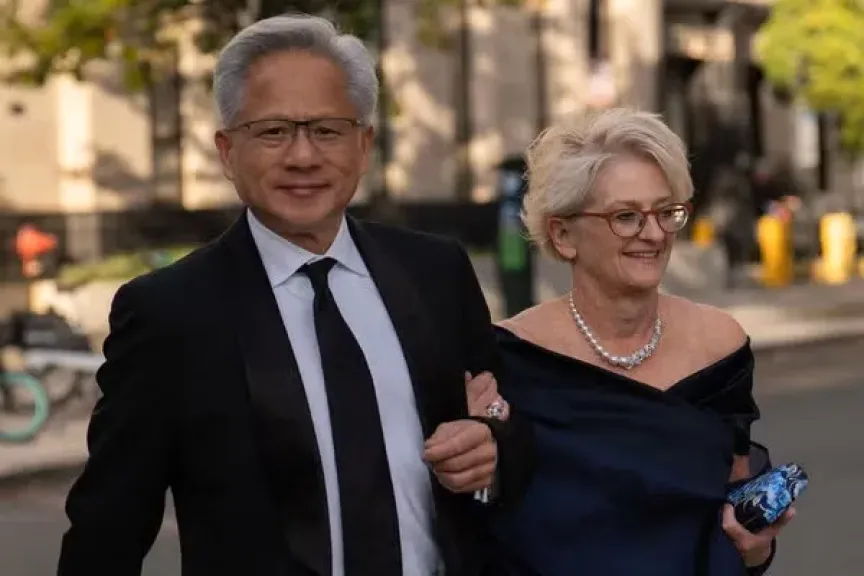
Nvidia is confronting an extraordinary leadership challenge following the resignation of co-founder Jensen Huang, reportedly amid allegations of extramarital relationships, including one involving a woman suspected of spying for China.
Chief Financial Officer Colette Kress has taken over on an interim basis, as attention turns to potential successors capable of leading the semiconductor giant. Huang helped establish Nvidia more than three decades ago and transformed it into one of the world's most valuable companies.
Several executives and technology industry leaders are now emerging as potential candidates.
Colette Kress: The Leading Internal Candidate
Kress, Nvidia's executive vice president and chief financial officer, is among the strongest internal contenders. She has more than 30 years of experience in the technology industry and previously held senior positions at Cisco and Microsoft.
She has witnessed Nvidia's transformation from a video game graphics chipmaker in the early 1990s into a major force in semiconductors powering artificial intelligence.
Josh Gilbert, an analyst at investment firm eToro, noted that Kress regularly joined Huang on earnings calls, making her a familiar and trusted voice for investors.
However, Gilbert suggested that securing the permanent position could be more difficult, as Nvidia might prefer a leader with an engineering background.
Co-Founder and Engineering Leadership
Another potential candidate is Chris Malachowsky, who co-founded Nvidia alongside Huang and Curtis Priem. He is the company's only executive whose tenure is comparable to Huang's and played a central role in developing its computing technologies.
Ian Buck, who oversees Nvidia's high-performance computing business, is also being considered as a possible successor if the company opts for an engineering-focused leader.
Buck was among the early pioneers who helped expand GPU applications beyond video gaming.
Charu Chanana, an investment strategist at Saxo Bank, said Buck could preserve Nvidia's technological advantage, although his ability to manage broader commercial relationships and geopolitical challenges would face scrutiny.
Huang's children also hold executive positions at Nvidia, but their relatively young age and limited experience make them less obvious candidates.
Apple and Arm Executives in the Running
June Pai Liu, founder of Ten Cap and its chief portfolio manager, believes Nvidia may initially favor an internal appointment before considering an external candidate for the permanent position.
One name she identified was Tim Cook, Apple's former chief executive, citing his experience managing global supply chains. However, she questioned whether he would be willing to leave the iPhone maker, where he serves as chairman.
Liu and Chanana also suggested Rene Haas, chief executive of British chip design group Arm Holdings, as a possible contender.
Haas brings experience running a publicly listed company and working in the semiconductor industry, although Arm's business model differs significantly from Nvidia's.
Nvidia relies on manufacturers worldwide to produce its leading processors, including Taiwan's TSMC and South Korea's SK Hynix and Samsung.
According to Liu, the central challenge is finding someone who combines Huang's technical understanding, strategic vision and extensive relationships across the global technology industry.
What Comes Next for Nvidia?
Liu believes Huang's departure as Nvidia's chief executive was only a matter of time. She argued that the situation now extends beyond personal conduct to corporate governance, national security concerns and maintaining confidence in the leadership of one of the world's most strategically important companies.
The developments have also prompted several major investment firms to revise their outlooks for Nvidia, marking a rare shift after years of sustained investor optimism.
The immediate market reaction was significant. Shortly after the resignation announcement, Nvidia shares opened more than 13% lower in New York, wiping out more than half a trillion dollars in market value.
Stacy Rasgon, Bernstein Research's senior US semiconductor analyst, cut the firm's price target for Nvidia shares by half. He also indicated that the firm preferred to remain on the sidelines while developments unfolded.
Ray Wang, chief executive of Constellation Research, said the challenge was more about Nvidia itself than the wider artificial intelligence industry.
He argued that the company must determine whether its next chief executive can command the same appeal and confidence as Huang.
"That's the crux of the problem," Wang said, noting that many of Nvidia's partnerships and investments had been built on trust in Jensen Huang.
related topics
 Trump’s Close Ties With Jensen Huang Raise Questions Over Nvidia’s China Policy
 Nvidia Settles Jensen Huang Succession Debate: Naming Candidates is Premature and Interviews...
 Nvidia Co-Founder Jensen Huang Steps Down as CEO as Colette Kress Takes...
 Investment Minister Meets with NVIDIA to Attract Data Center Investments and Localize...
 Axis Pay CEO: Egypt Has the Potential to Build Billion-Dollar Fintech Companies...
 Raya IT and Cisco Highlight AI Infrastructure, Cybersecurity and Smart Workplace Innovations...
 Former GSK Chief Emma Walmsley to Lead HP as Bruce Broussard Takes...
 Aref Al Ramli Appointed CEO of Ethihad Payments to Strengthen UAE's Digital...
 Backed by Nvidia’s Vote of Confidence: Baseten Aims for $2B Funding to...
 Econet Turns to AI to Optimize Telecom Generators and Slash Diesel Spending...
 OpenAI Considers Google TPUs as AI Infrastructure Race Intensifies
 Meta and NVIDIA Strengthen AI Alliance With $3 Billion Investment