Jensen Huang’s Leadership: Three Factors Behind Nvidia’s AI Dominance
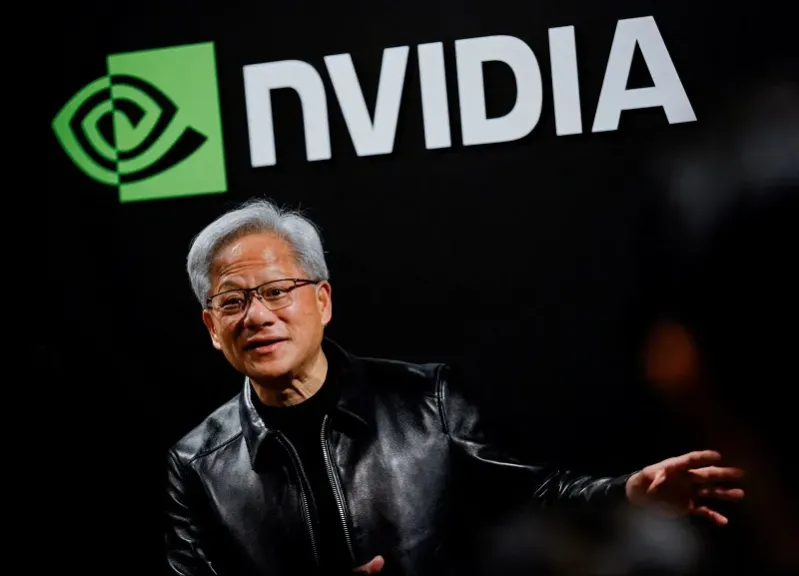
Nvidia faces a strategic challenge in maintaining its leadership in the artificial intelligence chip market if founder and CEO Jensen Huang is no longer at the helm. His influence has been central to transforming the company from a graphics chip designer into one of the most powerful players in the global technology industry.
Unlike major technology companies such as Google and Amazon, which continued expanding after their founders stepped away from executive leadership, Nvidia's future could be more closely tied to its founder's absence because of his role in shaping its strategy, partnerships and technological direction.
From financial struggles to a technology giant
Founded in 1992 by Huang and other engineers, Nvidia initially focused on developing chips for 3D graphics processing. The company faced financial and commercial difficulties in its early years before the growing popularity of computer games, including Doom, boosted demand for its products.
The launch of GeForce processors helped establish Nvidia as a major technology player. During the 1990s, Huang repeatedly warned that the company was just 30 days away from going out of business, reflecting a corporate culture built around constant innovation and competition.
Three pillars behind Nvidia's AI leadership
Nvidia's success in artificial intelligence rests on three major factors, rather than chip design alone.
First, the company moved early into AI computing. Before large language models such as GPT became mainstream, Huang redirected Nvidia's focus toward data centers and processors capable of accelerating machine learning.
Second, Nvidia developed CUDA, its proprietary software platform, which allows developers to harness the computing power of its processors. The ecosystem has become deeply embedded in AI development, making it difficult for companies to switch to competing technologies. OpenAI and Anthropic are among the companies using Nvidia's technology.
Third, Huang built an extensive network of commercial relationships with technology companies and semiconductor suppliers, helping Nvidia secure long-term supply and demand agreements.
Strategic partnerships strengthen supply chains
Nvidia secured memory supplies from Samsung and SK Hynix while maintaining access to advanced manufacturing technology at Taiwan's TSMC, which produces its chips. Huang's relationship with TSMC founder Morris Chang dates back to the 1990s.
On the demand side, Huang's connections helped establish agreements with major AI companies and data center operators. Around a decade ago, he personally delivered AI chips to OpenAI when it was still a startup and Elon Musk was part of its team.
Nvidia also invested in AI companies that subsequently used some of their funding to purchase its processors. While some analysts view this interconnected business model as a potential warning sign of an AI bubble, Nvidia considers it evidence of its expanding market influence.
Growing competition puts Nvidia's position under pressure
Nvidia faces increasing competition from AMD and Apple, as efforts to reduce developers' dependence on CUDA gain momentum.
Google, Microsoft and Amazon are also developing their own AI chips to reduce reliance on external suppliers. OpenAI, meanwhile, is seeking to strengthen its own capabilities in chip development.
Beyond technological competition, Nvidia must preserve its relationships with Asian suppliers and Silicon Valley technology companies.
Ultimately, the company's ability to maintain its AI leadership will depend not only on producing advanced processors, but also on preserving the commercial partnerships, supply chains and strategic vision that Huang spent decades building.
related topics
 Who Will Replace Jensen Huang? Nvidia Faces a Critical Leadership Succession Test
 Trump’s Close Ties With Jensen Huang Raise Questions Over Nvidia’s China Policy
 Nvidia Settles Jensen Huang Succession Debate: Naming Candidates is Premature and Interviews...
 Nvidia Co-Founder Jensen Huang Steps Down as CEO as Colette Kress Takes...
 Meta and NVIDIA Strengthen AI Alliance With $3 Billion Investment
 Nvidia Expands Global Manufacturing Capacity to Meet Rising Demand for AI Infrastructure
 Nvidia’s $500 Billion AI Financing Bet Faces a Wall Street Test Over...
 Nvidia Expands Share Buyback Program by $150B, Pushing Total Authorization to $235B
 NVIDIA CEO Jensen Huang Reveals the Strategy Behind His Signature Black Leather...
 Jensen Huang Says Every Country Will Become an AI Company
 NVIDIA Backs OpenAI with $105 Billion in Financing Guarantees for Mega AI...
 Nvidia CEO Jensen Huang to AP: Society Must Adapt to AI, Dismisses...