


Neuratia Labs Wants AI to Build a Digital Twin of Your Brain
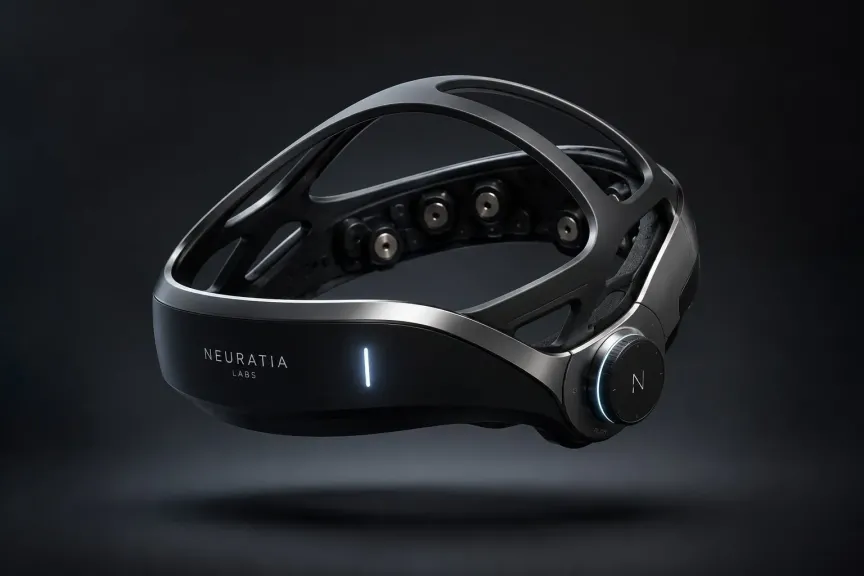
Most health wearables can tell users how fast their heart is beating, how many steps they have taken or how well they slept. Neuratia Labs is attempting something considerably more difficult: turning the changing electrical activity of the brain into continuous, personalized data that artificial intelligence can interpret over time.
The Dubai-based neurotechnology startup is developing ONYX, an ecosystem that combines wearable EEG brain sensing, physiological monitoring, AI-powered digital biomarkers and what the company describes as a personalized Brain Digital Twin.
Founded in 2026 by entrepreneur and researcher Affaan Shaikh, Neuratia is still at an early stage. Its technology is being developed rather than presented as a mature clinical product, and the company is working through research partnerships and incubator programs as it moves toward an MVP.
That distinction matters because the ambition behind ONYX is unusually large. Neuratia does not simply want to manufacture another EEG device. It wants to create a longitudinal digital model capable of understanding how an individual's brain state changes over time.
The Brain Remains One of the Biggest Blind Spots in Personal Health Data
Consumer health technology has made large parts of the human body continuously measurable.
Smartwatches monitor heart rate throughout the day. Continuous glucose monitors reveal how blood sugar changes after meals. Sleep trackers estimate different stages of rest, while connected scales follow changes in weight and body composition.
Brain activity remains much harder to measure routinely.
Electroencephalography, or EEG, records electrical activity generated by the brain through electrodes placed on the scalp. The technology has existed for decades and plays an established role in clinical and research settings, particularly in areas such as epilepsy, sleep studies and neuroscience.
Traditional EEG systems, however, are generally designed around specific clinical or research sessions rather than continuous everyday monitoring.
Neuratia's long-term opportunity begins with changing that relationship.
ONYX Wants to Move EEG Beyond the Laboratory
The company's ONYX Wearable is being developed as an EEG-based system capable of monitoring brain activity alongside physiological information.
Neuratia's stated focus includes areas such as stress, cognitive fatigue, focus and recovery, with the broader objective of converting neural signals into information that can be understood over time rather than treating every measurement as an isolated event.
This is technically difficult.
EEG signals are weak and can be affected by movement, muscle activity, electrode positioning and environmental interference. The brain is also enormously complex, making simplistic conclusions from individual signals scientifically dangerous.
A useful wearable neurotechnology platform therefore needs more than electrodes. It requires signal processing, longitudinal data, physiological context and carefully validated models capable of separating meaningful patterns from noise.
This is where Neuratia intends AI to become central to the system.
The Innovation to Watch Is Not the Headset Alone
The most interesting part of Neuratia's proposition is the architecture surrounding the wearable.
ONYX is being developed as an integrated neurotechnology ecosystem rather than a standalone device.
The wearable provides EEG and physiological signals. The ONYX Research Cloud is intended to provide a device-agnostic environment for analyzing EEG and other physiological data, supporting research and longitudinal monitoring. AI models can then search those datasets for patterns that may become digital biomarkers.
The company's longer-term Brain Digital Twin concept attempts to add another layer by building a personalized computational representation of an individual's neural state.
The wearable collects information. The intelligence layer determines what that information could mean.
A Digital Biomarker Turns a Signal Into Potentially Useful Information
Medicine already relies heavily on biomarkers.
Blood pressure can indicate cardiovascular risk. Glucose reveals information about metabolic health. Cholesterol levels contribute to risk assessment, while laboratory tests can detect biological changes associated with disease.
Digital biomarkers extend that principle into information generated by connected devices and software.
A wearable can continuously collect signals that would be impractical to measure repeatedly in a clinic. AI can then analyze changes across time and potentially identify patterns associated with particular physiological or behavioral states.
For Neuratia, the objective is to investigate whether combinations of EEG and physiological information can become useful indicators of changes in brain state.
The crucial challenge will be scientific validation. A pattern identified by an algorithm becomes medically meaningful only when research demonstrates that the relationship is reliable and clinically relevant.
Brain Health Is More Than a Single EEG Recording
One of the weaknesses of many health measurements is that they provide only a snapshot.
A person visits a clinic, a test is performed and the result represents their condition at that moment.
Longitudinal monitoring creates a different type of information.
Instead of asking only what the brain looks like during one recording, a system could potentially examine how patterns change across days, weeks or months and compare those changes with the individual's own historical baseline.
This distinction is particularly important for the brain because individuals can differ substantially from one another.
A personalized baseline may eventually become more useful for certain applications than comparing every person against a single population average.
Neuratia's Brain Digital Twin concept is built around this longitudinal approach.
What Does a Brain Digital Twin Actually Mean?
Digital twins originated largely in industrial engineering.
A manufacturer can create a digital representation of a turbine, factory or aircraft component and continuously update that model using data from the physical asset. Engineers can then examine how the system behaves, identify anomalies and potentially predict problems before failure occurs.
Healthcare researchers are exploring whether similar principles can be applied to humans.
A Brain Digital Twin does not mean creating a perfect virtual copy of a person's brain. Current neuroscience is nowhere close to reproducing the full biological complexity of the human brain digitally.
A more realistic interpretation is a computational model that represents selected measurable characteristics of an individual's neural state and updates as new data becomes available.
Neuratia says it is developing personalized neural-state modeling technology along these lines and has filed a provisional patent application around the concept.
The Value Comes From Change Over Time
Imagine that an individual's normal neural and physiological patterns can be established over a long period.
A system could then examine deviations from that personal baseline.
Changes might correspond with sleep deprivation, stress, cognitive overload, recovery or other factors affecting brain function.
The commercial and scientific opportunity lies in determining which of those relationships can be measured reliably enough to become useful.
If the system simply produces attractive visualizations of brain waves, its value will remain limited.
If validated models can convert those signals into reproducible information that researchers, clinicians or eventually individuals can use, the technology becomes considerably more important.
AI Could Find Patterns Humans Cannot Easily See
EEG generates complex time-series data across multiple channels.
Analyzing that information manually becomes increasingly difficult as the duration and number of users grow.
Artificial intelligence is well suited to finding recurring patterns across large multidimensional datasets, particularly when neural information can be combined with other physiological signals.
A model could potentially learn relationships between brain activity, heart-rate changes, sleep, stress indicators and behavioral information.
The objective would not necessarily be to replace neurologists or make autonomous diagnoses.
A more realistic near-term role for AI is to help transform enormous amounts of raw neurophysiological information into patterns researchers and clinicians can investigate.
This distinction is particularly important in healthcare, where an algorithmic correlation should not automatically be treated as a medical conclusion.
ONYX Research Cloud Could Become as Important as the Wearable
Neuratia is also developing ONYX Research Cloud, which the company describes as a device-agnostic neuroinformatics platform for EEG analysis, physiological data processing, AI research and longitudinal monitoring.
The device-agnostic approach is strategically interesting.
If the platform can eventually work with data generated by different EEG systems rather than only Neuratia's own hardware, the addressable market becomes larger.
Universities, hospitals, research organizations and neurotechnology companies already possess EEG equipment and datasets.
A cloud platform capable of organizing and analyzing information from multiple sources could potentially become research infrastructure rather than merely the software accompanying one wearable.
That would create a different business model, with the data and analytical layer becoming a product in its own right.
Neurotechnology Has a Data Problem Before It Has an AI Problem
The current enthusiasm surrounding AI can make it easy to assume that better algorithms automatically produce better healthcare.
Neurotechnology illustrates why that is not necessarily true.
AI models require high-quality data, and brain data is particularly challenging because acquisition methods, electrode configurations, patient conditions and recording environments can vary.
Poor signals fed into sophisticated algorithms can still produce unreliable conclusions.
Neuratia is therefore building research collaborations alongside its technology development, an approach that could prove essential if it wants to create meaningful digital biomarkers rather than consumer wellness claims.
The Company Is Building a Research Network Before Scaling the Product
Neuratia has established academic collaborations in India, including work with Manipal University and Anjuman-I-Islam's Kalsekar Technical Campus.
Its collaboration with the latter is intended to develop the Neuratia Brain Research & Innovation Centre, or NBRIC, focused on neuroscience, AI and neurotechnology research.
The company has also created the Neuratia Research Fellows Program, which attracted more than 1,000 applications from over 50 countries.
This research-first strategy makes sense for a startup attempting to build technology around brain signals.
The difficult part is not producing a wearable capable of recording electrical activity. EEG hardware already exists.
The difficult part is demonstrating that the information extracted from those signals corresponds reliably with meaningful states and can ultimately support real-world decisions.
Clinical Expertise Is Becoming Part of the Team
Neuratia has also strengthened the neuroscience side of its leadership with the appointment of Dr. Raj Munusamy as Chief Neuroscience Officer.
Munusamy is a neurosurgeon and clinician-scientist whose background includes training at Cambridge University and an academic fellowship in functional neurosurgery and neuromodulation at King's College Hospital in London. He also serves as a Clinical Lecturer at the University of Malaya.
The appointment illustrates the interdisciplinary nature of the company Neuratia is trying to build.
A Brain Digital Twin cannot realistically be developed as a conventional software project. It requires neuroscience, clinical research, signal processing, hardware engineering, AI and data infrastructure to develop together.
The Company Is Still Moving From Idea Toward MVP
Neuratia's early stage is one of the most important facts for understanding the company.
It was founded only in 2026, and its participation in the Edinburgh Business School Global Incubator at Heriot-Watt University Dubai has been focused on developing ONYX from concept toward an MVP.
This means the technology should not be described as though a clinically validated Brain Digital Twin is already commercially available.
The distinction between ambition and proven capability is particularly important in neurotechnology, where extraordinary claims can easily run ahead of scientific evidence.
At this stage, Neuratia should be viewed as a DeepTech research and product-development company attempting to demonstrate that its integrated architecture can work.
Its next milestones will matter more than its current marketing language.
Why Brain Wearables Are Becoming a Serious Technology Category
Neuratia is entering the market at a time when brain-computer interfaces and wearable neurotechnology are attracting growing investment.
Some companies are developing implanted interfaces capable of recording neural signals directly from the brain. Others are pursuing non-invasive approaches using EEG, optical sensing or combinations of physiological signals.
The markets are different.
Implanted systems can potentially capture much richer neural information but require medical procedures and face significant clinical and regulatory barriers.
Non-invasive wearables sacrifice signal quality but can potentially reach much larger populations because they do not require surgery.
Neuratia is positioning itself on the non-invasive side of that divide.
The Commercial Opportunity Extends Beyond Healthcare
If wearable EEG becomes reliable and comfortable enough for regular use, applications could extend beyond traditional clinical environments.
Research institutions represent an obvious initial market because they already understand EEG and have clear requirements for collecting and analyzing neural information.
Workplace health and safety could become another area, particularly in jobs where cognitive fatigue has serious consequences.
Aviation, transportation and industrial operations all involve situations in which reduced alertness can increase risk.
Sports and human-performance research may also provide opportunities, while personalized wellness represents a potentially much larger but scientifically more sensitive consumer market.
Each category would require different levels of evidence and regulatory scrutiny.
Cognitive Fatigue Could Become a Measurable Workplace Risk
Fatigue illustrates why brain-state monitoring attracts commercial interest.
Many organizations currently assess fatigue indirectly through working hours, sleep information, questionnaires or behavioral observations.
A reliable physiological indicator could provide a different layer of information.
In safety-critical environments, the ability to identify significant cognitive fatigue before it contributes to an accident could have obvious value.
The difficulty lies in demonstrating that a wearable can distinguish fatigue accurately from other changes in brain activity across diverse individuals and real-world environments.
This is precisely where longitudinal data and personalized baselines could become important.
Brain Data Also Creates an Unusually Sensitive Privacy Problem
The more powerful neurotechnology becomes, the more important another issue becomes: who owns brain data?
Heart rate and location information are already sensitive.
Neural data introduces a category with potentially deeper implications because future systems may infer information about cognitive state, fatigue, attention or neurological conditions.
A platform designed to collect brain information continuously therefore requires strong security, consent and governance from the beginning.
The challenge will become even greater if Brain Digital Twins accumulate years of individualized neural information.
For companies such as Neuratia, privacy cannot be treated as a compliance layer added after the technology is developed. It needs to become part of the product architecture.
The Brain Digital Twin Could Become the Company's Moat
Wearable hardware is difficult to defend indefinitely.
Competitors can develop new devices, sensor costs decline and established electronics companies possess enormous manufacturing advantages.
A personalized model built from longitudinal data could be much harder to replicate.
If a user has accumulated months or years of neural and physiological information, the historical dataset itself becomes valuable.
The AI model can potentially understand that individual's patterns more accurately as additional information is collected.
This creates the possibility of a data flywheel in which the hardware gathers signals, the platform organizes them, AI extracts patterns and those patterns improve the personalized model.
That is where Neuratia's Brain Digital Twin could become commercially more significant than the ONYX wearable itself.
NVIDIA Inception Places Neuratia Inside a Wider AI Ecosystem
Neuratia is also a member of NVIDIA Inception, the program supporting startups building AI and accelerated-computing technologies.
For a neurotechnology company, access to AI computing resources and technical expertise can become important because EEG and multimodal physiological datasets can require substantial processing as models become more sophisticated.
The relationship should not be interpreted as an investment by NVIDIA or validation of Neuratia's medical claims.
Its significance is technological: Neuratia is developing inside an ecosystem that can support the AI infrastructure required to train and deploy increasingly complex models.
Dubai Is Becoming Part of the Company's Identity
Neuratia operates between Dubai and Mumbai, giving it access to two very different innovation environments.
India provides a large research and engineering talent base alongside major academic institutions and an enormous healthcare market.
Dubai offers access to capital, international healthcare companies, regulators and a rapidly expanding technology ecosystem.
The company has already been selected for the Edinburgh Business School Global Incubator at Heriot-Watt University's Dubai campus and has used the UAE ecosystem to build relationships around investment and commercialization.
Its appointment of UAE executive Adel Miran as Chief Commercial Officer also signals an effort to strengthen fundraising, partnerships and market development from Dubai.
Expand North Star Is Building a Dedicated Health and Biotech Pipeline
Neuratia's relationship with Expand North Star began before the December exhibition through the MedTech Innovators Forum, organized by Dubai Technology Entrepreneur Campus in partnership with Expand North Star.
The company was selected to showcase and pitch ONYX at the September forum, where emerging technologies ranged from contactless vital-sign monitoring to QEEG brain mapping.
That engagement is particularly relevant in 2026 because Expand North Star is expanding its healthcare focus through DigiHealth-Biotech, a new feature covering areas including AI diagnostics, genomics and next-generation therapeutics.
The event is also introducing LivX around longevity, biotech and life sciences, while the wider GITEX ecosystem is strengthening its HealthTech presence.
Healthcare is therefore moving from being another startup category within the event toward becoming one of its distinct innovation tracks.
Why the Gulf Could Be an Important Market
The Gulf is investing heavily in preventive healthcare, personalized medicine, longevity and AI-enabled health services.
That creates a potentially attractive environment for neurotechnology, particularly if systems can move from occasional clinical measurement toward continuous health intelligence.
The region also has advantages for early-stage companies seeking pilot projects because healthcare providers, universities, government organizations and investors are often concentrated within relatively connected innovation ecosystems.
For Neuratia, however, regional enthusiasm for advanced healthcare technology will not eliminate the need for clinical evidence.
The stronger the health claim, the more important validation and regulatory approval become.
The Regulatory Question Will Eventually Become Unavoidable
Neuratia's future business model will depend heavily on how ONYX is positioned.
A wellness device monitoring stress or focus faces a very different regulatory environment from a medical device intended to diagnose or monitor neurological conditions.
The same hardware can move into significantly different regulatory territory depending on the claims made about what its measurements mean.
If Neuratia eventually pursues clinical applications, it will need evidence demonstrating accuracy, safety and clinical utility.
That process can take years.
The company therefore faces a strategic decision common across digital health: whether to build first for research and wellness applications or pursue the more demanding but potentially more valuable medical-device pathway.
The Biggest Risk Is Overpromising What AI Can Understand About the Brain
Few technology areas attract more exaggerated claims than neuroscience combined with artificial intelligence.
The human brain contains approximately 86 billion neurons and operates through biological processes that remain only partially understood.
EEG measures electrical activity at the scalp. It does not provide a direct window into every thought, emotion or cognitive process.
Neuratia's long-term success will therefore depend partly on restraint.
The strongest version of its business is not one that claims AI can read the human mind.
It is one that demonstrates, through research, that specific measurable neural patterns can provide useful information about defined aspects of brain health and function.
What to Watch Next
Because Neuratia was founded only this year, its most important milestones remain ahead.
The first is development of a functional ONYX MVP capable of collecting reliable EEG and physiological data in practical conditions.
The second is research validation demonstrating whether the company's proposed digital biomarkers correlate consistently with the states they are intended to measure.
The third is the development of ONYX Research Cloud into a platform capable of working across devices and research environments.
The Brain Digital Twin will be the most ambitious test because it requires longitudinal data and models capable of demonstrating that personalization produces meaningful advantages over conventional analysis.
Commercial partnerships, funding and regulatory strategy will then determine whether Neuratia can move from an interesting research proposition into a scalable neurotechnology company.
The Real Opportunity Is Making the Brain Longitudinal
The most interesting idea behind Neuratia is ultimately not the EEG headset, the cloud platform or even the use of artificial intelligence individually.
It is the possibility of changing brain measurement from an occasional event into a continuous history.
Medicine frequently knows what a patient's brain activity looks like during a particular test.
A longitudinal platform could attempt to understand how that activity changes over months and eventually years, building a personal baseline that becomes richer as more information is collected.
That is the premise behind the Brain Digital Twin.
Whether Neuratia can achieve it remains unproven, and the company is still early enough that scientific validation should matter more than technological ambition.
But if wearable sensing, AI and neuroscience can eventually make reliable longitudinal brain data practical, the result would represent a significant change in personal health technology.
Neuratia Labs is betting that the next frontier of wearables will not simply count what the body does. It will help us understand how the brain changes over time.
related topics
 Axelera AI Takes AI Beyond the Cloud With Energy-Efficient Chips for Physical...
 Companies Have More Customer Data Than Ever — PAM Uses AI to...
 11-Infotech Is Building the Digital Infrastructure Behind the Future of Travel Booking
 ownitnow Brings Tokenized Real Estate to Investors With Entry From €1,000
 EmeraldPlast Turns Starch Into a New Generation of Sustainable Materials
 Your WMS Knows Where the Boxes Are — Aislytics Wants AI to...
 The Next Climate Sensor May Be 500 Kilometers Above Us - SatLeo...
 Airlines Have Spent Decades Guessing What Extras Should Cost - ABRIAL Wants...