


Data Center Backlash Spreads From the US to Europe and Asia, Putting Billions in AI Investment at Risk
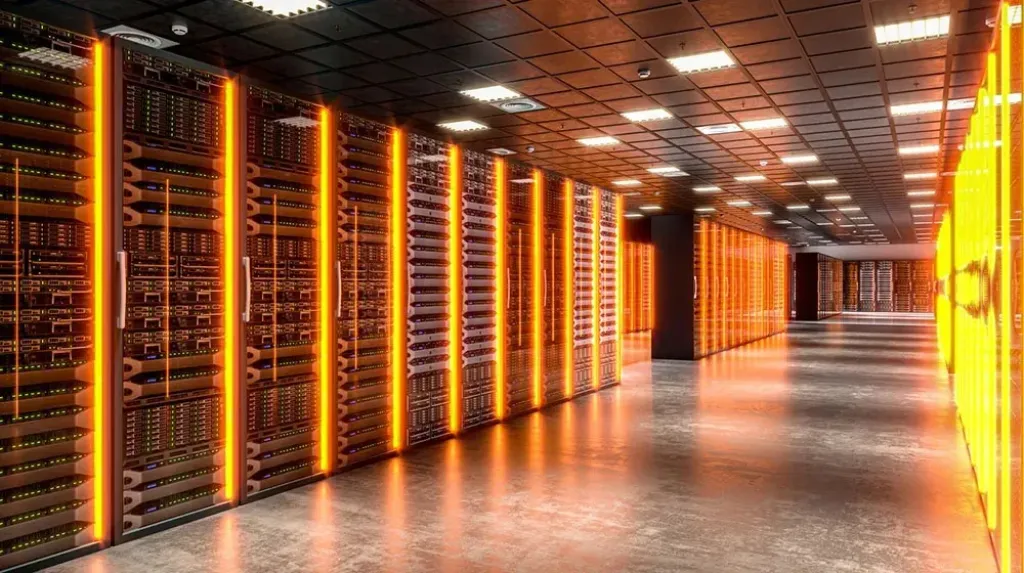
The artificial intelligence infrastructure boom is colliding with a new obstacle that money and faster chips cannot easily solve: communities increasingly unwilling to host the enormous data centers needed to power it.
Public opposition that first became highly visible in the United States is spreading across Europe and parts of Asia, turning electricity consumption, water use, land requirements and proximity to residential areas into increasingly important risks for AI infrastructure investors.
Around $42 billion in European data center investment has already been affected by community and regulatory opposition through delays, restrictions or cancellations, according to research by STL Partners. The comparable figure in the United States is around $77 billion.
The shift matters because the global AI race is increasingly becoming an infrastructure race. Technology companies can secure GPUs and raise billions of dollars for new computing capacity, but those investments still depend on obtaining land, electricity, water, grid connections and planning approval from communities that may see few direct benefits from hosting the facilities.
More Than 70 European Projects Hit by Restrictions in Four Months
Europe is emerging as one of the most difficult testing grounds.
More than 70 data center projects were rejected or restricted between January and April 2026, exceeding the number recorded during the whole of 2025.
The resistance is also changing character.
What once appeared primarily as isolated objections before local planning councils is increasingly reaching courts, regulators and national parliaments.
Europe faces particular pressure because many attractive data center markets combine high population density with constrained electricity grids and relatively high power prices.
That means new hyperscale facilities can find themselves competing for resources with households, industry and other infrastructure projects.
Scotland Shows How Quickly Local Opposition Can Escalate
Scotland has become one of the clearest examples.
Plans for hyperscale AI data centers have faced growing political scrutiny as campaigners warn against repeating the experience of Ireland, where extraordinary growth in data center electricity demand eventually forced tighter restrictions on new projects.
Scottish lawmakers rejected an outright moratorium in September but backed a 12-month pause on planning and consent decisions while national guidance for large-scale data centers is developed.
One proposed 300 MW data center at Larbert has generated more than 7,000 objections, compared with fewer than 100 expressions of support.
The scale of that response demonstrates a problem developers may increasingly encounter: national governments may view data centers as strategic AI infrastructure while the communities expected to host them calculate the costs very differently.
Spain Wants Data Centers to Bring Their Own Renewable Power
Spain is taking another approach.
The government proposed new rules this summer requiring large data centers to support at least 80% of their electricity consumption with newly installed renewable generation.
The requirement is considerably more demanding than simply purchasing renewable-energy certificates.
Under the proposed system, the renewable electricity would need to match data center consumption hour by hour.
For every new megawatt consumed, operators would effectively need corresponding new renewable generation installed within the required period, either through self-generation or long-term power purchase agreements.
The rules would apply to data centers with electrical capacity above 1 MW.
Projects seeking grid access would have to demonstrate compliance, while failure to meet the requirements could eventually lead to losing grid connection rights.
Spain Already Has More Data Center Demand Than Its AI Strategy Expected
The proposed regulation reflects the extraordinary scale of demand arriving at Spain’s electricity grid.
Spain’s AI strategy anticipates around 2.5 GW of computing capacity by 2030, requiring approximately 3.5 GW to 4 GW of electricity demand.
Yet more than 12 GW of grid access and connection rights have already been granted to data center projects since 2021.
That creates a fundamental infrastructure problem.
Governments want the economic benefits associated with cloud computing and artificial intelligence, but connecting every proposed facility without corresponding increases in generation and transmission capacity could raise electricity costs or constrain power available for other industries.
Spain is effectively attempting to make new computing capacity arrive with new electricity generation rather than allowing AI infrastructure to consume an increasing share of existing supply.
Denmark Is Reconsidering Who Gets Electricity First
Denmark has moved toward prioritizing scarce grid capacity.
New legislation allows electricity connections to be ranked according to their importance, raising the possibility that some data centers could find themselves behind other projects when grid capacity is limited.
The debate is particularly significant because Nordic countries have historically been highly attractive to data center developers.
Cool climates reduce cooling requirements, renewable electricity is widely available and large sites can be easier to secure than in more densely populated European markets.
The AI boom, however, has dramatically increased requests for power.
The question is consequently changing from whether a country has renewable electricity to whether it has enough grid capacity to connect every proposed data center without delaying other economic projects.
Ireland Became Europe’s Warning Case
Ireland provides the example policymakers elsewhere are trying to avoid.
Rapid data center development turned the sector into an unusually large electricity consumer.
Data centers now account for roughly one-fifth of Ireland’s electricity consumption, creating concerns over grid stability and future demand.
Restrictions on new connections followed, particularly around Dublin.
Ireland's experience has become important because it demonstrates how quickly digital infrastructure can move from being welcomed as foreign investment to becoming a national energy-planning issue.
The same tension is now appearing elsewhere as AI workloads require increasingly powerful computing clusters.
South Korea Faces the Same Battle Near Residential Areas
The backlash is not limited to Europe.
South Korea is encountering growing resistance even as the national government seeks to accelerate construction of AI infrastructure.
The conflict is particularly visible around Seoul and surrounding urban areas, where data centers can sit close to densely populated residential districts.
Residents have raised concerns about continuous noise, electromagnetic exposure, fire and battery safety, and the broader effect of industrial-scale computing facilities on residential neighborhoods.
Local governments are responding with increasingly different rules.
Some municipalities have considered minimum distances between data centers and homes, while others have proposed requiring approval from a majority of nearby residents.
That creates another type of risk for developers: a fragmented regulatory landscape in which a project acceptable under national policy may still encounter significantly different requirements from one municipality to another.
Half of Seoul’s Recent Data Center Projects Were Still Awaiting Completion
The tension is already visible in project pipelines.
Sixteen data centers entered building-permit procedures in Seoul over the five years leading into 2026.
By April, eight had received final approval for use, while the remaining eight were still progressing through permitting, construction preparation or other stages.
A proposed data center in Gwacheon’s Juam district outside Seoul has faced opposition despite being planned for land where such facilities were permitted.
Local authorities subsequently sought changes that could remove data centers from the list of allowed uses in the district.
For developers, such changes can become financially painful because substantial spending on land, engineering, electricity connections and planning can occur before construction begins.
AI Data Centers Have a Jobs Problem
One reason public resistance can be difficult to overcome is the unusual economics of data centers.
Large facilities can involve billions of dollars in investment during construction, but once operational they generally employ far fewer people than traditional factories requiring comparable land and energy resources.
That can create a mismatch between national and local perspectives.
Governments may see strategic computing capacity, foreign investment, tax revenue and the infrastructure required for an AI economy.
Residents may instead see a huge building consuming large amounts of electricity and water while generating relatively limited permanent employment.
The economic benefits can be national or even global, while many of the perceived costs remain local.
Electricity Is Becoming the Central Battleground
The largest constraint may ultimately be power.
AI workloads have substantially increased the electricity requirements of modern data centers as operators deploy increasingly dense clusters of GPUs and other accelerators.
A hyperscale AI campus can require hundreds of megawatts of electricity, placing it in the same consumption category as major industrial facilities.
That is transforming data centers from relatively obscure pieces of digital infrastructure into major participants in national energy systems.
The political consequences are becoming visible in the United States as well.
Debates over whether households should bear any portion of the grid investment required to connect new data centers have moved into Congress, with competing proposals seeking to determine how infrastructure costs should be allocated.
The same question is likely to become increasingly important elsewhere: who pays for the power infrastructure required by AI?
The Risk Begins Before a Single Server Is Installed
For investors, community opposition creates a particularly difficult type of financial exposure.
Data center developers spend money long before a facility begins generating revenue.
Land must be acquired, grid capacity reserved, engineering completed, planning applications submitted and equipment ordered.
If approval is subsequently delayed for years — or rejected entirely — part of that investment can become stranded.
This is why the estimated $42 billion affected in Europe matters beyond the projects themselves.
The figure signals that permitting and community acceptance are becoming material variables in the financial models used to evaluate AI infrastructure.
The AI Boom Is Becoming a Political Infrastructure Debate
The industry still has powerful arguments in its favor.
Data centers support cloud services, financial systems, healthcare platforms, government services, communications and the artificial intelligence applications increasingly used across the economy.
Without additional computing infrastructure, governments seeking domestic AI capabilities risk becoming dependent on capacity located elsewhere.
But describing data centers as essential infrastructure does not eliminate the trade-offs involved in building them.
Governments are increasingly being forced to balance digital sovereignty and AI ambitions against electricity prices, grid capacity, water resources, environmental targets and local planning concerns.
The Next AI Infrastructure Race May Be Won Outside the Data Center
The first phase of the AI boom focused heavily on securing the most advanced processors.
The next phase is revealing that owning GPUs does not guarantee the ability to deploy them.
Companies also need electricity, transmission infrastructure, cooling, water in some designs, suitable land, permits and — increasingly — political and community acceptance.
That changes the investment equation.
A region with cheaper land but insufficient grid capacity may no longer be attractive. A country with abundant renewable power may still face local opposition. And a technically viable site can become financially unworkable if approvals take years.
The emerging backlash from the United States to Europe and South Korea therefore does not necessarily represent opposition to artificial intelligence itself. It reflects a growing dispute over who should absorb the physical costs of the AI economy. As computing moves from software into industrial-scale infrastructure, the companies building it are discovering that the hardest resource to secure may no longer be the GPU — but the permission to switch it on.
related topics
 A Strategic Plan to Boost the Digital Economy: Minister of ICT Chairs...
 Amazon Plans Investment Vehicle to Offload $8 Billion in Nvidia Chips
 Nvidia’s $500 Billion AI Financing Bet Faces a Wall Street Test Over...
 Egypt Opens Government GPU Infrastructure to Universities to Power AI Research
 Google Sends AI Chips Into Orbit as Project Suncatcher Takes First Step...
 Orange Egypt Puts Cybersecurity at the Core of Enterprise Digital Transformation at...
 US Senators Demand Tech Giants Disclose AI and Data Center Tax Breaks...
 Nvidia Expands Share Buyback Program by $150B, Pushing Total Authorization to $235B
 Dell Technologies Highlights Leadership in Egypt’s Data Center Market with More Than...
 Raya Holding Approves Up to $60M Investment for Proposed Egyptian Data Center...
 Egypt’s National AI Council Reviews 2026 Strategy
 Egypt Reviews Plans for $1.2 Billion Kemet Data Center in Suez Canal...