


EGBANK Study: Freelancing is Now a Primary Profession for 77% of Egyptian Independent Workers
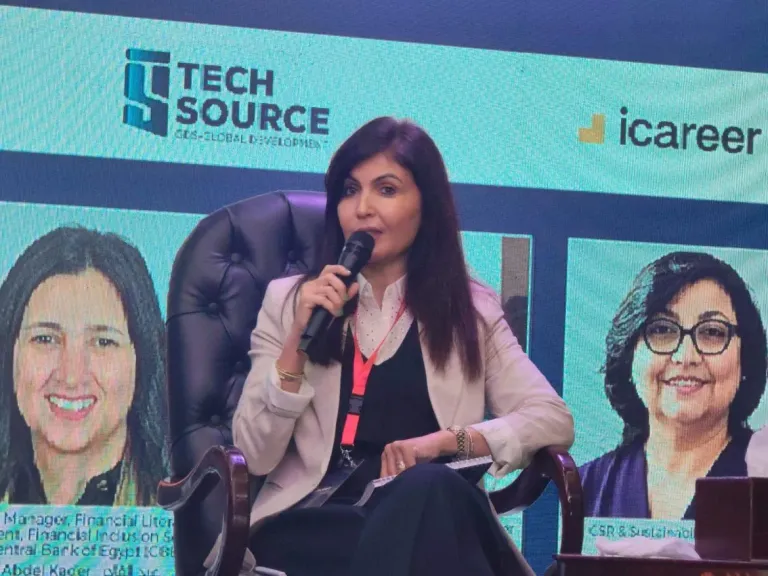
Nelly Mahmoud, Head of Corporate Communications at the Egyptian Gulf Bank (EGBANK), revealed that recent research conducted by the bank in collaboration with a specialized research firm indicates a radical shift in the nature of Egypt's freelance market. She emphasized that freelancing is no longer merely a side hustle or a means of generating supplementary income; for the vast majority of independent workers, it has become their primary, full-time profession.
Speaking during her participation at the "WorkShift Summit 2026", Mahmoud explained that following an initial initiative launched during the COVID-19 pandemic, EGBANK decided to conduct in-depth research to truly understand this demographic and its genuine needs. The study was executed in multiple phases in partnership with Kantar, aiming to extract precise, actionable data to serve as a foundation for developing tailored banking products and services.
A standout finding from the research is that approximately 77% of the surveyed sample confirmed that freelancing is their primary job, rather than an activity supplementary to traditional employment. Mahmoud noted that this reflects a high degree of maturity and massive expansion within the sector, signaling that financial institutions must now treat the gig economy as a core component of the national economy, rather than a marginal activity.
Mahmoud added that the study debunked several traditional misconceptions about freelancers. The prevailing belief that independent workers are solely driven by the pursuit of higher income proved inaccurate. Instead, the results showed that the primary motivators for many are flexibility, time management, the ability to work in fields aligned with their passions and skills, and the independence to make their own professional decisions.
These findings compel banks to rethink their approach to this demographic. The financial needs of independent workers differ drastically from those of salaried employees or traditional business owners, rendering conventional banking products insufficient.
One of the most significant challenges, she pointed out, is that freelancers fall into a banking "gray area." They do not fit standard classifications—they are neither salaried employees with an HR letter proving their income, nor business owners with a commercial register and audited financial statements. Instead, they monetize their skills and expertise by serving multiple clients domestically and internationally, meaning evaluating their financial standing requires entirely different criteria.
Therefore, Mahmoud stressed, the banking sector must establish clearer definitions for freelance work and develop innovative tools to accurately assess the nature of their activities and income streams.
Concluding her remarks, Mahmoud highlighted that the research also demonstrated that obtaining funding or credit is not the top priority for most freelancers. Primarily, they are seeking opportunities to grow their businesses, expand their client bases, and access financial services that support their professional growth. This dynamic requires banks to transition from being mere providers of traditional products to acting as strategic partners that support the client in business development and professional sustainability.
related topics
 India Accelerates AI Integration in Digital Payments, Targeting One Billion Daily UPI...
 Bokra and Geidea Forge Strategic Partnership to Offer Sharia-Compliant Digital Savings to...
 Fintech Gate: UAE Ranks 1st in Middle East, 31st Globally in Thunes...
 Huawei Cloud Hosts FinTech Summit 2026, Showcasing Local Cloud Capabilities and AI-Driven...
 Banks and Fintech Startups Must Join Forces to Accelerate Financial Inclusion, Says...
 Damen Expands Nationwide Footprint for Smart Utility Payments, Facilitating Instant Water Card...
 FinTra Holding’s Yalla Super App Crosses 1 Million Accounts in Egypt, Processing...
 Beyond Profit: How Telecom Companies in Egypt Drive Growth Through Customer-Centric Innovations
 Suez Canal Bank Launches ‘Current Plus’ Three-Year Floating-Rate Certificate with Yields Up...
 Banque Misr Becomes First Egyptian Bank to Achieve MFR’s Gold Level Certification...
 The United Bank Reports Strong Q1 2026 Results as Total Loan Portfolio...
 BMONI Partners with Mastercard to Launch Instant Virtual Card Issuance in Nigeria