


Ingie faltas: We Are Experiencing a ”Strategic Foundation” Phase for Industry... and It is Time to Restore the Prestige of the ”Heroes of Production”
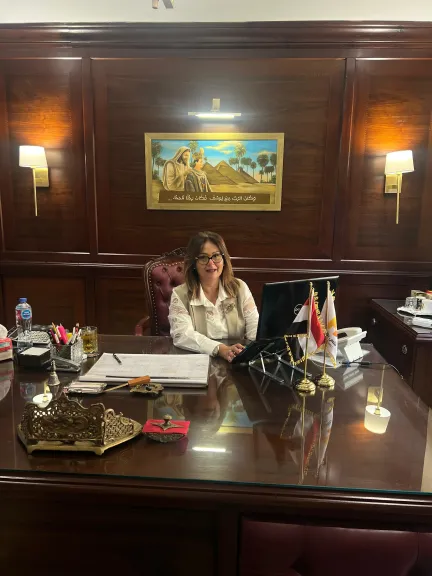
hamdy Abdelrashid
The Egyptian industrial sector is currently navigating a pivotal crossroads, best described as a phase of "strategic foundation" that paves the way for a promising economic future. In light of ongoing global economic shifts and successive geopolitical tensions, the urgent need to foster self-reliance and localize domestic industry has emerged more strongly than ever. This shift aims to achieve genuine independence that shields the national economy from external fluctuations.
In this interview, we delve deep into the current industrial landscape to assess the opportunities and challenges facing investors in the 10th of Ramadan City. We also explore a comprehensive vision for transforming operational hurdles into developmental breakthroughs.
We conducted this interview with Eng. Ingie faltas, Chairman of Faltas Unox for Oxides and Pigments, and Head of the Industry Committee at the 10th of Ramadan Investors Association. Here is the transcript of the dialogue:
How do you evaluate the current state of the Egyptian industrial sector? And do you believe the industry is now in a better position to take off?
We are currently living through a phase of "strategic foundation" for a bright future. It is true that our current generation of factory owners bears a massive responsibility and exerts exceptional effort to overcome challenges. However, "as a mother and a citizen," I clearly see that we are laying the cornerstone for a genuine and sustainable industrial boom from which future generations will reap the benefits. We are on the right track, and with some minor adjustments to the vision, we will witness an unprecedented leap forward.
What are the most prominent obstacles facing factories in the 10th of Ramadan City, and what solutions are required to overcome them?
The 10th of Ramadan City is the oldest and largest industrial city in Egypt, having witnessed significant industrial expansion over the decades. However, this expansion is currently facing mounting challenges, most notably the scarcity of industrial land offered by the relevant authorities. This has made expanding within the city exceedingly difficult for both existing factories and new investors. As a result of this scarcity, prices for land available through individuals or factory owners have skyrocketed to exaggerated levels, placing an additional financial burden on investors.
Furthermore, the city suffers from the deterioration of certain infrastructure elements and road networks. This demands a comprehensive plan to upgrade their efficiency and develop them in a manner commensurate with the sheer volume of industrial activity and the increasing transport traffic within the city.
To what extent has the state succeeded in supporting industrial localization and reducing reliance on imports?
I believe the state is moving in the right direction. Here, I must commend the balanced vision presented by Eng. Khaled Hashem, Minister of Industry, which relies on realistic figures and data to reach the target of $100 billion in exports. This approach reflects a precise understanding of the relationship between exports and imports and underscores the importance of deepening local industry and increasing value-added. Naturally, this vision enhances the Egyptian economy's global competitiveness and supports the path toward achieving sustainable growth based on strong, productive foundations.
Which industries possess genuine opportunities to achieve a production and export leap in the upcoming period?
The true treasure and promising future lie in "feeder industries" (such as the manufacturing of gears, motors, and pumps). These industries are the lifeblood of the entire industrial sector. Localizing them will grant all other factories immense power to operate and produce, free from the volatility of imports, thereby opening the door to a massive export surge.
How do you evaluate the state's efforts in improving the business environment and attracting investments?
The state is continuously working to improve the business environment, eliminate obstacles for investors, and attract foreign direct investments. This serves as a certificate of confidence in the strength and attractiveness of the Egyptian economy and reflects the success of these efforts in providing a competitive investment climate. Every new foreign investment confirms that Egypt possesses promising fundamentals and genuine growth opportunities, reinforcing its position as a regional hub for industry and investment, while supporting sustainable economic development efforts.
Are factories suffering from a shortage of skilled labor? And how can we align technical education with market needs?
Yes, the technical labor file represents one of the most significant challenges, but at the same time, it is an opportunity to enact real economic and social change. I applaud the role of the 10th of Ramadan Investors Association in pioneering the dual education model and dedicating an entire school to it, which contributes to preparing a new generation of qualified cadres to serve our factories. Moreover, expanding applied technology schools and improving the public image of technical professions are essential pillars for meeting labor market demands.
What is the role of technology and digital transformation in raising the efficiency of Egyptian factories?
Digital transformation plays a crucial role in enhancing the efficiency of Egyptian factories by facilitating access to global markets and promoting national products. It is essential to launch an advanced digital platform under the slogan "Made in Egypt," utilizing the latest technologies and marketing mechanisms to serve as a global window and an ambassador for Egyptian industry worldwide. Additionally, continuously developing and updating electronic portals helps introduce Egyptian products, open new export markets, enhance the competitiveness of national industries, and support export growth.
How do you view the prospects for Egyptian products in foreign markets?
Egyptian products hold great potential in foreign markets. However, boosting their competitiveness requires restarting idle factories and monitoring the prices of raw materials and intermediate goods to ensure production stability. This must be coupled with providing partial subsidies for energy, gas, and water costs, enabling manufacturers to reduce expenses, increase exports, and compete more fiercely with foreign products.
What is the impact of global economic shifts and geopolitical tensions on Egyptian industrial plans?
These tensions have served as a "positive wake-up call" that propelled us to swiftly embrace self-reliance. Global shifts represent a strong incentive for us to accelerate the pace of localizing feeder industries and securing domestic supply chains. This will make us more resilient and robust in the face of any international crises, ensuring that the wheel of Egyptian production keeps turning without interruption.
What are the top priority files for the Industry Committee to support investors?
Our priorities center around creating a "comprehensive cultural and industrial renaissance" based on two main pillars:
Empowering the Individual: Elevating the value and status of the Egyptian worker and enriching society's culture regarding the importance and viability of technical education as a pathway to success and excellence.
Empowering Investment: Strongly directing the compass toward supporting feeder industries and removing all obstacles for local investors, enabling them to expand with ease. This ensures the continuous building of this nation with Egyptian funds, minds, and hands.