stc pay Bahrain Takes Its Digital Wallet Offline With First Self-Service Network
Digital wallets were built to move financial services away from physical infrastructure. stc pay Bahrain is now taking a seemingly opposite step — deploying its first network of self-service machines to reach customers who still rely on cash and may not even own a smartphone.
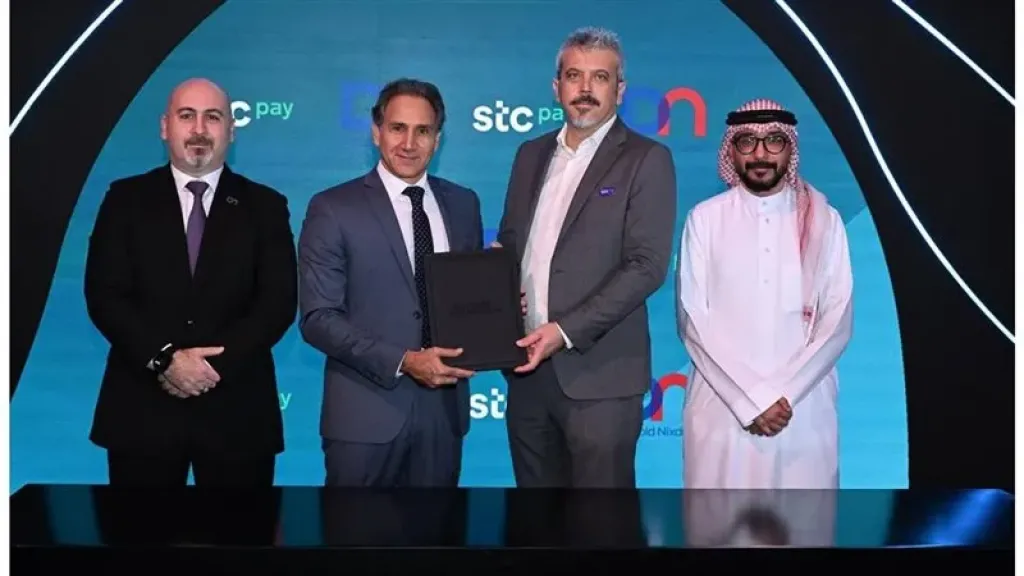
The Bahrain-based digital wallet has signed a strategic partnership with banking and retail technology company Diebold Nixdorf to launch the network, connecting stc pay’s digital financial ecosystem with physical self-service access points across the Kingdom.
The agreement was signed on the sidelines of the Future of Fintech 2026 Forum and will see stc pay deploy machines from Diebold Nixdorf’s DN Series, powered by its DN Vynamic software platform.
The move reflects a broader challenge facing digital finance: building sophisticated apps is relatively straightforward compared with bringing cash-dependent consumers into the digital financial system.
A Digital Wallet That Does Not Require a Smartphone
One of the most significant elements of the new model is that customers will not necessarily need a smartphone or a previously installed stc pay application to access some services.
Users will be able to deposit cash and verify their identity using a verification code sent to their mobile number.
That lowers one of the barriers separating cash users from digital financial services.
Instead of requiring customers to begin their journey by downloading an application, completing the process digitally and funding their wallet through existing banking channels, the self-service machines create a physical entry point into the stc pay ecosystem.
For consumers accustomed to handling cash, that could make the transition to digital finance considerably easier.
Cash Becomes the Entry Point to a Digital Wallet
The machines will gradually be deployed across high-traffic locations and community centers throughout Bahrain.
They will support services including digital wallet top-ups, cash collection, domestic and international transfers, bill payments, prepaid and postpaid mobile recharges and digital card management.
This effectively gives stc pay a hybrid distribution model.
Cash can enter the system through a physical machine before being converted into digital value that can subsequently move through the company’s electronic payment ecosystem.
That makes the machines more than conventional cash-deposit terminals. They become an interface between two financial behaviors that continue to coexist across many markets: cash and digital payments.
Why Fintech Is Moving Into Physical Infrastructure
The strategy highlights an important shift in the evolution of fintech.
The first generation of digital financial companies largely competed by eliminating branches, paperwork and physical infrastructure.
But reaching the next group of customers may require a different approach.
Consumers who depend heavily on cash, lack access to traditional banking channels or are uncomfortable with app-only financial services can be difficult to serve through a purely digital model.
Physical self-service infrastructure offers fintech companies another way to reach those customers without building conventional branch networks.
For stc pay Bahrain, the machines could therefore perform a role similar to a lightweight financial access network while maintaining the economics and scalability of a digital platform.
DN Series Connects the Physical and Digital Channels
Diebold Nixdorf will provide its DN Series self-service technology alongside the DN Vynamic software platform.
The infrastructure is designed to provide a consistent experience across physical and digital channels while allowing the network to scale as demand increases.
Habib Hanna, Managing Director for the Middle East at Diebold Nixdorf, described stc pay Bahrain as an example of how digital-first fintech companies can expand their reach by connecting digital and physical channels.
The partnership is also significant for Diebold Nixdorf itself.
According to Hanna, it represents the company’s first major collaboration with a telecom-sector company in the Middle East, extending technology traditionally associated with banks into a telecom-backed fintech environment.
stc pay Expands Beyond an App-Based Relationship
Miten Zafrak, CEO of stc pay Bahrain, said the partnership is intended to expand the company’s network and make its financial services available to a broader segment of society.
The self-service infrastructure will give customers additional ways to access stc pay services while extending the company’s physical reach across Bahrain.
For stc pay, that means the customer relationship no longer needs to begin and end inside a mobile application.
The wallet can instead be accessed through a combination of digital and physical channels depending on how individual customers prefer to manage their money.
That flexibility could become increasingly important as digital financial providers compete not only for digitally native customers, but also for people who continue to move between cash and electronic payments.
Local Deployment Through Almoayyed Group
The rollout and local technical support for the new machines will be carried out in cooperation with Almoayyed Group, Diebold Nixdorf’s authorized partner in Bahrain.
Local support will be particularly important as stc pay expands the machines across multiple locations and moves from an initial deployment into a broader operating network.
The model combines stc pay’s financial platform, Diebold Nixdorf’s self-service technology and Almoayyed Group’s local implementation and support capabilities.
Financial Inclusion May Require Both Screens and Cash
Bahrain has been steadily developing its digital payments ecosystem as the Central Bank of Bahrain promotes the transition toward a modern, increasingly cashless economy.
But cashless does not necessarily mean that cash disappears overnight.
The more immediate challenge is creating infrastructure that allows people who still use cash to participate in digital financial systems without forcing them to change every aspect of their financial behavior at once.
That is where stc pay’s strategy becomes particularly interesting.
The company is not using physical machines to recreate the traditional bank branch. It is using them as gateways into a digital wallet.
For fintech companies, that distinction could become increasingly important. The next phase of financial inclusion may not be won by choosing between physical and digital banking, but by making the boundary between the two almost invisible.