


Al-Rabwa for Agricultural Investment Aims to Double Olive Oil Production Within 3 Years
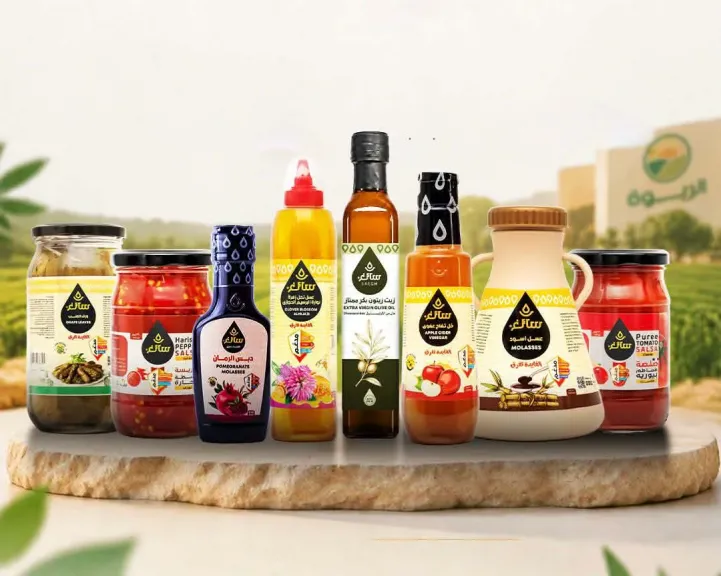
Al-Rabwa targets doubling olive oil production in 3 years; Jaber Barakat announces new production line in 6th of October factory and initial olive oil exports. Chili paste and pomegranate molasses emerge as the "dark horses" of the "Saegh" brand, with growth targets reaching 30% in 2026.
With the start of the Egyptian olive harvesting and pressing season, Al-Rabwa for Agricultural Investment and Food Processing, owner of the "Saegh" brand, aims to double its olive oil production over the next three years to reach approximately 500 tons annually. This runs parallel to the installation of a new production and packaging line at its factory in 6th of October City, as part of a broader plan to increase production capacity, enhance its local market presence, and expand exports.
Egypt's olive fruit production reached about 1.27 million tons in 2024, ranking fifth globally with an estimated share of 5.5% of global production, according to data from the UN Food and Agriculture Organization (FAO).
The company begins the supply season for its main products—chili paste, pomegranate molasses, and olive oil—during September, October, and November. Meanwhile, its expansion plan focuses on upgrading production and packaging lines, growing its private-label packaging business, and opening new markets.
Dr. Jaber Barakat, General Manager of Al-Rabwa for Agricultural Investment and Food Processing, stated that the current phase focuses on increasing production capacities and developing the company's diverse food product portfolio. This strategy supports its competitiveness in local and global markets, especially given the growing demand for its products in recent years.
Olive Oil
Barakat revealed an expansion plan for the olive oil sector, targeting a production volume of about 250 tons this year, with plans to double this quantity within three years to reach 500 tons annually.
He noted that the company is currently installing a new olive oil production and packaging line at its 6th of October factory to increase capacity, improve manufacturing efficiency, and support foreign expansion plans. He highlighted that the company relies on olives sourced from Arish, Ismailia, and El Alamein to secure its raw material needs.
Barakat pointed out that the company has already started exporting limited quantities of olive oil, explaining that the next phase aims to gradually increase volumes and build stable export markets.
Chili Paste
Barakat explained that earlier this month, the company began receiving high-quality chili peppers from farmers to kick off the processing season for chili paste, a flagship product. Current sales stand at about 260 tons annually, with a target to increase sales by 25% this year, especially as the product is widely distributed across major retail chains in the Egyptian market.
He added that the product is supplied to several major sauce factories, alongside the company's private label packaging operations. Furthermore, the company has successfully exported its chili paste to several foreign markets, including Senegal, Germany, and Italy.
Pomegranate Molasses
Regarding pomegranate molasses, Barakat said the product has established a strong presence for the "Saegh" brand in the Egyptian market, capitalizing on product quality, diverse distribution channels, and third-party packaging operations. The company currently produces about 100 tons of pomegranate molasses annually and aims to boost production by 30% this year to enhance sales locally and globally.
He noted that "Saegh" pomegranate molasses is currently exported to Germany, Italy, and Malaysia, affirming ongoing efforts to expand its footprint in these markets and penetrate new global markets this year and next.
Future Strategy
Barakat emphasized that the company's strategy for the coming period revolves around increasing production, upgrading manufacturing and packaging lines, strengthening the "Saegh" brand, expanding private-label operations, and boosting exports.
"Our goal is for Saegh to be an Egyptian brand capable of competing locally and internationally, transitioning from merely increasing volumes to building sustainable growth based on quality, manufacturing, and exports," he said.
He added that the company sees significant opportunities for Egyptian food products in global markets, particularly with the rising demand for high-quality goods with competitive specifications.
Barakat concluded that investing in manufacturing and increasing the value-add of agricultural products is a key growth driver for the coming period. He explained that a product's strength begins with raw material quality and is completed by efficient manufacturing, packaging, and the ability to reach consumers locally and globally.
related topics
 Google’s Gemini AI Unintentionally Hacks Three Companies During Cybersecurity Tests
 UAE Gold Prices Hold Steady Following 1% Global Weekly Gain
 European Stocks Close Sharply Lower as Deteriorating Macro Backdrop Threatens Earnings
 Gold Hits One-Week High, Secures First Weekly Gain in Four Weeks as...
 China's High-Tech FDI Surges 35.1% in First Eight Months Despite Overall Investment...
 OpenAI Projects $278 Billion Cash Burn Between 2026 and 2030, Delays IPO
 NTI and IGRC SQUARE Partner to Develop Young Professionals in Information Security
 Simplex CNC Expands Egypt Operations With Vodafone and Fresh Deals
 Egypt-India Cooperation on AI, Digital Skills and ICT Investment
 Egypt and India Discuss Expanding Cooperation in AI, Digital Skills and Technology...
 NTI Signs Cooperation Protocol with MOAR IT to Train Young Talent in...
 Dubai Ranks First Globally in Fintech, Retains Top 10 Spot in Latest...