Egypt Targets 50% Local Content in Mobile Phone Manufacturing as Exports Expand

Egypt is targeting an increase in local content in mobile phone manufacturing from 35%-40% to 45%-50%, while expanding exports of locally made devices, Mohamed Ibrahim, spokesperson for Egypt’s National Telecom Regulatory Authority, said.
Local Manufacturing Moves Toward Exports
Ibrahim said in televised remarks that raising local content is gradual, driven by technology transfer and supporting industries. Deeper localization requires domestic production of screens, batteries and electronic board parts.
The strategy has two stages: increasing output to meet domestic demand, followed by exports. Egypt has already exported locally manufactured phones, with shipments ranging from 150,000 to 200,000 devices.
Domestic Output Reaches 10 Million Devices
Ibrahim said Egypt previously imported more than 17 million phones annually at a cost of about $2 billion. Around two years ago, local manufacturing accounted for only 10%-15%, with output at roughly 3 million devices. The government targeted 50% local manufacturing in the first year and more than 70% in the second.
Production has since risen to 10 million devices. More than 92% of mobile brands used in Egypt now have manufacturing activity in the country. The market consumes about 20 million phones annually, while local factories have capacity capable of fully covering domestic demand.
More Than 10 Factories, 10,000 Direct Jobs
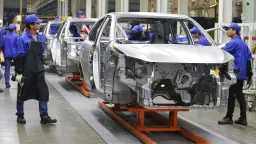
Egypt now has more than 10 mobile phone and electronics factories in Beni Suef, Assiut, 10th of Ramadan, Sadat and Borg El Arab, among other areas. Ibrahim attributed the expansion to governance measures for imported phones, investment and tax incentives, workforce training, the local market and trade.
The industry has created more than 10,000 direct jobs for trained workers and engineers alongside indirect employment. It has also supported local suppliers. Phone chargers, routers and other communications equipment are now manufactured in Egypt after previously being imported.
Beyond Assembly to Local Component Design
Ibrahim said localization goes beyond assembly to technology and expertise transfer. Egyptian engineers have begun designing electronic boards and components for routers and other equipment, and new services are opening opportunities for locally designed components.
Ibrahim invited global companies to invest, noting that locally made phones are exempt from customs duties.
He said localization supports foreign-currency savings, technology transfer, investment, jobs and supplier industries, with the goal of turning Egypt from a phone importer into a country that meets domestic demand locally and exports part of its production.