


Huawei Cloud Egypt Unveils Three-Pillar Strategy to Power AI-Driven Fintech Ecosystem
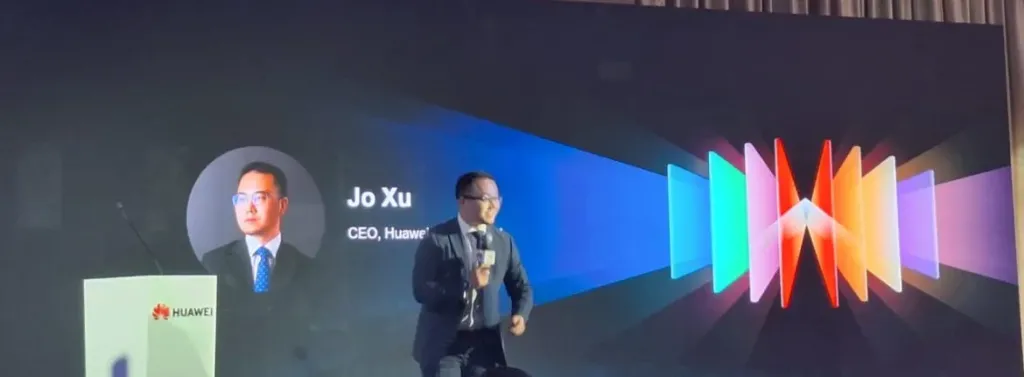
Huawei Cloud has announced a strategic shift in its operational focus within the Egyptian market, moving from traditional cloud migration to advanced Artificial Intelligence (AI) integration. Speaking at the annual Huawei Cloud Fintech Summit, Joe Zhou, CEO of Huawei Cloud Egypt, outlined a targeted three-pillar blueprint designed to help financial technology firms navigate escalating technical and operational challenges.
According to Zhou, the market has officially entered the "Age of AI," forcing financial enterprises to re-engineer both internal operations and customer-facing platforms. To anchor this transition, Huawei Cloud's new framework prioritizes Trust and Sovereignty, Learning-Driven Transformation, and Sovereign AI Infrastructure.
Huawei Cloud’s Strategic Framework for Fintech:
Strategic PillarTarget DomainCore Technologies & Architecture
1. Absolute Trust & SovereigntyPlatform stability, zero downtime, and high-tier data privacy and compliance.HSS, CTR, Cloud SecMaster, WAF, Cloud Firewall
2. Learning-Driven ChangeTransitioning legacy data systems into active, cognitive analytical assets.AI-powered databases, cloud-native analytics
3. AI Infrastructure EnablementLocalized compute power backed by proprietary hardware and silicon design.Specialized chips, high-density processors
Architecting Perimeter-Level Security
In the highly sensitive fintech sector, data sovereignty and infrastructure uptime are critical benchmarks. Zhou highlighted that Huawei Cloud has maintained an unblemished operational record in Egypt with zero core infrastructure disruptions. He contrasted this with the operational bottlenecks and downtime occasionally faced by other global hyperscalers, attributing Huawei’s stability to strict data-validation testing.
To combat highly automated cyber threats, Huawei Cloud deploys an enterprise-grade security matrix. Financial applications running on the platform are secured via Host Security Service (HSS) and Cloud Threat Response (CTR). For advanced threat mitigation, the architecture integrates Cloud SecMaster, Web Application Firewalls (WAF), and Cloud Firewalls to contain edge-level attacks before they reach core databases.
Transitioning to Intelligent Data Engines
Addressing the second and third pillars, Zhou emphasized that true technological evolution requires a shift in data management strategy. Drawing on Huawei's 20-year history in database engineering, the company is migrating local firms away from passive relational storage to AI-driven database models. This enables real-time predictive analysis, continuous model training, and enhanced consumer personalization.
Zhou concluded by noting that software capabilities are entirely dependent on underlying hardware. To sustain the heavy computational workloads demanded by modern AI applications, Huawei continues to invest heavily in its physical supply chain, developing proprietary semiconductors, processing chips, and compute nodes to secure a robust digital infrastructure for Egypt.
related topics
 CAISEC 2026 Concludes with Record International Participation, Reinforcing Egypt’s Position as a...
 FinTech as a Market Catalyst: Inside Samsung and Valu’s 24-Month Zero-Friction Campaign...
 Egypt’s Ministry of Justice Partners with I-Score and Community to Digitize Alimony...
 eYouth and Doroob Partner to Expand Digital Skills Training and Employment Opportunities...
 Uptime Through Maintenance: The Strategy Behind Banque Misr’s Forced Corporate Password Rotation...
 PIF’s HUMAIN Partners with NVIDIA to Deploy DRIVE Hyperion Platform for Level...
 realme Launches 16 Series in Egypt, Bringing AI-Powered Photography and Flagship Performance...
 Orange Completes €4.25 Billion Buyout of MasOrange to Take 100% Control of...
 Zoom Launches New Advanced Data Center in Saudi Arabia to Empower AI...
 Kaspersky Warns of New AI-Powered Phishing Campaign Exploiting Tencent’s Web Development Platform
 Egyptian Ministry of Labor Warns Against Fake Overseas Job Ads, Affirms Official...
 The $100 Billion Blueprint: Egypt’s Strategic Pivot Toward Global Industrial Integration