


Tech Creator ”Dr. Semiconductor” Successfully Fabricates Functional DRAM Chip in Home Cleanroom
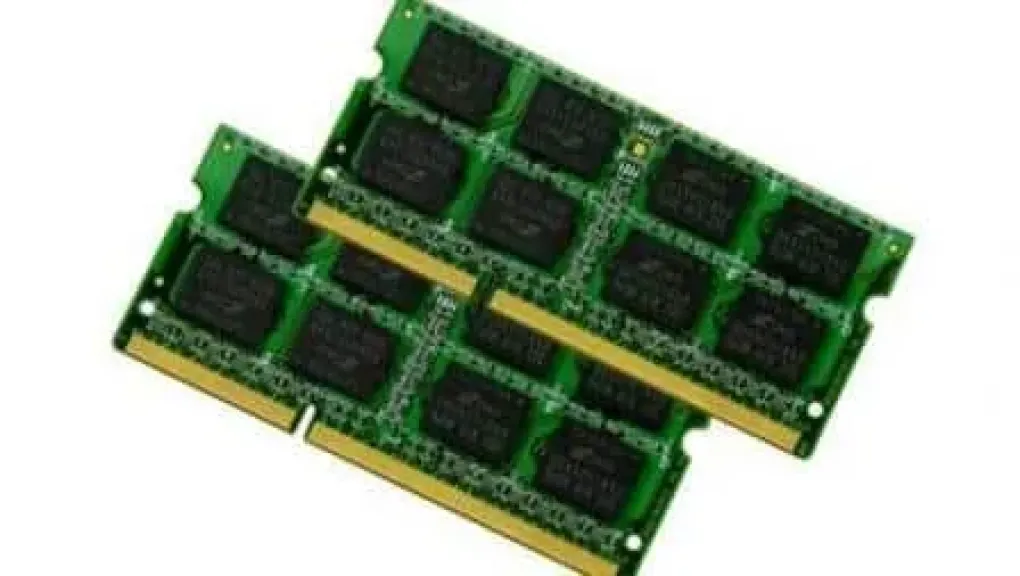
In an unprecedented hardware engineering milestone, prominent tech YouTuber and content creator known as Dr. Semiconductor has successfully fabricated functional Dynamic Random-Access Memory (DRAM) within a residential setting. While the project proves that baseline semiconductor fabrication is achievable at a primitive level, it simultaneously exposes the staggering structural complexity undergirding modern commercial microchip manufacturing.
Constructing a Cleanroom Environment and Processing Wafers The experiment originated as a conceptual challenge but required highly sophisticated technical configurations. Dr. Semiconductor retrofitted a small home workshop into a high-precision, makeshift cleanroom environment engineered to suppress airborne particulate matter to near-zero levels—an absolute prerequisite for silicon processing. This phase presented a major barrier; a single microscopic dust particle can completely fracture the nanoscale architecture of an integrated circuit, explaining why global foundries invest billions of dollars into advanced cleanroom infrastructures.
The creator targeted the fabrication of DRAM, the ubiquitous memory architecture utilized in personal computers and smartphones. DRAM cells rely on a microscopic topology consisting of one transistor and one capacitor; the capacitor retains the volatile electrical charge representing binary data, while the transistor acts as a gate controlling read and write operations. The physical workflow involved slicing and cleaning raw silicon wafers with high-purity chemical solvents, treating them with dopants to alter electrical conductivity, deploying photolithography techniques to etch the mircroscopic circuits, depositing thin metallic layers for internal interconnects, and executing repetitive chemical etching loops to define the finalized cells.
Telemetry, Testing, and Performance Metrics Despite the immense labor involved, the project yielded a microscopic matrix of just 20 functional memory cells arranged in a highly constrained grid—a stark contrast to commercial memory modules that pack billions of cells onto a single die. Upon testing, the home-brewed silicon could not be slotted into a standard computer motherboard. Instead, the creator utilized specialized diagnostic oscilloscopes and signal analyzers to measure individual cell telemetry, confirming that the nodes successfully stored and retrieved binary code.
However, the experiment revealed a significant engineering bottleneck: accelerated charge leakage. The homemade DRAM required a refresh cycle every few milliseconds to prevent data degradation, compared to the tens of milliseconds standard in commercial memory units, drastically reducing its efficiency. Ultimately, while the experiment serves as a hands-on proof of concept for non-industrial component fabrication, it underscores that commercial silicon manufacturing relies on ultra-complex, capital-intensive engineering pipelines that can only be sustained by advanced foundries backed by massive institutional capital.