


Nvidia Outperforms Wall Street Expectations with $81.6B Q1 Revenue; Data Center Segment Surges to $75B
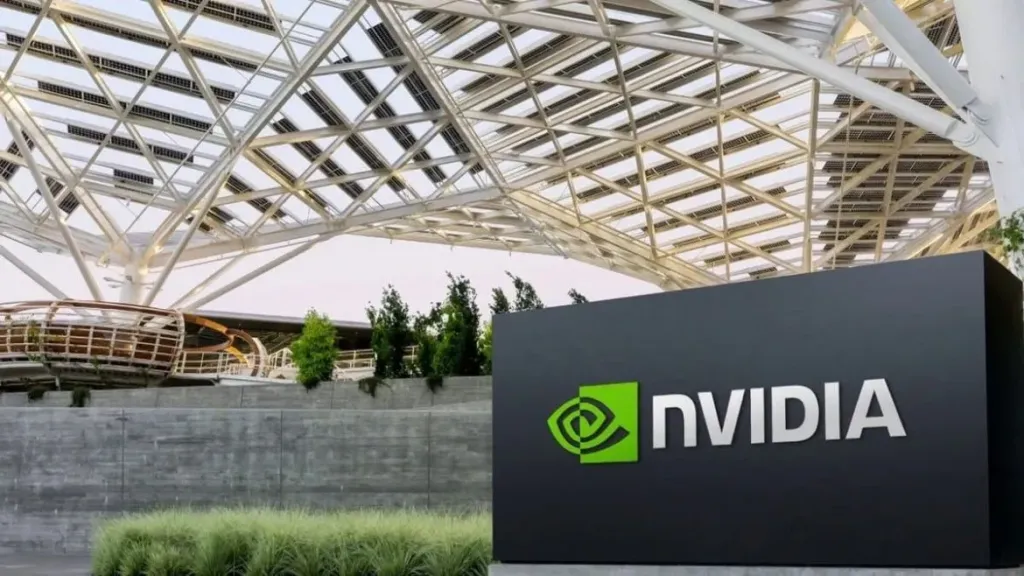
Nvidia reported a massive financial leap in its latest quarterly financial results, posting a net profit of $58.3 billion—a staggering 211% year-on-year (YoY) increase. The record-breaking performance was driven by accelerating global demand for advanced artificial intelligence processors from hyper-scale technology conglomerates.
The company's total consolidated revenue climbed to $81.6 billion during the final fiscal quarter, marking an 85% YoY expansion and comfortably outpacing Wall Street consensus. The figures provide clear evidence of sustained, aggressive corporate expenditure on generative AI deployment and next-generation digital infrastructure.
Dominating the Global AI Supply Chain
Nvidia continues to solidify its position as the primary beneficiary of the global artificial intelligence boom. Its specialized graphics processing units (GPUs) have become essential components for training and executing foundation language models, prompting global tech giants to allocate tens of billions of dollars toward expanding hyper-scale data centers and scaling computational capacity.
Looking ahead, management expects this market momentum to persist through the medium term. The company pointed to macroeconomic industry projections indicating that global infrastructure spending on artificial intelligence could swell to between $3 trillion and $4 trillion by 2030, up from an estimated baseline of approximately $1 trillion today.
Bullish Revenue Guidance and the Rise of AI Agents
Providing strong forward-looking guidance, Nvidia projected revenue for the current quarter to hit approximately $91 billion, significantly exceeding consensus analyst estimates of $86 billion. The forecast reflects deep institutional confidence in the sustained consumption velocity of its advanced hardware architectures.
Jensen Huang, Founder and CEO of Nvidia, emphasized that demand for advanced computing stacks is accelerating at an unprecedented pace. Huang highlighted the rapid emergence of "AI Agents"—autonomous systems capable of executing complex productivity workflows—as a primary catalyst forcing global enterprises to speed up data center construction and expand their broader technology investments.
Data Center Dominance and Geo-Regulatory Tailwinds
Nvidia’s specialized Data Center business unit remains the primary engine driving corporate top-line growth. The segment alone generated $75 billion during the quarter—a 92% YoY surge—capturing the vast majority of the company's total revenue footprint. This segment relies heavily on multi-billion-dollar procurement contracts from market leaders including Google, Amazon, Meta, and Microsoft, which utilize Nvidia’s silicon architecture to anchor their flagship AI clusters.
Concurrently, the company is fortifying its competitive moat by launching next-generation product architectures, increasing equity investments in high-growth AI startups, and securing long-term foundry agreements to shield its high-performance computing supply chains from component shortages.
However, the Chinese market continues to present an operational challenge for the tech giant. Tightening US export control regulations on advanced silicon architectures, coupled with Beijing’s aggressive push to subsidize domestic semiconductor firms—led by Huawei—to reduce reliance on Western technology, are creating persistent headwinds for Nvidia's regional market share.
Despite these regulatory boundaries, analysts emphasize that Nvidia’s stellar financial framework positions the company as the definitive bellwether for global technology capital expenditure and institutional investor sentiment regarding the automation economy.
related topics
 Private Hyperscaling: SpaceX Share Tender Capitalizes on Surge in Pre-IPO Liquidity and...
 Anthropic Inks Historic $1.8 Billion Cloud Infrastructure Deal with Akamai to Diversify...
 Datalec Establishes New Entity in Saudi Arabia to Expand Data Center Capabilities
 Jodel’s Hyper-Local Ecosystem and Strategic Dominance in the GCC
 SoftBank and AEP Plan $33 Billion AI Data Center and Gas Power...
 AI Data Centers Spark Concerns Over Rising U.S. Electricity Prices
 LG Introduces 2026 OLED evo TVs with Hyper Radiant Color Technology for...
 HyperPay Receives National Payment Gateway Accreditation from Saudi Central Bank
 Gartner Identifies the Top Strategic Technology Trends for 2026 The Top Strategic...
 The Brain & Performance Centre Becomes the First UHMS-Accredited Hyperbaric Medicine Facility...
 Mastercard collaborates with HyperPay to transform the region’s business payments landscape
 Meta to unveil Hypernova smart glasses with a display, wristband