


Researchers Develop Lollipop-Shaped Device to Track Paracetamol Through Saliva
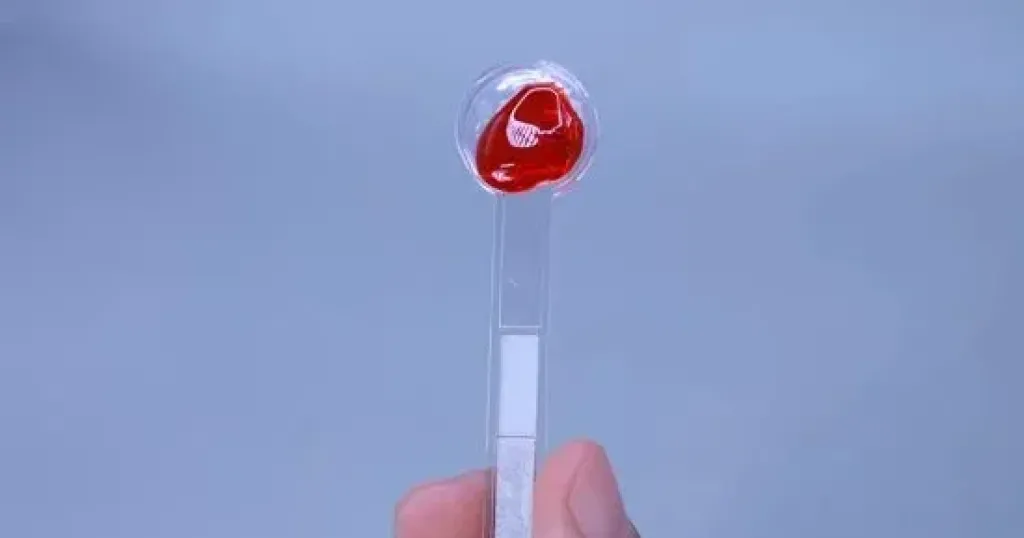
A team of researchers has developed an unusual medical testing concept that looks more like a candy than a conventional diagnostic device. Known as Lollylab, the prototype is designed to collect saliva and identify paracetamol using a built-in graphene sensor.
The technology was tested in an initial study and was able to detect the medication in saliva in less than two minutes. The research was published in ACS Sensors and explores whether saliva collection could be made easier and more comfortable for users.
A Medical Sensor Hidden Inside a Lollipop
Lollylab uses a flavored candy layer to encourage saliva production while the user sucks on the device.
Once collected, the saliva travels through a small internal channel toward a graphene-based sensor. The sensor looks for changes in electrical current associated with the presence of paracetamol.
The researchers evaluated the system with both artificial saliva and human saliva as part of the testing process.
Six Adults Took Part in the First Trial
The first human trial was relatively small, involving six adults.
Participants used a peach-flavored Lollylab before and after taking a standard 650 mg dose of paracetamol. The device was able to repeatedly detect the medication in their saliva.
Participants also found the lollipop-based approach more convenient and comfortable than traditional methods used to collect saliva samples.
Why Paracetamol Is Important to Monitor
Paracetamol is widely used as a painkiller and is also found in many cold and flu medicines.
While it is commonly used, taking excessive amounts can result in serious harm, including liver damage. This makes the ability to monitor drug levels potentially useful in medical settings.
The researchers pointed out that saliva concentrations of paracetamol can correspond reasonably well with levels found in blood, making saliva a potentially useful alternative for drug monitoring.
The Technology Is Still in the Prototype Stage
Despite the promising early results, Lollylab is not currently an approved medical device for consumers.
The first study involved only six adults, meaning that significantly larger studies will be needed to determine how accurate and safe the technology is across a wider population.
Future research is expected to involve more participants, including children. The team is also exploring whether the platform could eventually be adapted to detect other substances, including naturally occurring biomarkers associated with stress.
Could Saliva Replace More Traditional Testing Methods?
The researchers believe the concept could eventually contribute to a new generation of rapid testing technologies based on saliva rather than blood samples or conventional swabs.
If future trials confirm its performance, the approach could make certain sample-collection procedures less complicated and more comfortable.
For now, however, Lollylab remains an experimental prototype and should not be considered a replacement for established medical tests.
related topics
 Giza Chamber of Commerce and Chinese Delegation Explore Healthcare and Smart City...
 Sonova Launches Third-Generation Phonak EON Hearing Aid Platform Powered by Real-Time AI
 Here is the journalistic rewrite in English, complete with a headline and...
 Egypt’s Health Minister and Samsung Egypt President Discuss Healthcare Tech and Training...
 Morocco’s T2S Group Ready for $120 Million IPO on Casablanca Stock Exchange
 CVS Health Partners with Google Cloud to Launch AI-Powered Digital Health Platform
 Egypt’s Industry and Investment Ministers Outline Roadmap to Localize Pharmaceutical Manufacturing
 PraxisPro Raises $6 Million Seed Round to Advance AI-Powered Medical Sales Training
 Egypt’s Power Valley Achieves Near-Zero Medical Device Failures in Malaysian Public Hospitals
 Bio Middle East: How is biotechnology reshaping the future of medicine